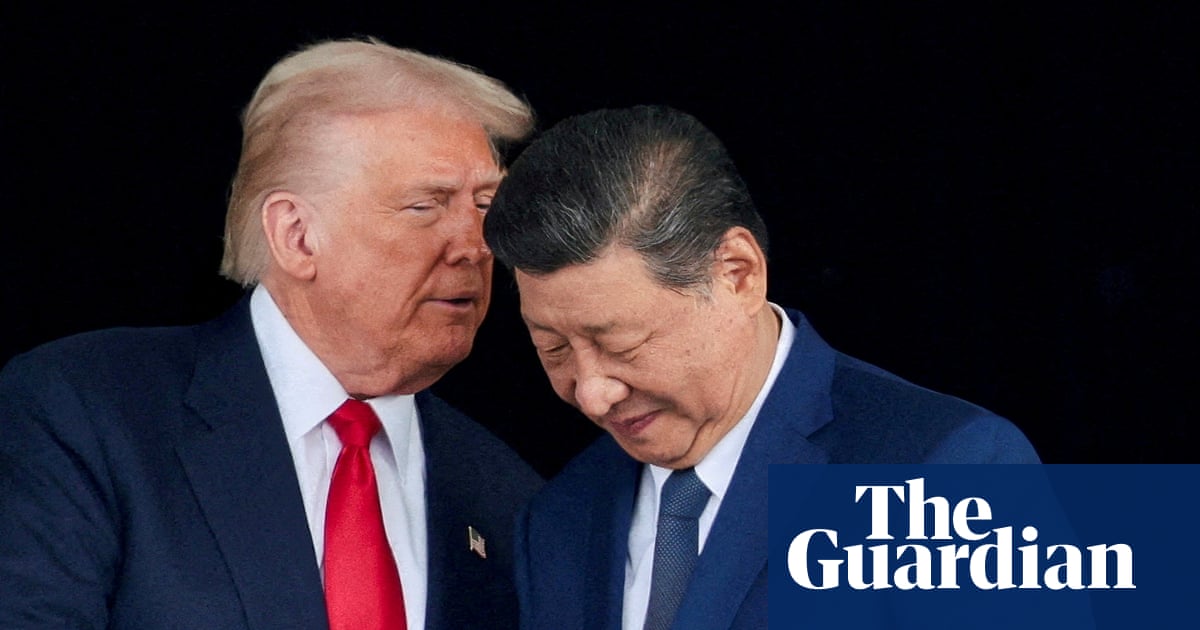
"Top of the agenda: the US-China trade war. One week later, Trump approved joint strikes with Israel against Iran, starting a new war in the Middle East. Its ramifications have spread far beyond the region and caused alarm in Beijing. The presidential summit was postponed. Now the highly anticipated meeting between Trump and Xi is expected to take place on 13-15 May in Beijing, and China's agenda has shifted."
"Beijing is keen to make sure that the sky-high tariffs that Trump announced last year which reached as high as 145% before the two sides agreed a truce in October do not return. But now the more pressing concern is to find a way to reopen the strait of Hormuz, through which half of China's crude oil passes. Although China has been more insulated from the energy shock than other Asian countries, thanks to its diversified energy mix and large stockpiles, the risk of a global recession which the International Monetary Fund has warned is a possible outcome of the Iran war is a bigger threat to China's economy."
"About a fifth of China's GDP comes from exports. If the rest of the world is no longer able to spend money on goods, China will suffer. There is no country whose national interests are advanced by the perpetuation of this conflict, Ali Wyne, a senior adviser at the International Crisis Group, said in a briefing last week. While China is much better prepared than many US allies and partners in Asia to weather a short-term disruption to commercial traffic through the strait of Hormuz a longer-term disruption becomes more problematic."
"The big question hanging over the Trump-Xi summit, then, is what will China do to help to resolve the conflict? It was reported last month that China had pushed Iran to the negotiating table with the US in a previous round of ceasefire talks. Last week, Irani"
A US-China summit planned for Beijing was postponed after joint US strikes against Iran escalated conflict in the Middle East. The meeting is now expected for 13-15 May, with China adjusting its priorities. Beijing wants assurances that previously announced US tariffs, which had reached up to 145%, will not return. The more urgent issue is energy security, especially reopening the Strait of Hormuz, through which a large share of China’s crude oil flows. Even with diversified energy sources and stockpiles, China faces greater economic risk from a potential global recession. China’s export-driven economy could be harmed if global demand falls. The key question is what China will do to help resolve the conflict.
#us-china-relations #us-china-trade-tariffs #iran-war-and-middle-east-conflict #energy-security #global-recession-risk
Read at www.theguardian.com
Unable to calculate read time
Collection
[
|
...
]