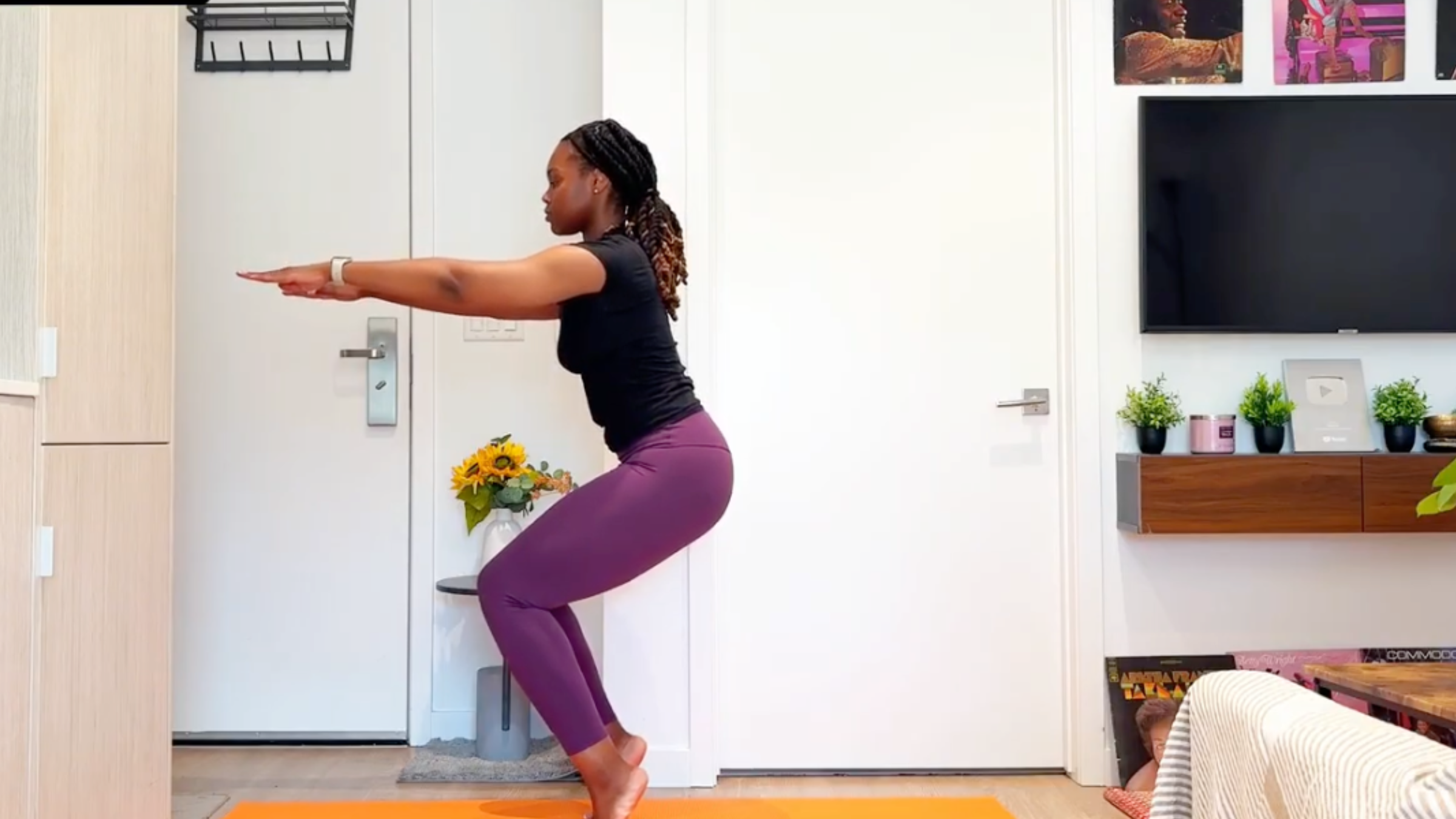
"Yoga teachers often assume that students can easily get up and down from the floor. But that's not always the case. For some students, getting down onto the mat can feel physically demanding. For others, it's simply not practical, whether they're navigating joint pain, recovering from an injury, coming off a long work day, or they simply don't feel like sitting or lying down."
"That's where standing yoga poses come in. They offer a way to move your body without the added pressure of getting onto the floor or making your way to standing from kneeling. A standing yoga sequence is also one of the most adaptable ways to practice, whether you're in a classroom, a hotel room, or at the airport. And you don't even need a mat."
"Inhale, sweep your arms overhead, and touch your palms together. As you exhale, lower your arms back down. Inhale and sweep your arms overhead again, and this time, interlace your fingers and point your index fingers toward the ceiling. Exhale as you lean your torso toward the right, then inhale as you return to center. Lean toward the left, then return to center. Repeat that a few times."
"Exhale and bend your torso a little more toward the right as you lean your hips toward the left. Squeeze your thighs together and keep your arms straight. Take a few breaths here, then return to center. Exhale and repeat on your left side."
Some students find it physically demanding or impractical to get down to the floor or stand up from kneeling due to joint pain, injury recovery, fatigue, or personal preference. Standing yoga poses offer a way to practice movement and release tension without the added pressure of floor transitions. A standing sequence can be practiced in many environments such as classrooms, hotel rooms, or airports, and it does not require a mat. A short practice can begin with Mountain Pose by standing with feet together or hip-width apart, pressing into the floor, lengthening the spine, and taking slow breaths. It can continue with Side Stretch by sweeping arms overhead, interlacing fingers, leaning right and left, and deepening the stretch by shifting hips. It can also include Standing Backbend with arms overhead, clasped hands, lifted gaze, and an arched back.
Read at Yoga Journal
Unable to calculate read time
Collection
[
|
...
]