Business
from24/7 Wall St.
10 hours agoAmazon vs. Walmart: The Retail War Just Picked a Winner
Amazon and Walmart have similar revenues but vastly different profit strategies, with Amazon relying on AWS and Walmart on physical stores and eCommerce.
The free webinar is designed to help assist local businesses with the transition back to in-store transactions by highlighting how they can appear for important 'near me' searches in order to capture the attention of local customers.
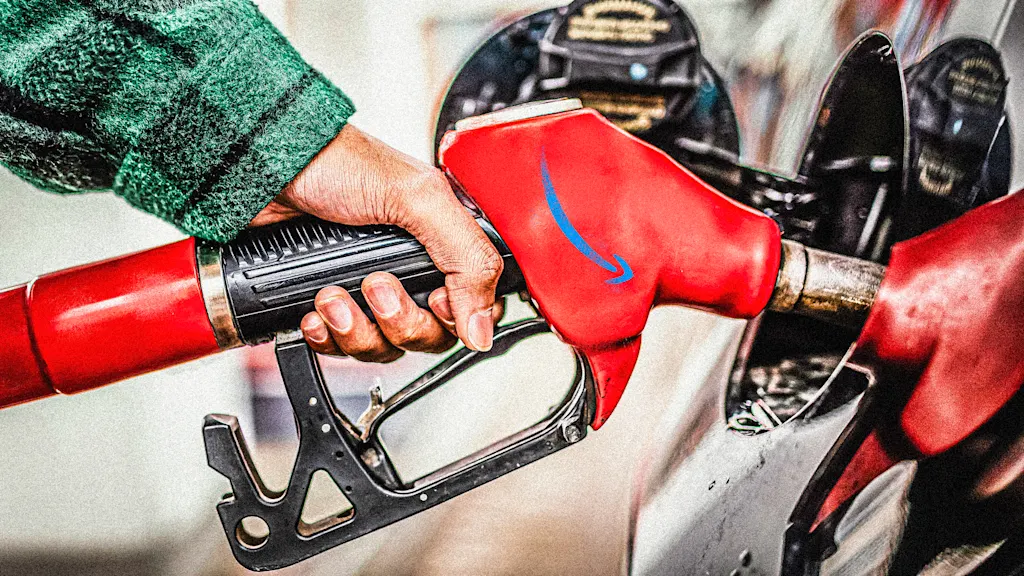
"Transportation costs are a big factor there. Every company that is involved and has logistics and they have to pay for gas, either they have to absorb this cost, or they will charge the third party that will provide this service. I'm not surprised this is happening, because at some point, Amazon will say we cannot absorb all this cost."
I create shoppable videos reviews of products sold on Amazon. My strength is that I film in-depth, highly descriptive, long-form videos, which I believe helped me achieve quick success with the program.
The mail will stop if the agency can't meet its obligations. That includes critical deliveries like prescription drug packages. Postmaster General David Steiner warned lawmakers this week that USPS could run out of cash in less than 12 months without congressional action.
"This was a natural next step in a relationship that's already delivering for our customers," Aldi COO Dave Rinaldo said in an email. "Customers get a more seamless shopping experience while Aldi remains focused on what we do best - delivering high-quality groceries at the lowest possible prices."
Our customers are busier than ever and are looking for new ways to save time while keeping their households running. We saw an opportunity to use our unique operational expertise and delivery network to help make customers' lives a little easier while unlocking even more value for Prime members.
Surveys suggest customers want to use AI for shopping and to see AI tools from retailers. In a CI&T survey conducted in 2025, 58% of 1,040 U.S. consumers said retailers should use AI to improve the shopping experience, and almost 75% said they were already using AI tools at least occasionally in their path to purchase. In a separate survey from Gartner last March, 56% of millennials said they would be willing to let AI handle or assist with some of their shopping tasks.
You're scrolling through an online retailer, like Amazon, Shein or eBay, and spot a shirt on sale for $40. You add it to your cart, but at checkout, a $10 shipping fee suddenly appears. Frustrated, you close the tab. But what if that same shirt was priced at $50 with free shipping? The likelihood that you would have bought it without a second thought is much higher.
When a transaction involves a cost, we instinctively weigh the downside. But when something is entirely free, we experience a positive emotion and perceive the offer as more valuable than it is mathematically. Retailers no doubt realise that offering free delivery is one of the most effective ways to stop a consumer from abandoning a digital shopping cart.
That's a problem. Without a doubt, a great website and top-level marketing will help generate new sales, but it's the delivery experience that warrants future ones. This is because today's consumer not only has options for where they'll buy but also a high set of expectations. What's more, they remember the way a product arrives at their doorstep more than how it was sold.