#retirement-planning
#retirement-planning
[ follow ]
#social-security #passive-income #cost-of-living #financial-decision-making #dividend-etfs #healthcare-costs
#social-security




Retirement
fromwww.housingwire.com
6 hours agoHow policy uncertainty is reshaping senior retirement plans
Retirees and near-retirees show heightened financial anxiety in 2025, with Social Security benefit cuts emerging as the primary policy concern, prompting delayed retirement plans and portfolio shifts toward conservative investments.
Retirement
from24/7 Wall St.
1 week agoThis Stealth 2026 Social Security Change Is Costing Workers Thousands
Full retirement age for Social Security is increasing to 67 for workers born in 1960 or later, a change many workers don't understand that could reduce lifetime benefits by thousands of dollars.
Relationships
fromSilicon Canals
16 hours agoMost retirees don't realize the single biggest predictor of loneliness in retirement isn't whether you have friends - it's whether your friendships were built on mutual curiosity and care, or just shared circumstance, and these 7 signs reveal which kind you have - Silicon Canals
Workplace friendships often dissolve after retirement because they depend on shared professional context rather than genuine personal connection and mutual curiosity.

#affordable-living-destinations
Travel
fromYahoo Travel
4 days agoMaximize Your Money in 10 Budget-Friendly Asian Countries Perfect for Retirees and Travelers
Asian countries offer affordable living costs ranging from $270-$600 monthly while providing stunning landscapes, rich culture, excellent healthcare, and visa programs designed for retirees and remote workers.
Travel
fromYahoo Travel
4 days agoMaximize Your Money in 10 Budget-Friendly Asian Countries Perfect for Retirees and Travelers
Asian countries offer affordable living costs ranging from $270-$600 monthly while providing stunning landscapes, rich culture, excellent healthcare, and visa programs designed for retirees and remote workers.
#safe-withdrawal-rate
Retirement
from24/7 Wall St.
4 days ago$1 Million in Savings Sounds Like Freedom. The Monthly Budget Tells a Different Story.
A $1 million retirement portfolio generates approximately $58,000 annual net income when combined with Social Security, providing a comfortable but not lavish lifestyle in a mid-cost city with modest discretionary spending.

Retirement
fromSilicon Canals
5 days agoPeople who find retirement genuinely fulfilling didn't just plan their finances - they planned their identity, and here's what that actually means - Silicon Canals
Successful retirement requires planning your identity and purpose beyond financial preparation, not just accumulating money.
#social-security-claiming-strategy
Retirement
from24/7 Wall St.
6 days agoHere's How to Make Dave Ramsey's Controversial Social Security Advice Work for You
Dave Ramsey recommends claiming Social Security at age 62 to maximize lifetime income through more monthly payments, though this strategy carries significant risks if longevity exceeds expectations.
Retirement
from24/7 Wall St.
1 week agoClaim Social Security at 62? Dave Ramsey's Advice Looks Riskier as Benefit Cuts Loom
Dave Ramsey recommends claiming Social Security at 62 to maximize lifetime payouts and investment opportunities, but this strategy becomes riskier given Social Security's uncertain financial future.
Retirement
from24/7 Wall St.
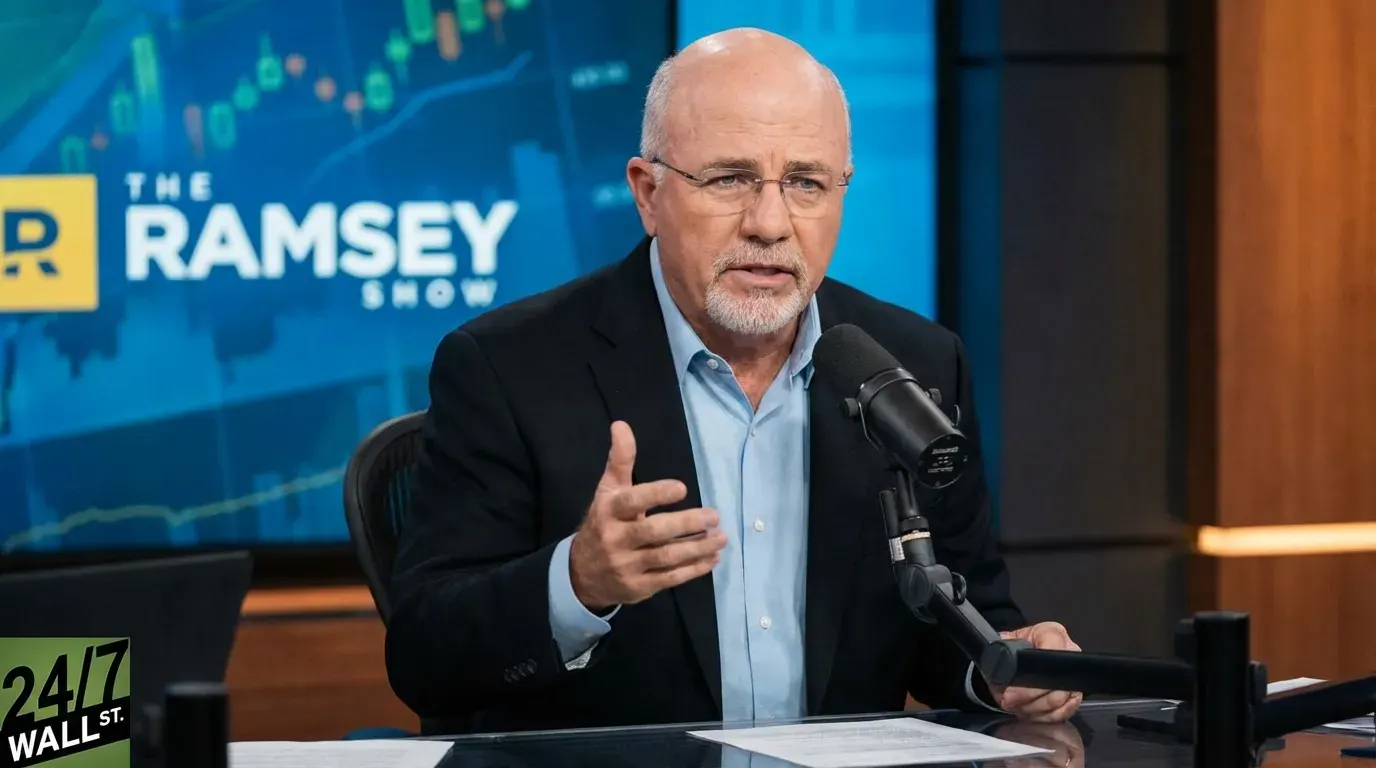
6 days agoHere's How to Make Dave Ramsey's Controversial Social Security Advice Work for You
Dave Ramsey recommends claiming Social Security at age 62 to maximize lifetime income through more monthly payments, though this strategy carries significant risks if longevity exceeds expectations.
Retirement
from24/7 Wall St.
1 week agoClaim Social Security at 62? Dave Ramsey's Advice Looks Riskier as Benefit Cuts Loom
Dave Ramsey recommends claiming Social Security at 62 to maximize lifetime payouts and investment opportunities, but this strategy becomes riskier given Social Security's uncertain financial future.
from24/7 Wall St.
6 days ago5 High-Yield ETFs Paying Up to 10% That Boomers Are Loading Up on Right Now
Baby boomers are navigating an uncertain global market and looking for investments that can generate steady passive income. They're looking for income-generating assets and capital preservation. But this doesn't have to mean a high-risk investment that generates a minimal payout.
Miscellaneous
Miscellaneous
from24/7 Wall St.
1 week agoRisk-Savvy Investors Love 4 Passive Income Kings Yielding 10% and More
Ultra-high-yield dividend stocks provide dependable passive income streams and total returns through interest, capital gains, dividends, and distributions for investors with higher risk tolerance.
Retirement
from24/7 Wall St.
1 week agoSurprisingly, Dave Ramsey Tells 40-Year-Old Couple With $86,000 Debt They'll "Still Become Multimillionaires"
Eliminating debt first creates the monthly cash flow necessary for compound growth, making late-start retirement investing viable and potentially more effective than early investing with debt obligations.
Retirement
from24/7 Wall St.
1 week agoInflation and Healthcare Are Quietly Draining the $800,000 Retirement Plan
An $800,000 retirement portfolio provides approximately $4,500-$5,000 monthly income when combined with Social Security, requiring careful budgeting to cover housing, healthcare, food, and discretionary spending over a 25-30 year retirement.
from24/7 Wall St.
1 week agoDave Ramsey: "You Can't Put $2,500 Away Because You Got $86,000 in Debt Sucking the Bone Marrow Out of Your Life"
You can't put $2,500 away right now because you got 86,000 freaking dollars in debt sucking the bone marrow out of your life. The key phrase is 'focused investing.' That only happens after the debt is gone. $2,500 per month represents exactly 15% of a $200,000 annual income. Right now, that $2,500 is not available because it's already being consumed by debt service.
Retirement
Retirement
from24/7 Wall St.
1 week agoRetirees With $3 Million Still Can't Sleep
Retirement anxiety persists despite adequate financial preparation because the psychological shift from earning to spending creates a loss of control, causing retirees to underspend even when their portfolio supports their planned lifestyle.
fromBusiness Insider
1 week agoMy parents had no retirement plans after selling their house. They now live in Airbnbs, and I'm worried about them.
I knew I was inching toward simultaneously caring for my young kids and aging parents. Suddenly, I was squarely in the sandwich generation. I now had to deal with the terrifying reality that my parents did not have a plan for how to spend their retirement years - especially where they plan to live.
Retirement


Retirement
fromBusiness Insider
1 week agoThe under-the-radar books early retirees and savvy investors are reading to get ahead
Financially savvy investors prioritize meaningful experiences and intentional spending over endless wealth accumulation, using books like 'Die With Zero' and 'Work Optional' to reshape their approach to money and retirement.


Retirement
fromSilicon Canals
1 week agoRetirement counselors say the couples who struggle most in the first year of retirement all made the same 7 assumptions beforehand - Silicon Canals
Retirement requires couples to intentionally establish boundaries and routines to manage unexpected challenges of constant togetherness that most couples are unprepared for.
Retirement
from24/7 Wall St.
1 week agoHow Much Do You Really Need Invested to Replace a $60K Salary With Dividends
Building a dividend portfolio generating $60,000 annually requires different capital amounts depending on yield and risk tolerance, ranging from $1.8 million at 3% yield to significantly less at higher yields.
Retirement
from24/7 Wall St.
1 week agoBaby Boomers: The 3 Retirement Moves Financial Advisors Say You Can't Afford to Skip
Successful retirement depends on avoiding common financial pitfalls and building passive income streams before retirement through strategic asset allocation and income-producing investments.
from24/7 Wall St.
1 week agoThe NASDAQ Dividend Stocks Retirees Are Loading Up On Before the Next Rate Cut
U.S. Treasury bonds paid decent yields for a while, but that's very likely to come to an end soon. This year and in 2027, retirees should prepare their portfolios for one or more interest-rate cuts. If government bond yields are poised to fall, retirement investors will probably want to get passive income from other sources.
Retirement
Retirement
fromSilicon Canals
2 weeks ago10 things no one warns you about the first year of retirement that hit harder than any financial worry - Silicon Canals
Retirement's greatest challenges are psychological and social, not financial—requiring preparation for identity loss, relationship changes, and lack of structure.

Business intelligence
from24/7 Wall St.
2 weeks ago5 of Bank of America's US1 List Top Picks Also Pay Big Passive Income
Bank of America's top-rated US1 stocks offer dividend investors reliable passive income with significant upside potential, including healthcare REITs like America Healthcare REIT with 1.89% yields.
from24/7 Wall St.
2 weeks agoKey Signs Your 401(k) Isn't Doing As Well As It Should
Many recent retirees told us they wish they had saved differently, highlighting a critical truth: retirement planning isn't just about setting a number-it's about building a strategy that anticipates life's changes and regularly revisiting that plan as life happens.
Retirement
Retirement
from24/7 Wall St.
2 weeks agoI Didn't Save for Retirement - What Now?
A 47-year-old self-employed individual with no retirement accounts must strategically leverage real estate assets and a $1,300 monthly pension to build retirement security through careful financial planning and asset optimization.
from24/7 Wall St.
2 weeks ago5 High Yielding Stocks that Raised their Dividends by 50% over the last five years
Aggressively invest in high-yielding stocks and reinvest the dividends continuously until you consider retirement. After all, each reinvested dividend payout buys you more income-producing shares without any out-of-pocket expenses. Better, by doing so, you're compounding the earnings and expediting the growth of your portfolio.
Retirement
Retirement
fromSilicon Canals
2 weeks ago9 things every man who worked a trade for 30+ years knows about retirement that white-collar retirees usually learn the hard way - Silicon Canals
Tradesmen understand retirement challenges better than office workers because physical labor teaches lessons about body maintenance, purpose, and identity that desk jobs delay until retirement arrives.
from24/7 Wall St.
3 weeks agoRetirement Crisis Deepens as Trump Proposes Government-Backed 401(k) Rescue
My administration will give these oft-forgotten American workers, great people, the people that built our country, access to the same type of retirement plan offered to every federal worker. We will match your contribution with up to $1,000 each year.
Retirement
Retirement
fromTravel + Leisure
3 weeks agoThis Is the Best State to Retire if You Want Your Money to Go the Farthest
Mississippi offers the lowest retirement costs in the nation, requiring $768,800 to retire comfortably with annual living expenses of $30,754 and no taxation on Social Security or retirement withdrawals.
fromwww.housingwire.com
3 weeks agoRetirement planning faces longevity risk as Americans live longer
A 65-year-old man today can expect to live to 84 years old, while a 65-year-old woman can expect to live until 86. For plan sponsors and advisers, that translates into a potential distribution horizon of at least 20 to 30 years. Without incorporating realistic longevity assumptions into glide path design, withdrawal strategies and income solutions, participants face a heightened risk of outliving their savings.
Retirement
Miscellaneous
from24/7 Wall St.
3 weeks agoThe Conservative ETF That Beats Bonds but Costs You Almost Nothing to Own
AOK offers a low-cost conservative allocation ETF with 70% bonds and 30% equities, delivering capital preservation and modest income but sacrificing significant long-term growth compared to equity-heavy portfolios.
from24/7 Wall St.
3 weeks agoRetiring in Florida vs. Texas: Which State Taxes Your 401(k) Less?
Neither state will collect state income tax, which means any 401(k) withdrawals, IRA distributions, pension payouts, and Social Security benefits are all untouched at the state level. The advantage shared by both states is also what makes this comparison all the more interesting. If neither state takes a cut of your retirement income, then the real question isn't about your 401(k) at all.
Retirement
Retirement
from24/7 Wall St.
3 weeks agoDave Ramsey's Brutal Takedown on the 4% 'Safe' Withdrawal Rule For Retirees
Dave Ramsey's 8% withdrawal rate doubles the traditional 4% rule but exposes retirees to sequence-of-returns risk during market downturns, potentially depleting portfolios faster than historical stress tests allow.
fromSlate Magazine
3 weeks agoI'm Totally Burnt Out on Work. I Know How I Can Get Some Freedom, But My Friend Warns That It'll Ruin Me.
Once you withdraw from your 401(k) early, taxes (24 percent federal, plus applicable state taxes) and the 10 percent early-withdrawal penalty will take a big chunk of that $80,000. Your remaining funds-about $50,000-might still take you far, but also might go faster than you think.
Relationships
Relationships
fromSlate Magazine
3 weeks agoMy Dying Husband Has One Final Wish. I Don't Think I Can Give Him That.
An 80-year-old couple faces conflicting priorities: one spouse wants expensive international travel for end-of-life experiences while the other prioritizes financial reserves for anticipated long-term care costs.
US politics
fromFortune
3 weeks agoTrump announces 401(k) for all: 'We will match your contribution with up to $1,000 each year' | Fortune
Trump proposed expanding federal employee retirement plans to uninsured workers with $1,000 annual government matching contributions and called for congressional insider trading restrictions.
fromBusiness Insider
3 weeks agoMy dad died at 56 and never made it to retirement. The 3 lessons he taught me changed my own plans and perspective.
In 2023, my dad called to tell me he'd dropped down to four days a week at work. He'd had a long career as an insurance underwriter, though it didn't define him. At one point, he even left the profession to become a plasterer for a decade to better balance out his schedule. Still, it served him well enough. "You really are getting old, then," I joked. Dad laughed - he was only in his 50s.
Medicine


from24/7 Wall St.
3 weeks agoThe 10 Counties With the Highest Property Taxes in Texas
If you're a homeowner in the state of Texas, you have the joy of living without any state income tax, and this has become one of the most powerful selling points of the state. Whether you are a retiree, a remote worker, or anyone looking to keep more of what they earn, the Lone Star State has plenty of appeal.
Real estate
Retirement
fromBusiness Insider
3 weeks agoI'm 39 but just started contributing to a 401(k) account. I have what I call 'retirement planning paralysis.'
Neglected retirement savings in younger years left multiple small accounts and regret; now approaching 40, beginning 401(k) contributions and facing consolidation and paralysis.
fromFortune
3 weeks agoAre you a 'hidden millionaire?' | Fortune
Like snow falling quietly overnight, wealth has a way of sneaking up: steadily increasing salaries, 401(k) contributions, stock options, rising home equity, inheritances. It accumulates while you're busy living. If your financial identity hasn't kept pace-understandably shaped more these days by inflating prices, competing tugs on your discretionary dollars, and that familiar feeling of " I'd be comfortable if I made more"-you're not alone.
Real estate
from24/7 Wall St.
4 weeks agoRetirement Planning Mistakes That Only Show Up After You Stop Working
The harder mistakes to catch are the ones that look fine on paper but fall apart the moment you stop working. These are unquestionably the planning failures that will only reveal themselves after the paycheck ends and you're living off the portfolio. Recent data from Nationwide's Retirement Institute shows that 55% of people who retired in the last five years regret how they saved, and only 40% said they were on track with their original budget.
Business
Education
fromwww.housingwire.com
1 month agoFairway, NAIFA debut Certified Home Equity Advisor program
NAIFA members can earn a CHEA credential teaching reverse-mortgage-based home-equity strategies for retirement planning, emphasizing education, ethics, and consumer protection rather than product origination.


Business
from24/7 Wall St.
1 month agoWhy Early Retirement Has Become Harder in a High Inflation, Higher Rate Era
Inflation-driven permanent price increases and shifting market conditions make achieving early retirement under traditional FIRE assumptions significantly harder and require recalculated planning.
from24/7 Wall St.
1 month agoDave Ramsey Tells 57-Year-Old Investing $2,800 Monthly to Cut Retirement Contributions in Half
A 57-year-old woman and her 68-year-old husband were doing everything right by conventional standards - investing 35% of their take-home pay into retirement accounts. But this aggressive retirement strategy created an unexpected problem: they couldn't save enough for a down payment on their first home. On a January 2026 episode of The Dave Ramsey Show, the couple received counterintuitive advice that challenged standard financial wisdom.
Real estate
[ Load more ]