Wearables
Wearables
[ follow ]




Wearables
fromTechCrunch
6 hours agoAfter Zomato, Deepinder Goyal returns with a $54M brain-monitoring bet | TechCrunch
Deepinder Goyal raised $54 million for Temple, a wearable startup measuring cerebral blood flow for elite athletes, marking his shift toward higher-risk ventures after stepping down as Zomato CEO.
fromScary Mommy
1 day agoScary Mommy 2026 Readers' Choice Award Best Wearable Health Tracker Brand
If you want to try running, or just have a better log of your health, why not try a tracker. From the traditional sleep and cycle trackers to the more "medical grade" options, there are tons of excellent options on the market.
Wearables

Wearables
fromTechCrunch
2 days agoWearable startup CUDIS launches a new health ring line with an AI-fueled 'coach' | TechCrunch
CUDIS launches an AI-powered health ring with an agent coach, gamified points system for healthy behaviors, and Pace of Aging tracking to incentivize and optimize user wellness.
Wearables
fromMail Online
2 days agoOura Ring review: After 6 weeks of wear, here's my honest thoughts
The Oura Ring 4 is a smart ring that tracks sleep, heart rate, activity, body temperature, and stress, providing health insights and recovery recommendations despite its high initial cost and subscription fees.
fromYanko Design - Modern Industrial Design News
2 days agoTAG Heuer Connected Calibre E5 x Formula 1 Edition brings real-time race telemetry to your wrist - Yanko Design
Housed in a 45mm grade 2 titanium case with a black DLC finish, it features a fixed ceramic bezel engraved with a tachymeter scale-a direct reference to classic racing chronographs. The screw-down caseback carries special Formula 1 engraving, while the textured rubber strap reinforces its sporting intent.
Wearables

fromThe Verge
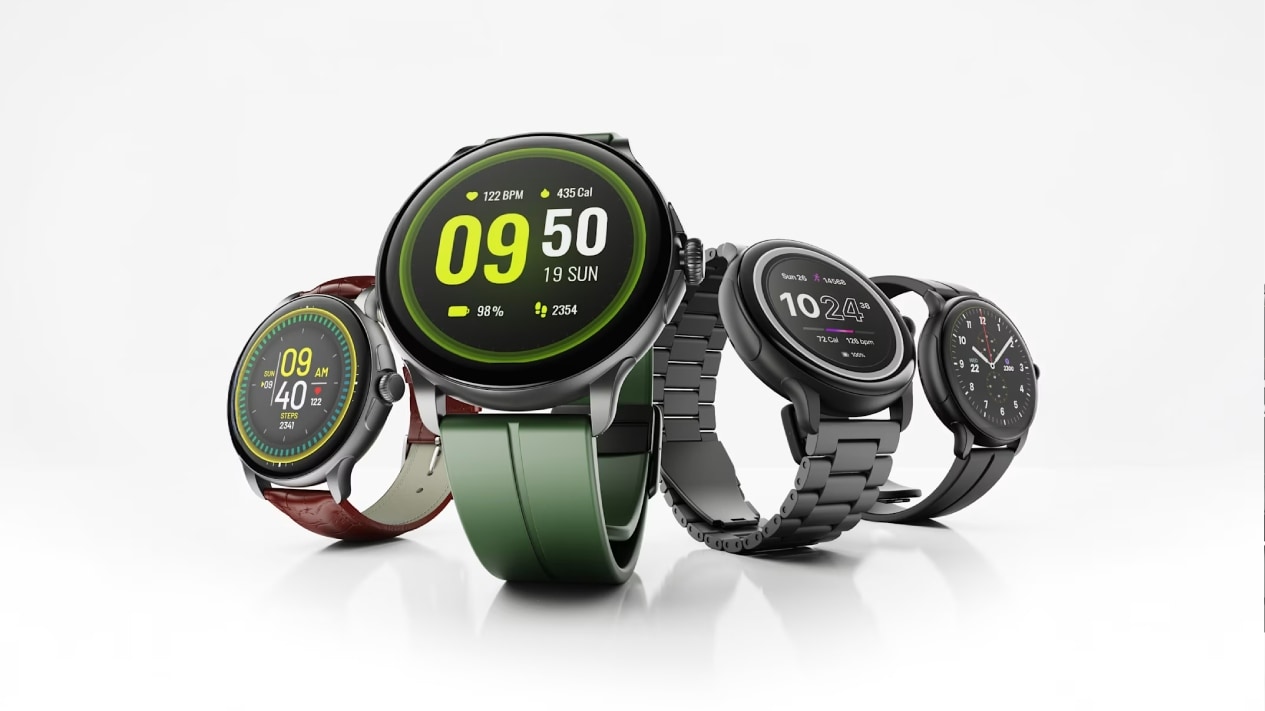
1 week agoMeta will ruin its smart glasses by being Meta
Smart glasses evangelists often tell me this fear is somewhat overblown. After all, the phone in your pocket also has a camera. The government already uses facial recognition tech, and CCTV feeds are everywhere. Anyone who's ever watched a true-crime documentary or an episode of Law & Order knows that these days, it's hard to step out in public and not be recorded.
Wearables


fromGadgets 360
1 week agoAI Impact Summit: Here's a Look at Sarvam's First AI Smart Glasses
Sarvam AI on Monday showcased its first pair of smart glasses at the AI Impact Summit 2026, in New Delhi's Bharat Mandapam. On the first day of the expo, the Indian tech firm announced that it is foraying into manufacturing hardware, starting with Sarvam Kaze, its upcoming pair of AI smart glasses. The AI expo was inaugurated by Prime Minister Narendra Modi on February 16. The event hosts various AI firms, industry leaders, technocrats, and experts from across the world.
Wearables
fromZDNET
1 week agoThese touchscreen gloves handle rain and cold - and fix my biggest issue with winter hikes
On the outside is a wind- and wear-resistant knitted nylon/spandex/lycra layer, and on the inside is a soft, moisture-wicking acrylic/polyester layer. Lastly, a waterproof and breathable Artex membrane is sandwiched between, keeping your hands dry no matter what. I've worn these down to about 23°F in hail and winds hitting 50 miles per hour, and my hands were warm enough.
Wearables
Wearables
fromYanko Design - Modern Industrial Design News
1 week agoSmart Ring With A Built-in Screen Also Doubles As An AI-Assistant Pendant Wearable - Yanko Design
Dribble is a pill-shaped wearable that uses silent speech recognition—lip movement and whisper detection—to enable private, hands-free smartphone-free interactions.


fromYanko Design - Modern Industrial Design News
1 week agoNike Just Turned Air Into Team USA's Smartest Olympic Jacket - Yanko Design
Lotti explained that Nike has been working with air as a cushioning technology in footwear for half a century, but they've barely scratched the surface of what air can do. The interesting twist? From a design perspective, they're working with a medium that's completely invisible. You can't see air, you can't touch it in the traditional sense, yet it's proving to be one of the most versatile materials in their arsenal.
Wearables
Wearables
fromYanko Design - Modern Industrial Design News
2 weeks agoForget Step Counters: Dreame's New Smart Rings Focus On ECG Reports, Sleep, And Real-Time Emotion Data - Yanko Design
Dreame's two-ring strategy includes a clinical-grade Health Ring and an AI Smart Haptic Ring, using sensors to measure spectators' physiological and emotional responses.
Wearables
fromYanko Design - Modern Industrial Design News
2 weeks agoPebblebee Clip 5 Hot Coral and Subzero Trackers Won't Be Restocked - Yanko Design
Pebblebee's Evercolor Clip 5 adds limited Subzero and Hot Coral finishes, pairing collectible style with upgraded hardware, safety Alert, USB-C charge, IP66 water resistance.
fromNature
2 weeks agoSelf-powered vibration sensor for wearable health care and voice detection
When people breathe, speak, sing or clear their throats, their bodies are in constant motion. Air flowing through the lungs, the oscillation of vocal folds in the throat and the rhythmic expansion of the chest all produce tiny vibrations that carry valuable information about physiology and health. However, constructing a device that can capture all of these physiological signals has remained a challenge.
Wearables
fromYanko Design - Modern Industrial Design News
2 weeks agoForget bulky multitools, this titanium Apple Watch bracelet hides 24 EDC tools on your wrist - Yanko Design
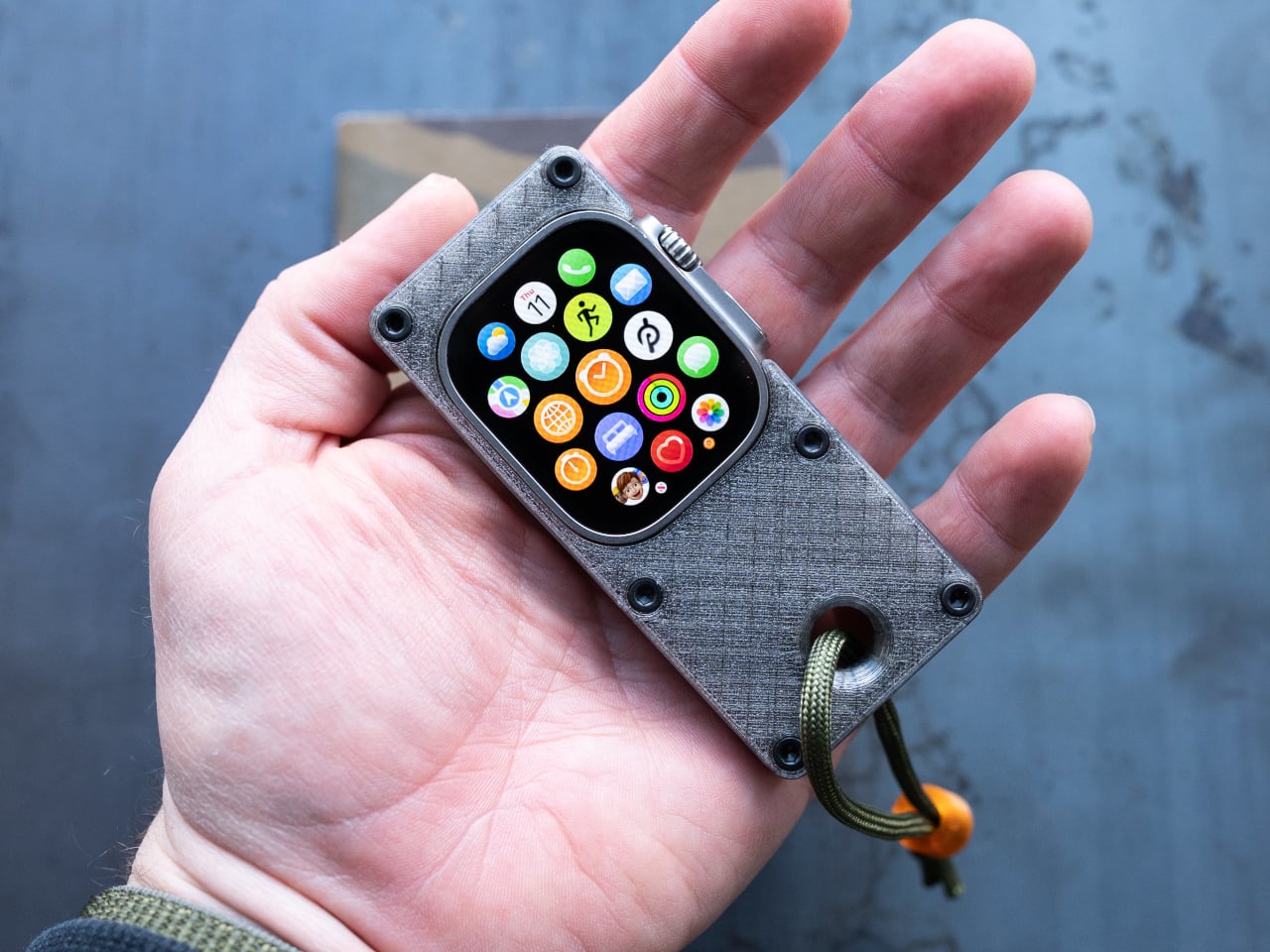
The TiLink is a 24-in-1 titanium bracelet that doubles as a watch strap, creating this interesting yin-yang of capabilities. Compatibility spans across all watches with lug widths between 18-26mm, which means the TiLink can attach to the Apple Watch as well as Garmin, Samsung, Google Pixel, and analog watches. One side tracks your biometrics and messages, the other has screwdrivers, wrenches, a magnifier, and a fire starter machined from aerospace-grade titanium.
Wearables
fromLondon Business News | Londonlovesbusiness.com
2 weeks agoWearable tech sparks a stir at the Australian Open - London Business News | Londonlovesbusiness.com
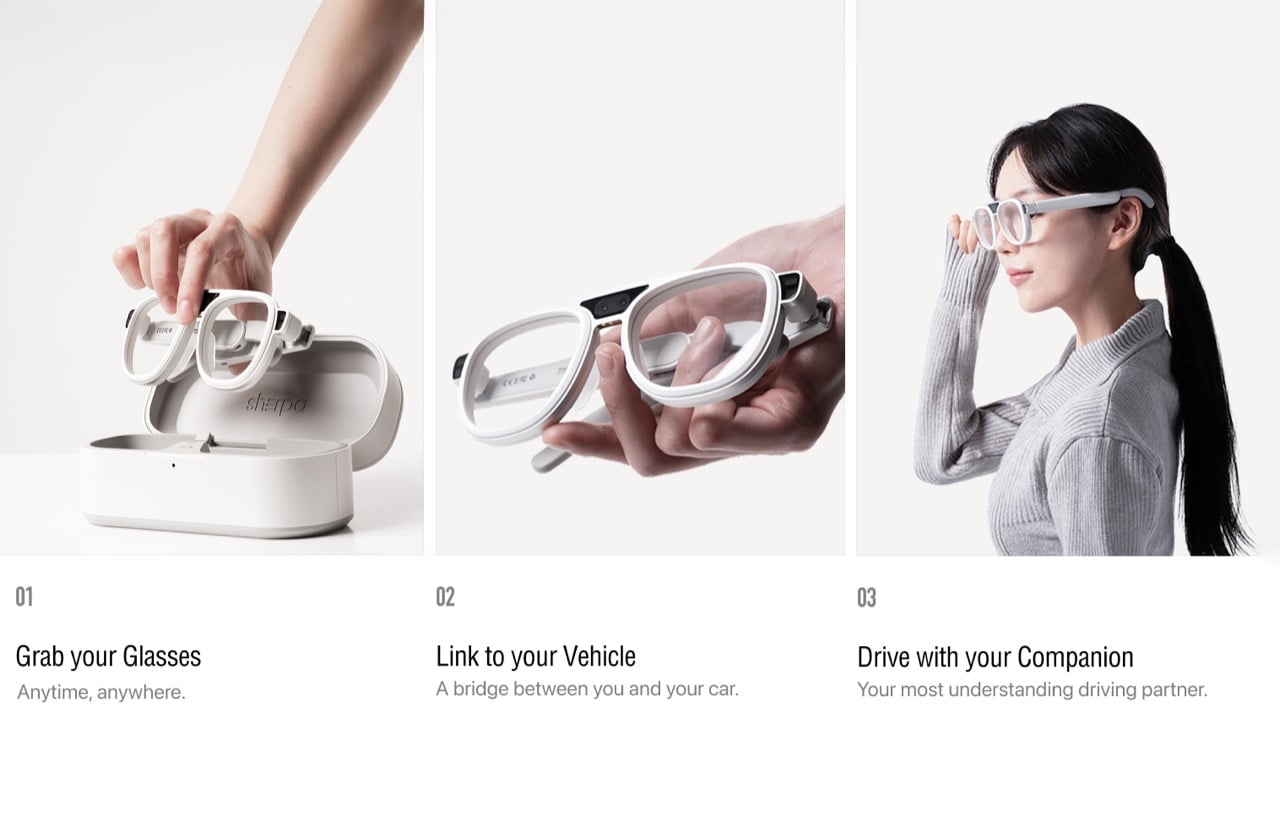
A tennis match usually starts with rituals you can set your watch by. A towel tug, a ball bounce, a glance at the strings. This year, a different ritual stole the first spotlight, because officials asked top players to take off a wrist wearable before they played, and the moment landed like a plot twist you did not order. This piece walks you through what happened, why it happened, and what it says about where tennis sits with athlete data right now.
Wearables
Wearables
fromYanko Design - Modern Industrial Design News
2 weeks agoCasio's Origami-Inspired G-Shock watches blend Japanese craft with everyday toughness - Yanko Design
Casio released two origami-inspired G-Shock models (DW5600RGM-1 and DW6900RGM-5) with washi-like textures, crane motifs, bio-based resin construction, and full G-Shock durability.


fromNature
3 weeks agoWhat my cave stay taught me about sensors
To capture the biological impact of this extreme environment, I used a comprehensive suite of sensors and biomarker analyses. I wore a wireless electroencephalograph (EEG) system to monitor brain activity, sleep stages and neural signatures of stress and adaptation; the Oura Ring to continuously track sleep patterns, heart-rate variability and circadian-rhythm shifts; and the glucose monitor to follow metabolic responses in real time.
Wearables
fromYanko Design - Modern Industrial Design News
4 weeks agoThis $50 Smart Ring Has a Screen (And Works Like A Tiny Smartwatch) - Yanko Design
The smartwatch got smaller. Then the smart ring arrived. Now Rogbid has released something that splits the difference and costs less than a nice dinner: the Fusion, a hybrid device that looks like someone shrunk a fitness tracker and stuck it on a ring band. For fifty dollars, you get a legitimate OLED display, actual health sensors, and the ability to wear your technology on whichever body part feels right that day.
Wearables
fromThe Verge
4 weeks agoI wear lots of technology for a living, ask me anything
It's time for another exclusive AMA for Verge subscribers, and this time, I'll be your host. I cover everything from wearables to dystopian cursed tech like at-home urine labs and belligerent AI companions. At times, my job calls for flirting with Grok's AI girlfriend for 24 hours or coercing weird AI video apps to generate odd French-kissing videos. Other times, I'm making personas of myself in the Vision Pro. I also do normal things, like testing the latest smart glasses, smart rings, and smartwatches.
Wearables
fromInc
4 weeks agoWhoop Got Banned From the Australian Open, Then Turned the Controversy Into a Marketing Grand Slam
the founder and CEO of fitness technology company Whoop has found himself thrust into the center of a global controversy after his startup 's products became the unlikely breakout star of this year's Australian Open. It was not a typical viral moment. It happened after the top tennis players in the world across the women's and men's game, Aryna Sabalenka, Carlos Alcaraz, and Jannick Sinner, were all asked by umpires to remove their Whoop fitness devices from their wrists during the middle of their matches.
Wearables
from24/7 Wall St.
4 weeks agoAfter Disappointing in 2025, These Blue-Chip Dividend Stocks Are Way Too Cheap
Investors love dividend stocks, especially blue-chip varieties, because they offer a significant income stream and substantial total-return potential. Total return includes interest, capital gains, dividends, and distributions realized over time. In other words, the total return on an investment or a portfolio consists of income and stock appreciation. Blue-chip stocks are shares of large, well-established, financially stable companies with a consistent and reliable performance history.
Wearables


fromElite Traveler
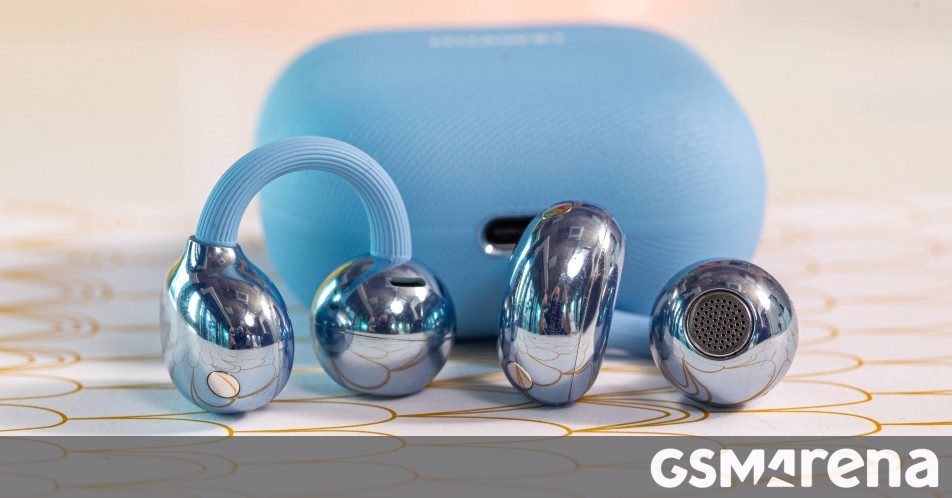
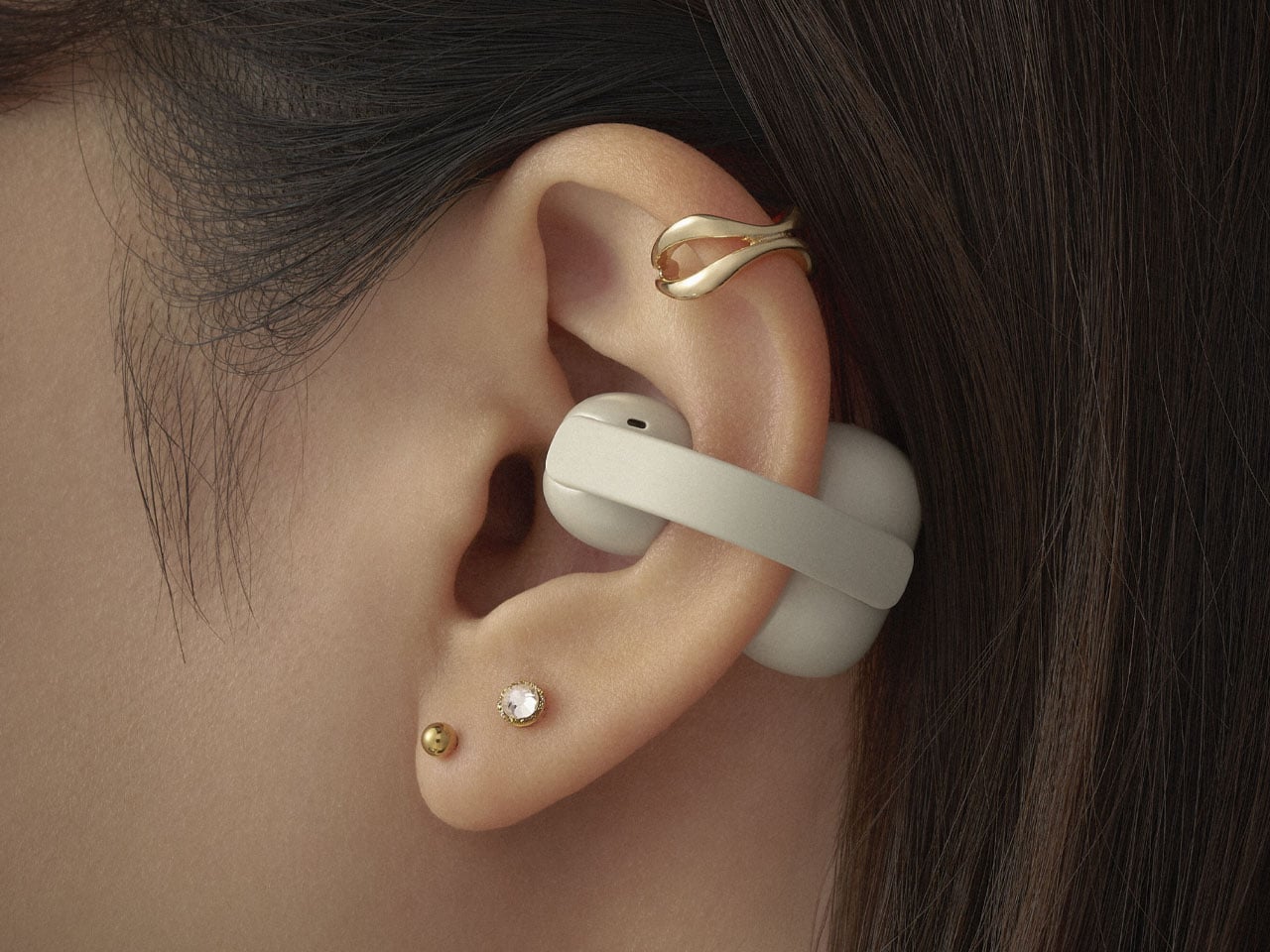
4 weeks agoEar Cuff or AI Tech Accessory? The Evolution of Wearable Audio
For years, innovation in earbuds centered on sound quality, battery life, and noise cancellation, while aesthetics converged on a single in-ear silhouette. Today, designers and brands are challenging that orthodoxy, reimagining earbuds as jewelry-adjacent objects that sit visibly on the ear, more ear cuff than invisible tech. The idea of elevating earbuds into luxury objects is not new. Over the past decade, bespoke jewelers have produced gold-plated AirPods, diamond-encrusted headphones, and one-off couture audio pieces intended as collector's items or status symbols.
Wearables


fromEngadget
4 weeks agoShokz OpenFit Pro review: Reducing distractions while keeping your ears open
I tend to find them underwhelming because overall sound quality is subpar compared to the more "traditional" in-ear models. Any promise of noise reduction, or a far-fetched claim of noise cancellation, usually doesn't hold true. The first time I used the Shokz OpenFit Pro ($249.95) I was immediately met with better audio performance than I'd just experienced on Sony's new LinkBuds Clip and noise reduction technology that actually lessened some distractions.
Wearables
Wearables
fromKotaku
1 month agoGarmin Clears Out Fitness GPS Smartwatch at Its Lowest Price, Vivoactive 5 Now Cheaper Than Apple Watches - Kotaku
Garmin Vivoactive 5 is discounted on Amazon and offers an AMOLED display, extensive health monitoring, over 30 workout apps, and lightweight all-day wearability.
fromZDNET
1 month agoSony just shook up the Bose rivalry with these earbuds, and I wasn't prepared for it
Sony's include removable ear-fitting cushions, addressing common fit and stability issues with clip-on open-ear earbuds. Sony's inclusion of fitting cushions is ideal for people like me who shy away from clip-on earbuds due to poor fit, which often diminishes the listening experience and causes discomfort. Fortunately, these cushions are included with your purchase, similar to the eartip replacements for in-canal earbuds.
Wearables
fromYanko Design - Modern Industrial Design News
1 month agoCambridge Just Designed the Voice Device Every Stroke Survivor Wanted - Yanko Design
A soft wearable choker uses throat vibrations and heart-rate signals with AI to reconstruct and expand speech, restoring fluent, emotionally nuanced conversation for stroke survivors.
fromGadgets 360
1 month agoMoto Watch With Up to 13 Days of Battery Launched in India at This Price
Moto Watch was launched in India on Friday, along with the tech firm's Motorola Signature, at an event in Mumbai. The new smartwatch will be available for purchase in India via the company's online store. The Moto Watch has been launched in India with various health and fitness tracking functionalities, like blood-oxygen monitoring, heart rate tracking, and "advanced" sleep and recovery monitoring. It is equipped with a round dial, which houses a 1.4-inch OLED display.
Wearables
fromZDNET
1 month agoMy Oura Ring told me I was sick. I disregarded it, and then got sick
Last Wednesday morning, I woke up and did what I normally do when I open my eyes. I grabbed my phone and checked my Oura app to see how I slept. This morning, however, Oura's home page looked a bit different. Unlike the sleep and readiness scores I usually see on the home page, a new message appeared on top. While no biomarker deviated strongly from my baseline, Oura's Symptom Radar feature warned me that my biometrics indicated "major signs of strain." It encouraged me to take it easy -- a tall task given that I was headed into the office for the workday.
Wearables
fromEngadget
1 month agoA rival smart glasses company is suing Meta over its Ray-Ban products
Meta is being sued by Solos, a rival smart glasses maker, for infringing on its patents, Bloomberg reports. Solos is seeking "multiple billions of dollars" in damages and an injunction that could prevent Meta from selling its Ray-Ban Meta smart glasses as part of the lawsuit. Solos claims that Meta's Ray-Ban Meta Wayfarer Gen 1 smart glasses violate multiple patents covering "core technologies in the field of smart eyewear."
Wearables
fromKotaku
1 month agoBose Goes on ANC Headphone Clearance, New QuietComfort Ultra Earbuds (2nd Gen) Crash to an All-Time Low - Kotaku
The Bose New QuietComfort Ultra Earbuds feature an Active Noise Control system and an immersive audio system, and they fit well for extended periods. They also include soft ear tips that seal against the ear to eliminate ambient noise, but do not feel too tight. These earbuds feature Bluetooth compatibility for phones, tablets, laptops, and other devices. Additionally, the earbuds have a white smoke finish, have touch controls, and a compact charging case that is small enough to carry in a pocket.
Wearables
fromZDNET
1 month agoThe makers of Meta Ray-Ban Display glasses showed me what's next for AR, and it's wild
The company is building directly on its major success supplying its waveguide technology to glasses, and proving that geometric waveguides work at consumer scale with standard glass. At CES, Lumus showcased a ZOE prototype with a field of view of more than 70 degrees, an optimized Z-30 with 40% more brightness, and a Z-30 2.0 preview that's 40% thinner. David Goldman, VP of marketing, walked me through each demo with clear enthusiasm about the progress Lumus is making.
Wearables
fromYanko Design - Modern Industrial Design News
1 month agoNomad Icy Blue Glow Stratos Band adds glow-in-the-dark twist to Apple Watch Ultra - Yanko Design
The new Stratos Band blends Grade 4 titanium hardware with compression-molded FKM fluoroelastomer for a hybrid design that balances strength and flexibility. The titanium outer links provide a refined look and robust build, while the FKM interior links contour around the wrist for comfort and movement that traditional metal bands rarely offer. This dual-material approach also introduces subtle ventilation spaces, which help with moisture evaporation and breathability during everyday wear or more intense activity.
Wearables
Wearables
fromYanko Design - Modern Industrial Design News
1 month agoAirbags for Cyclists Are Finally Here (And They're Pretty Smart) - Yanko Design
A lightweight, integrated airbag system inflates from bib shorts to protect cyclists' hips, torso, collarbone, and neck during crashes, already tested by WorldTour teams.
fromInsideHook
1 month agoWatchword: The Sector Dial
Take the so-called "sector" or "scientific" dial. Organized into concentric "sectors" that divide the minute, hour and sometimes the subdivided seconds tracks into separate areas, they often (but not always) feature bisecting vertical and horizontal lines that create four equal quadrants. These aesthetically-distinctive dials originated on pocket watches in the early 20th century, carrying over the idea of the "railroad" minute track and merging it somewhat with the curvaceous, decorative geometry of the art deco movement.
Wearables
fromYanko Design - Modern Industrial Design News
1 month ago5 AI Devices That Just Made Smartphones Look Obsolete in 2026 - Yanko Design
The year 2026 marks a historic pivot in personal technology. We are moving past the era of the "AI chatbot" trapped inside a website and entering the age of ambient hardware. While 2025 was defined by software experimentation, 2026 is the year when specialized AI silicon, smart glasses, and wearable pins have matured into indispensable daily companions. These next-gen devices aren't just faster smartphones; they represent a fundamental shift in how we interact with the digital world.
Wearables
Wearables
fromYanko Design - Modern Industrial Design News
1 month agoBird.zzz Turns Sleep Tracking into a Calm Earbud and Bedside Lamp Ritual - Yanko Design
Bird.zzz pairs EEG-enabled sleep earbuds with a sculptural, knock-on lamp cradle to measure sleep and deliver adaptive sound while preserving a cozy bedroom aesthetic.
fromZDNET
1 month agoI replaced my Meta Ray-Bans with smart glasses that truly lasted all day - but there's a catch
First available in October of 2025, Solos is positioning the AirGo A5 as lightweight, comfortable smart glasses with hands-free AI assistance and a long-lasting battery. As a result, the target audience differs from that of the popular Meta Ray-Ban glasses, which are geared more towards content creation, as these are more intended for the AI enthusiast. Yet, they are still an investment, with the cheapest frames costing $249, so I put them to the test to determine if they are worth the price.
Wearables
[ Load more ]