#auto-zoom
#auto-zoom
[ follow ]
#camera-technology #smartphones #mobile-photography #technology #insta360 #ai #samsung #camera-accessories




fromYanko Design - Modern Industrial Design News
4 days ago60Hz Thermal and 4K Night Vision in One Device. SpectraEyes Basically Gives You Superman's Vision - Yanko Design
The core innovation lives in what SpectraEyes calls the Real-Time Dual-Screen Synchronization System. Rather than attempting to merge thermal and night vision into a single confused image, the optics route each feed to its own dedicated 1280×720 LCD screen inside the binocular housing.
Wearables
Artificial intelligence
fromComputerWeekly.com
4 weeks agoZoom expands enterprise agentic AI platform | Computer Weekly
Zoom expanded its agentic AI platform with workflow orchestration capabilities across Zoom Workplace, Phone, and CX to automate tasks and convert conversations into business outcomes across enterprise systems.
Artificial intelligence
fromTechCrunch
1 month agoZoom introduces an AI-powered office suite, says AI avatars for meetings arrive this month | TechCrunch
Zoom launches AI avatars for meetings this month, alongside AI productivity apps, deepfake detection, and an AI agent builder for non-technical users.
Gadgets
fromThe Verge
1 month agoHonor's Robot Phone is a bad robot, an interesting camera, and maybe your friend
Honor's Robot Phone features a 200-megapixel gimbal-mounted camera that unfolds from the back, offering stabilized video, 360-degree rotation for selfies, and AI-powered subject tracking capabilities.
Privacy technologies
fromGadget Flow
1 month agoOSO / PANOCORE 360 review: the privacy-first conference camera built for modern hybrid work
PANOCORE 360 All-In-One Conference Camera restores hybrid meeting presence with panoramic capture, intelligent speaker tracking, consolidated hardware, and strong privacy and governance at an accessible price.
fromThe Drum
2 months agoA break from reality: Is VR really going to be the next big thing?
According to Digi Capital augmented and virtual reality are about to explode as VCs and corporates get in on the act. Facebook's multi-billion dollar acquisition of Oculus got everyone's attention early last year, but it's only really in the last 12 months that investments have accelerated, with more than $1bn pouring into the sector. Meanwhile Mashable reports Nokia's virtual reality camera is now available for pre-order for a cool $60,000.
Wearables
fromTechCrunch
1 month agoA new app alerts you if someone nearby is wearing smart glasses | TechCrunch
Nearby Glasses is an Android app that detects Bluetooth signals from smart glasses and alerts users when recording devices are nearby, addressing privacy concerns about non-consensual surveillance.
Gadgets
fromYanko Design - Modern Industrial Design News
1 month agoEZCast Just Turned Every Phone Into a Professional Camera Monitor - Yanko Design
EZCast's CamCast CT-1 is a compact wireless HDMI transmitter that streams 1080p 60fps video to up to four iOS or Android devices simultaneously over 5GHz Wi-Fi, bridging the gap between basic camera monitoring and expensive professional systems.
fromThe Verge
2 months agoThe telephoto is the only phone camera that really matters
Samsung's Galaxy S20 Ultra wasn't the first phone to feature a periscopic telephoto lens - both Huawei and Oppo beat the Korean company to it - but it was the first in the US to make such a big deal about it. Almost all of Samsung's marketing for the S20 Ultra centered on its so-called Space Zoom, its 5x optical folded periscope lens, capable of digitally zooming much further.
Gadgets
fromGSMArena.com
1 month agoXiaomi 17 Ultra Photography Kit and Photography Kit Pro hands-on
Xiaomi's Photography Kit Pro for the Xiaomi 17 Ultra represents this evolution by adding manual control features and filter compatibility. The kit includes a magnetic case with detachable filter threads, a photography grip with USB-C connectivity supporting 90W HyperCharge, and customizable controls including a two-stage shutter, zoom lever, video button, and adjustable dial.
Mobile UX
fromGadget Flow
2 months agoCES 2026: These AI webcams aim squarely at remote pros
As a remote professional, I can tell you firsthand: a good webcam matters. A lot. You don't want to look-or sound-grainy when you're talking to management, clients, or collaborators. And you definitely don't want to constantly crane your neck or shift in your chair just to stay in frame. So when I saw Insta360 unveil its latest webcam lineup at CES 2026, I was genuinely interested-especially because these models were clearly designed with remote workers in mind, not just casual video calls.
Gadgets
fromGSMArena.com
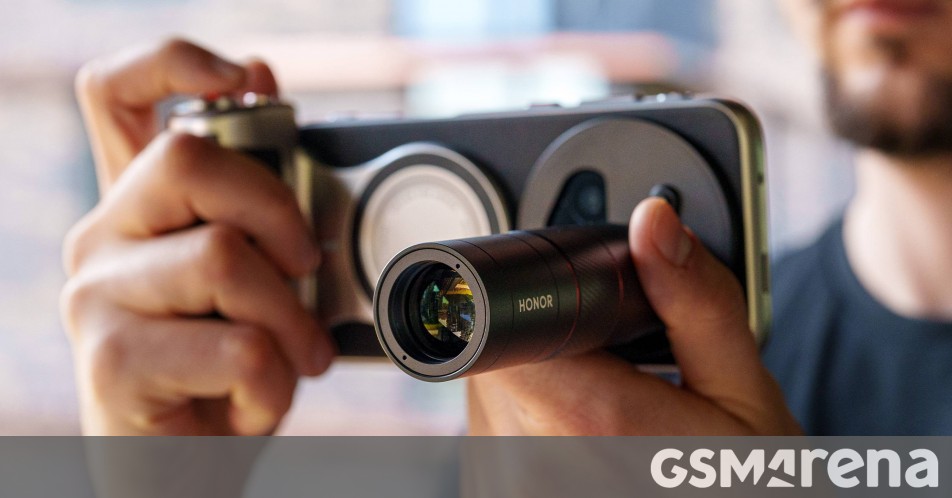
2 months agoWhy Camera Hardware Is Back at the Centre of Smartphone Photography
In recent years, smartphone photography has become increasingly dominated by software. Computational imaging, AI processing, and post-capture optimisation now play a central role in how images are produced. Yet as these techniques become more widespread, camera hardware is once again emerging as a key differentiator. The REDMI Note 15 Pro 5G Series reflects this shift clearly, placing renewed emphasis on sensor capability and optical fundamentals rather than relying solely on software to define image quality.
Gadgets
fromGadgets 360
13 years agoSamsung Galaxy Camera vs Nikon Coolpix S800C
For millions of people, the ability to share a fresh photo wirelessly - Facebook, Twitter, e-mail, text message - is so tempting, they're willing to sacrifice a lot of real-camera goodness. That's an awfully big convenience/photo-quality swap. A real camera teems with compelling features that most phones lack: optical zoom, big sensor, image stabilization, removable memory cards, removable batteries and decent ergonomics. (A four-inch, featureless glass slab is not exactly optimally shaped for a hand-held photographic instrument.)
Gadgets
[ Load more ]