#exp
#exp
[ follow ]

fromArchDaily
5 days agoMapping the Technosphere: Architecture as an Interface Between Systems and Territories
Architecture can no longer be conceived as an isolated object, detached from the technical networks that sustain contemporary life. This condition calls for new readings and approaches.
Design
Wearables
fromYanko Design - Modern Industrial Design News
6 days ago5 Best Camping Gadgets So Smartly Designed in 2026 They're Making Your Old Gear Look Embarrassing - Yanko Design
Camping gear often fails quietly when needed most, but innovative designs in 2026 address critical functionality and emergency preparedness.
Photography
fromYanko Design - Modern Industrial Design News
1 week agoThis minimal AI camera blends into the wild while quietly tracking wildlife - Yanko Design
A minimal AI camera concept enhances wildlife observation by integrating intelligence into the environment, reducing human interference and improving monitoring accuracy.
fromwww.theguardian.com
4 weeks agoScrambling, walking and swimming in splendid isolation: 75 years of the UK's national parks
The early morning sun is bursting around the dark corners of High Dodd and Sleet Fell, sending a flush of light across the golden bracken and on to the hammered silver of the lake.
London
Arts
fromThe Art Newspaper - International art news and events
1 month agoNew book shows why physical maps have an important role to play in our digital world
A cartography professor discovered 96 historically significant maps in a forgotten university archive, revealing cartography's vital role in preserving sociopolitical memory and demonstrating maps' importance beyond navigation.
fromwww.businessinsider.com
1 week agoI've been to all 63 major US national parks. These 9 feel like stepping onto another planet.
Bryce Canyon National Park is home to the world's largest concentration of hoodoos, making hiking here feel like you're on another planet. I recommend hiking around the rim to take in the vastness of the spires.
Travel
fromwww.kaltblut-magazine.com
2 months agoTerrain
The body is a shifting landscape transformed by surfaces and sensations. Each look captures a different tactile world: the heat of blood, the cool weight of metal, the yielding drift of water. The result is a sculptural study of how the elements carve, shield, and release the self. The materials we embody become the emotions we carry, and the body becomes a materialised exhibition of our emotions, from the pulse of Blood to the discipline of Metal to the surrender of Water.
Fashion & style
fromwww.theguardian.com
1 month agoExperience: I've been on more than 2,000 hot-air balloon flights in 124 countries
I can still remember my first flight, in 2002. It was magical. I was working as a tour guide in Myanmar. I met a British balloon pilot called Phil, who had a spare place on a flight. He offered to take me, too.
Travel
Miscellaneous
fromEntrepreneur
1 month agoFrom Andean Villages to Antarctica - What Living a Life Built on Adventure Can Teach You About Leadership
Collette's CEO Jaclyn Leibl-Cote built leadership credibility through hands-on experience across all departments, prioritizing people-first leadership and community impact through the Collette Foundation.
#solo-travel


:max_bytes(150000):strip_icc()/TAL-kyoto-japan-SOLOTRAVDEST0326-bfc4f7f7c0da432cbc7f0bc0b8e3f7c3.jpg)
fromIndependent
2 months agoTravel
'After health and personal setbacks, I left my dream job for a five-month solo backpacking trip'
Solo female traveller abandons journalism career for a bucket-list Colombian adventure, confronting safety fears, language barriers, and embracing local cultures while learning Spanish.
fromBusiness Insider
1 month agoTravel
I spent a year backpacking around the world by myself. Struggling with loneliness taught me lessons I didn't expect.
Traveling solo to escape personal problems reveals that external changes cannot resolve internal emotional wounds without genuine connection and support.

fromNature
2 months agoWhat my cave stay taught me about sensors
To capture the biological impact of this extreme environment, I used a comprehensive suite of sensors and biomarker analyses. I wore a wireless electroencephalograph (EEG) system to monitor brain activity, sleep stages and neural signatures of stress and adaptation; the Oura Ring to continuously track sleep patterns, heart-rate variability and circadian-rhythm shifts; and the glucose monitor to follow metabolic responses in real time.
Wearables
Travel
fromInsideHook
1 month agoThe "Mystic Outlands" Travel Trend Is About More Than Moody Landscapes
Pinterest's 'Mystic Outlands' trend predicts 2026 travel will focus on whimsical, mystical destinations featuring dramatic landscapes, ancient ruins, and enchanting forests, though the appeal of such places has endured for centuries.
Travel
fromConde Nast Traveler
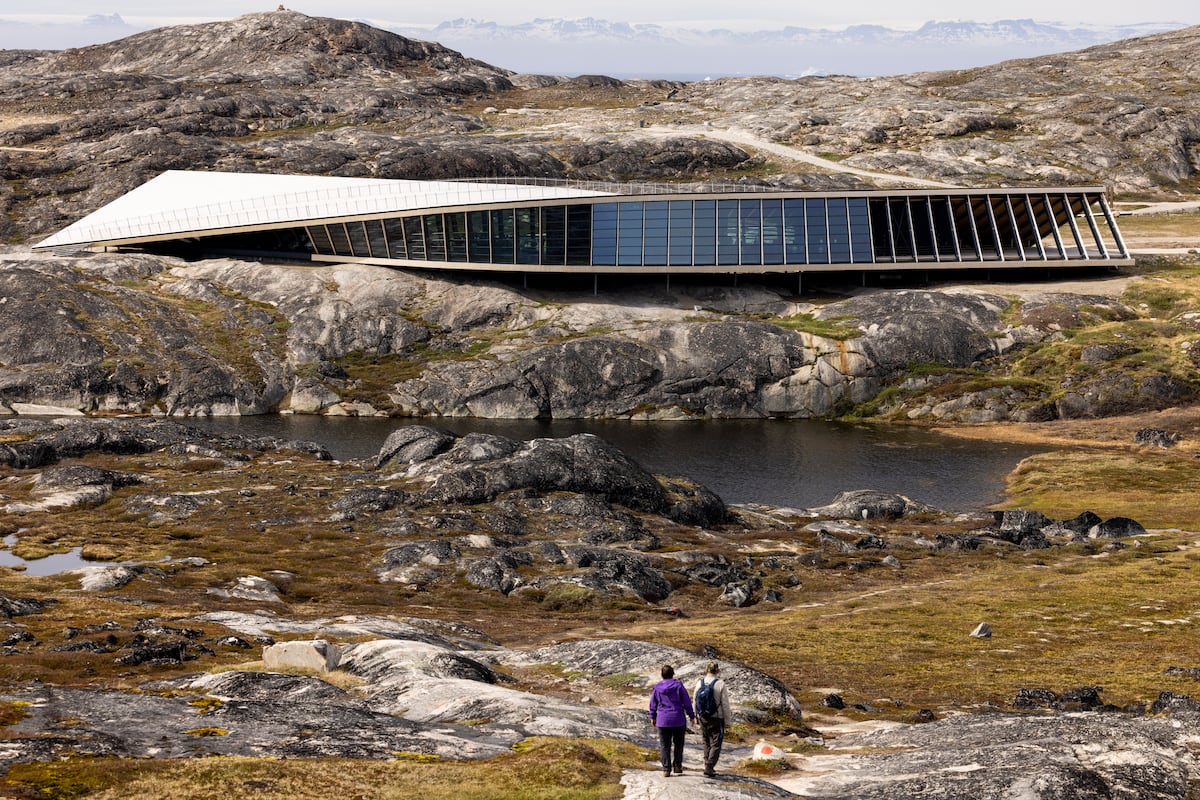
1 month agoIn Greenland's Remote Fjords and Tiny Settlements, a New Sense of Connection
Greenland's new airport and developing tourism infrastructure make Arctic exploration increasingly accessible, offering unique cultural experiences with Indigenous and settler communities unavailable in Antarctica.
fromTravel + Leisure
2 months agoI've Chased Night Skies Around the World-and This Is My No. 1 Astrotourism Tip
After years of traveling the globe in search of the darkest skies still possible in an increasingly bright world, I've learned something that surprises a lot of people: truly experiencing the night isn't just about where you go-it's about when you go. If I had to share just one astrotourism tip with travelers, it would be this: plan your trip around the new moon. It sounds almost too simple, but the difference it makes is dramatic. When the moon is absent from the night sky, darkness returns in a way that feels almost ancient. Stars multiply. Constellations become easier to trace. And in truly dark places, the Milky Way often reveals itself as a glowing, dusty band stretching from horizon to horizon.
fromNature
2 months agoFloating science stations: my month on a research vessel looking after buoys
In this photo, I'm preparing drifting buoys for deployment. This was my main responsibility aboard the RV Falkor (too), during a 27-day research expedition in October 2025 exploring the Malvinas Current, an ocean current that runs alongside Argentina. The expedition included biologists, geologists and physical oceanographers such as myself; I'm a PhD candidate at the Sea and Atmosphere Research Center (CIMA) in Buenos Aires, Argentina.
Science

:max_bytes(150000):strip_icc()/TAL-lead-image-TRAVELJOBS0126-b1bb179bbcc346fda60f821071057808.jpg)
fromTravel + Leisure
2 months agoThese 8 Scenic Hikes Around the World Are Worth Planning a Trip For, According to AllTrails
AllTrails, a hiking app with trail maps and reviews, dug into insights from their 90 million-plus members and team of trail experts to spotlight lesser-known places where the trail alone is worth planning a trip around. Their guide, Travel-Worthy Trails for 2026, spotlights eight unexpected destinations around the world where the trail is the destination.
Travel
fromConde Nast Traveler
2 months ago26 Reasons Our Editors Are Excited to Travel in 2026
We're spoiled for choice when it comes to reasons to travel in 2026. Whether you plan to take a trip inspired by a favored period drama; want the best views of the solar eclipse on August 12; or hope to be the first to embark on a luxury train journey across Saudi Arabia, here are 26 things to be excited about as you plan this year's travels.
Travel
[ Load more ]