#gene-editing-crispr

[ follow ]
#gene-editing
#ai
Medicine
fromFast Company
1 day ago

AI is coming for superbugs

AI can significantly enhance antibiotic discovery, addressing the urgent global health crisis of antibiotic resistance.
#aging
OMG science
fromNature
1 day ago

This method to reverse cellular ageing is about to be tested in humans

Yuancheng Ryan Lu's research on reprogramming retinal nerve cells could lead to restoring eyesight and rejuvenating organs.
OMG science
fromNature
1 day ago

This method to reverse cellular ageing is about to be tested in humans

Yuancheng Ryan Lu's research on reprogramming retinal nerve cells could lead to restoring eyesight and rejuvenating organs.
#genetics
Health
fromThe Washington Post
2 days ago

One way to live longer: Win the genetic lottery

Genetic factors account for about 50% of human lifespan, significantly higher than the previously estimated 20%.
Health
fromThe Washington Post
2 days ago

One way to live longer: Win the genetic lottery

Genetic factors account for about 50% of human lifespan, significantly higher than the previously estimated 20%.
Cannabis
fromFuturism
2 days ago

Scientists Gene Hacked a Plant So It Grows Five Types of Psychoactive Drugs at Once

Genetically engineered tobacco plants can produce five different psychedelics, potentially enabling sustainable production for therapeutic use.
Data science
fromMedium
5 days ago

In-Silico Perturbation Meets Single-Cell Foundation Models: From Zero-Shot Potential to Fine-Tuned...

In-silico perturbation simulates cellular state changes, but biological trustworthiness remains a challenge despite advancements in single-cell foundation models.
#cloning
fromFuturism
1 week ago
Science

A Startup Has Been Quietly Pitching Cloned Human Bodies to Transfer Your Brain Into

fromFuturism
1 week ago
OMG science

Scientists Cloned a Mouse, Then Cloned the Clone, Et Cetera. The Results Were Horrific

Science
fromFuturism
1 week ago

A Startup Has Been Quietly Pitching Cloned Human Bodies to Transfer Your Brain Into

Cloning efforts have evolved from animals to controversial human embryo models, with ambitions for brainless human clones for organ transplants.
OMG science
fromFuturism
1 week ago

Scientists Cloned a Mouse, Then Cloned the Clone, Et Cetera. The Results Were Horrific

Cloning mice for 58 generations led to immediate death of offspring, revealing limits to mammalian cloning.
OMG science
fromNature
2 weeks ago

Can a mouse be cloned indefinitely? Decades-long experiment has answers

Asexual reproduction in mice is unsustainable due to accumulating mutations, limiting the potential for successful cloning.
Silicon Valley
fromSilicon Canals
1 week ago

Silicon Valley startup backed by Tim Draper pitches growing brainless human clones for organ harvesting and brain transplants - Silicon Canals

A Silicon Valley startup is developing brainless cloned human bodies for organ sourcing and potential brain transplants.
#crispr
#genomics
fromNature
1 week ago
Science

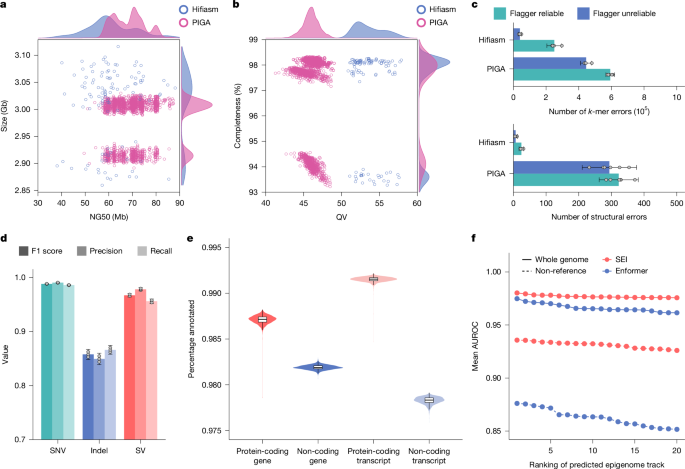
The 1000 Chinese Pangenome empowers medical and population genetics - Nature

fromNature
1 week ago
Science

The 1000 Chinese Pangenome empowers medical and population genetics - Nature

fromNature
3 weeks ago

In vivo site-specific engineering to reprogram T cells - Nature

Using CRISPR-Cas9 and adeno-associated virus (AAV)-mediated homology-directed repair, we targeted CAR integration into the endogenous human TCR alpha locus (TRAC). TRAC-CAR T cells display dynamic CAR expression that delays exhaustion and improves tumour control in xenograft and immunocompetent models. This work has been critical for the development of allogeneic CAR T cell therapy, as it disrupts the TCR after transgene insertion—a necessary step to limit graft-versus-host disease.
Cancer
Artificial intelligence
fromFortune
2 weeks ago

Could data from 100 million species help cure disease? One startup is betting on it | Fortune

Basecamp Research launches the Trillion Gene Atlas to map genetic diversity across 100 million species, aiming to expand biological knowledge 100-fold through AI-powered genomic data collection.
Science
fromNature
2 weeks ago

Zombieland: Genome transplant brings 'dead' bacteria back to life

Researchers have revived 'dead' bacterial cells by replacing their DNA with a working genome from another species, advancing genome engineering.
Medicine
fromwww.bbc.com
2 weeks ago

Lab-grown food pipe offers new hope for young patients

Scientists have successfully grown and transplanted fully functioning food pipes in mini pigs, offering hope for patients with oesophageal conditions.
Science
fromNature
3 weeks ago

Synthetic circuits for cell ratio control - Nature

Synthetic biology enables artificial cell differentiation and division of labor by engineering genetic and epigenetic circuits that mimic natural stem cell asymmetric division processes.
Medicine
fromThe Atlantic
3 weeks ago

Everyone Is a Biohacker Now

Vyleesi, a prescription female libido drug, is being purchased off-label by men through online retailers exploiting 'research use only' disclaimers to circumvent prescription requirements.
Science
fromFuturism
2 weeks ago

Scientists Bring Mouse Brains Back to Life After "Cryosleep" Deep Freeze

Researchers are advancing towards cryosleep by restoring activity in mouse brains using vitrification, potentially aiding organ preservation and brain injury recovery.
fromwww.theguardian.com
3 weeks ago

A petri dish of human brain cells is currently playing Doom. Should we be worried?

Cortical Labs in Melbourne taught a dish of lab-grown neurons to play Pong in 2022. Now it has built what it describes as the world's first code-deployable biological computer, running on living human tissue rather than silicon chips, which is happily playing the 1993 shooter Doom. At first it didn't know how to move, aim or shoot. Then it would shoot two enemies and stop. So it's definitely learning.
OMG science
Venture
from24/7 Wall St.
1 month ago

Forget AI. This Biotech Stock's Taking Off Right Now

AI stocks face correction risk due to rising capital expenditures without proportional profits, making biotech an undervalued alternative for AI-driven growth exposure.
Left-wing politics
fromTruthout
1 month ago

Reproductive Tech That Promises Smart Babies Is Peddling Soft Eugenics

Reproductive tech companies now offer embryo genetic screening for intelligence and disease, raising concerns about eugenics, disability discrimination, and wealth-based genetic enhancement.
Silicon Valley
fromKqed
1 month ago

How South San Francisco Became the Birthplace of Biotechnology | KQED

South San Francisco transformed from an industrial meatpacking and steel manufacturing hub into the world's biotechnology capital, hosting over 250 biotech companies including Genentech.
#de-extinction
OMG science
fromwww.theguardian.com
3 weeks ago

Can scientists really resurrect the dodo? Inside the company that says they can

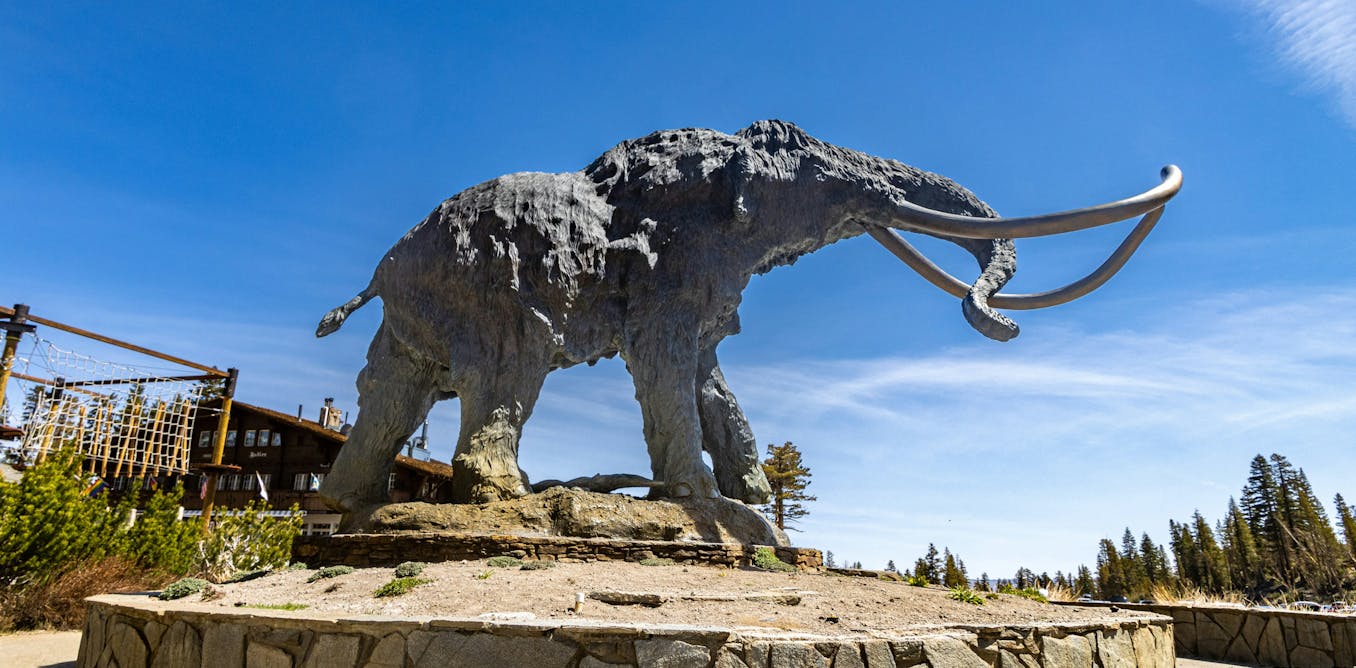
Colossal Biosciences is using ancient DNA and gene editing to resurrect extinct species including dire wolves, woolly mammoths, and dodos, raising questions about the ethics and feasibility of de-extinction technology.
OMG science
fromwww.npr.org
1 month ago

Colossal Biosciences breeds controversy while trying to revive mammoths

Colossal Biosciences uses gene-editing, cloning, and AI technologies to resurrect extinct species like woolly mammoths while developing tools to save endangered animals, though critics question the ethics and feasibility of de-extinction.
fromwww.theguardian.com
1 month ago

I clicked on a button and everything changed': how a DNA test turned my life upside-down

It was another detail that the rest of the family apparently knew but had never told me; they thought I already knew. The biology mattered less to me than the secret. Dad had been adopted, it turned out. A classic affliction of the 1950s, in which young, unmarried couples were forced to give away their newborn babies.
Books
Science
fromScienceDaily
3 weeks ago

A lab mistake at Cambridge reveals a powerful new way to modify drug molecules

Cambridge researchers developed an LED-powered photochemical technique that enables late-stage modification of complex drug molecules without toxic chemicals or metal catalysts, accelerating drug development.
Cancer
fromFuturism
1 month ago

Bacteria Engineered to Eat Tumors From the Inside

Researchers engineered Clostridium sporogenes bacteria to consume tumor cells from inside, offering a potential alternative to traditional cancer treatments.
Science
fromMail Online
3 weeks ago

Frozen brains REAWAKEN in astonishing medical breakthrough

German researchers successfully restored functional activity in frozen brain tissue using vitrification, a technique that prevents ice crystal formation by rapidly cooling tissue to a glass-like state.
Science
fromNature
4 weeks ago

From cancer to Alzheimer's: could a renewed focus on energy transform biomedicine?

Energy flow, governed by universal physics principles, provides a more fundamental understanding of biological processes and disease than molecular mechanisms alone.
OMG science
fromNature
1 month ago

Why 'quantum proteins' could be the next big thing in biology

Fluorescent proteins from crystal jellyfish are being transformed into quantum bits to create highly sensitive quantum sensors for biological applications.
fromwww.nature.com
1 month ago

Genetically encoded assembly recorder temporally resolves cellular history

GEMINI leverages a computationally designed protein assembly as an intracellular memory device to record the history of individual cells. GEMINI grows predictably within live cells, capturing cellular events as tree-ring-like fluorescent patterns for imaging-based retrospective readout. Absolute chronological information of activity histories is attainable with hour-level accuracy.
Medicine
fromenglish.elpais.com
1 month ago

The very long road from a cancer cure' in mice to one in humans

Promising mouse cancer cures often fail to become safe, effective human drugs; premature media claims can create false patient expectations and hinder responsible research progress.
Philosophy
fromAeon
2 months ago

Groundbreaking visuals capture how our bodies repair damaged DNA | Aeon Videos

Drew Berry creates striking biomedical animations that visualize microscopic biological processes like DNA repair, revealing intricate evolution-shaped cellular mechanisms.
Science
fromArs Technica
1 month ago

Large genome model: Open source AI trained on trillions of bases

Evo 2, an AI system trained on trillions of base pairs from all life domains, can identify genes, regulatory sequences, and splice sites in complex genomes including humans.
Silicon Valley
fromFuturism
1 month ago

It Seems Bad That Temu Is Selling Peptides

Cheap, poorly characterized peptides are being sold on mainstream ecommerce like Temu, bringing unregulated biohacking substances into mass consumer markets and raising safety risks.
Philosophy
fromApaonline
2 months ago

The Moral Life of Organs in an Age of Technological Innovation

Transplant technology is rapidly expanding organ viability through advanced perfusion, preservation, and logistics while implementation outpaces oversight and public input.
fromNews Center
1 month ago

AI Model May Improve RNA Sequencing Research - News Center

Scientists in the laboratory of Rendong Yang, PhD, associate professor of Urology, have developed a new large language model that can interpret transcriptomic data in cancer cell lines more accurately than conventional approaches, as detailed in a recent study published in Nature Communications. Long-read RNA sequencing technologies have transformed transcriptomics research by detecting complex RNA splicing and gene fusion events that have often been missed by conventional short-read RNA-sequencing methods.
Cancer
fromNature
1 month ago

AI tools can design genomes. Will they upend how life evolves?

Biology is undergoing a transformation. After centuries of studying life as it evolves naturally, researchers are now using a combination of computation and genome engineering to intervene, generating new proteins and even whole bacteria from scratch. The use of artificial-intelligence tools to design biological components, an approach known as generative biology, is set to turbocharge this area of research. Just last year, scientists used AI-assisted design to produce artificial genes that can be expressed in mammalian cells.
Science
Agriculture
fromwww.theguardian.com
2 months ago

Genetically modified purple tomatoes get green light to be sold in Australia

Purple Bliss tomatoes engineered to produce anthocyanin pigments were approved for sale and cultivation in Australia, with regulators finding negligible health and environmental risk.
Philosophy
fromPsychology Today
2 months ago

Is Transhumanism the Future or Our Downfall?

Transhumanism uses emerging technologies to augment human capacities, offering longevity and enhanced abilities while raising profound ethical, control, and societal risk questions.
Medicine
fromThe Atlantic
1 month ago

Their Mutated Genes Were Supposed to Be Harmless

People who carry single-gene mutations for disorders like thalassemia can experience real health effects, including lethargy and fainting, despite being labeled asymptomatic.
fromNature
1 month ago

The age of animal experiments is waning. Where will science go next?

Last November, the UK government announced a bold plan to phase out animal testing in some areas of research. Animal tests for skin irritation are scheduled for elimination this year, and some studies on dogs should be slashed by 2030. The long-term vision is 'a world where the use of animals in science is eliminated in all but exceptional circumstances'.
Science
fromArs Technica
1 month ago

Have we leapt into commercial genetic testing without understanding it?

Martschenko's argument is largely that genetic research and data have almost always been used thus far as a justification to further entrench extant social inequalities. But we know the solutions to many of the injustices in our world-trying to lift people out of poverty, for example-and we certainly don't need more genetic research to implement them. Trejo's point is largely that more information is generally better than less.
Science
Medicine
fromNature
1 month ago

China's biotech boom: why the nation must collaborate to stay ahead

China leads in drug manufacturing and biotech innovation, but geopolitical scrutiny and moves toward a closed biotech ecosystem threaten scientific collaboration and global medicine access.
OMG science
fromNature
2 months ago

Regulatory grammar in human promoters uncovered by MPRA-based deep learning - Nature

Massively parallel reporter assays provide cell-type-specific causal training data enabling more direct inference of DNA sequence effects on promoter activity than epigenomic maps.
#alphagenome
Science
fromNature
2 months ago

Construction of complex and diverse DNA sequences using DNA three-way junctions - Nature

DNA writing remains limited by short oligo synthesis and two-way junction assembly methods, hindering affordable, scalable construction of large, complex synthetic DNA.
Medicine
fromIntelligencer
2 months ago

Did AI Alter the Course of This Baby's Life?

A newborn, Jorie, was diagnosed with DeSanto-Shinawi syndrome, a rare, incurable genetic disorder causing neurodevelopmental and physical challenges, with limited treatment options.
Science
fromWIRED
2 months ago

He Went to Prison for Gene-Editing Babies. Now He's Planning to Do It Again

He Jiankui created the first gene-edited babies, was jailed and banned, and now seeks to resume controversial genetic research despite widespread germline-editing prohibitions.
Medicine
fromDefector
1 month ago

Chromosome Testing Will Take Sports Back To The Dark Ages | Defector

Sports organizations have reinstated DNA/chromosome testing to exclude trans and intersex women, framing it as noninvasive and necessary to protect female competition.
Science
fromNature
2 months ago

RNA-triggered Cas12a3 cleaves tRNA tails to execute bacterial immunity - Nature

Some immune systems inactivate tRNAs to impair viral protein synthesis, and certain Cas nucleases, like LshCas13a, can cleave tRNA anticodon loops.
Medicine
fromLGBTQ Nation
2 months ago

These 4 promising breakthroughs are bringing HIV researchers closer to a cure - LGBTQ Nation

Significant scientific advances have produced promising combination therapies and experimental approaches that have eliminated HIV in rare cases but no widely scalable cure exists yet.
Science
fromwww.nature.com
2 months ago

Scalable and multiplexed recorders of gene regulation dynamics across weeks

CytoTape enables multiplexed, genetically encoded, spatiotemporally scalable recording of gene regulation dynamics in single cells for up to three weeks with minute-scale resolution.
Science
fromwww.scientificamerican.com
2 months ago

Google DeepMind unleashes new AI to investigate DNA's dark matter'

AlphaGenome predicts functional effects of mutations in long noncoding DNA sequences up to one million base pairs, helping interpret genomic variants for disease research.
Science
fromMail Online
2 months ago

Scientists use AI to create a virus never seen before

Scientists used AI and gene-assembly tools to create Evo-Φ2147, a novel 11-gene virus designed to kill pathogenic E. coli.
Science
fromwww.theguardian.com
2 months ago

On the Future of Species by Adrian Woolfson review are we on the verge of creating synthetic life?

Humans are on the verge of creating synthetic species that will coexist with natural life, offering major benefits while posing significant ecological and ethical risks.
Science
fromNature
2 months ago

An expanded registry of candidate cis-regulatory elements - Nature

The cCRE registry expanded to 2.37 million human and 967,000 mouse elements and integrates functional characterization for over 97% of human cCREs.
Science
fromNature
2 months ago

Developmental convergence and divergence in human stem cell models of autism - Nature

Distinct rare mutations and common genetic variation jointly shape ASD risk, yet convergent molecular pathology and early fetal neurodevelopmental mechanisms can be studied using stem-cell models.
fromFuturism
1 month ago

Jeffrey Epstein Had a Bizarre Obsession With "Improving" Human DNA, and He Was Emailing With Top Scientists About It

The newly released documents from the Justice Department shine additional light on how the convicted child sex criminal exhibited a fascination with transhumanism, a controversial movement in science and philosophy with a eugenicist mission: using cutting edge technology, including genetic engineering and AI, to advance the biology of the human race. They also reinforce how serious Epstein was about pursuing these ideas.
Science
fromFortune
2 months ago

AI drug startup Insilico Medicine launches an AI 'gym' to help models like GPT and Qwen be good at science | Fortune

Generalist models "fail miserably" at the benchmarks used to measure how AI performs scientific tasks, Alex Zhavoronkov, Insilico's founder and CEO, told Fortune. " You test it five times at the same task, and you can see that it's so far from state of the art...It's basically worse than random. It's complete garbage." Far better are specialist AI models that are trained directly on chemistry or biology data.
Science
Science
fromNature
2 months ago

Now is not the time to defund human fetal tissue research

Restricting federal funding for human fetal tissue research will impede development of replacement technologies and slow discovery of new medicines.
[ Load more ]