#lng-market-disruption
#lng-market-disruption
[ follow ]
#oil-prices #energy-crisis #strait-of-hormuz #iran #middle-east-conflict #iran-war #geopolitical-tensions


.jpeg?width=1200&height=800&crop=1200:800)
#china
Europe politics
fromTNW | China
17 hours agoBeijing warns EU after 27 Chinese firms included in 20th Russia sanctions package, retaliates against European defence companies
China condemned the EU's sanctions and retaliated by placing seven EU defense firms on its export control list, framing it as a Taiwan issue.
Russo-Ukrainian War
fromLondon Business News | Londonlovesbusiness.com
19 hours agoMultiple explosions erupt at one of Russia's largest oil refineries in a long-range attack - London Business News | Londonlovesbusiness.com
Ukrainian drones targeted major Russian oil and chemical facilities to disrupt Moscow's war economy.
Europe news
fromFortune
2 days agoFuel shortages from the Iran war have spread to Europe, but the pain is hitting California and the West Coast as well-and help is years away | Fortune
California faces severe fuel shortages due to refinery closures and global supply issues, impacting the economy and air travel this summer.

#iran



World news
fromLondon Business News | Londonlovesbusiness.com
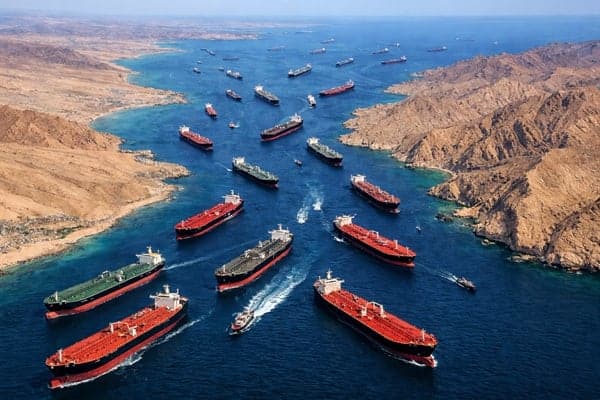
6 days agoIran's Hormuz squeeze drives UK towards stagflation, food shortages, higher CO - London Business News | Londonlovesbusiness.com
Iran's actions in the Strait of Hormuz have caused significant economic disruptions in the UK, leading to food shortages and increased energy prices.
#russia
Russo-Ukrainian War
fromLondon Business News | Londonlovesbusiness.com
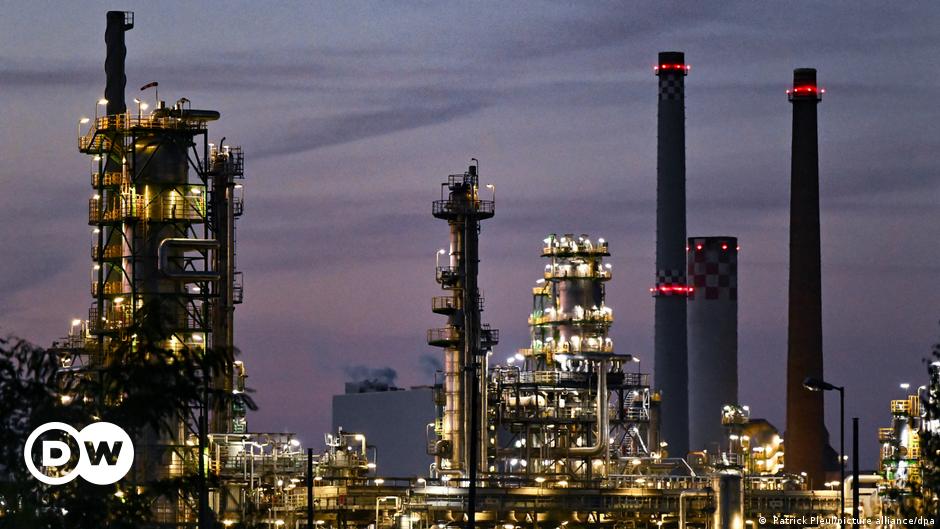
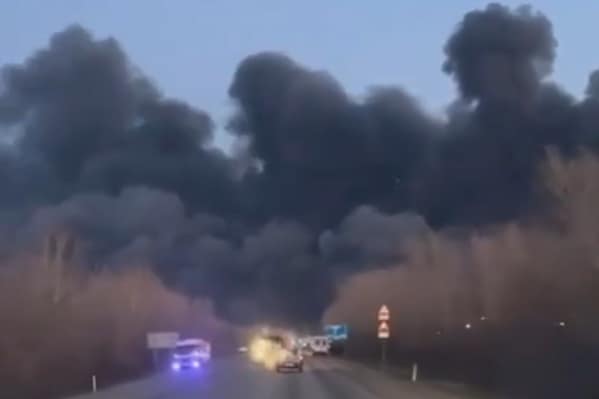
3 days agoPutin turns fuel boss as refineries keep catching fire amid Ukraine's successful strikes - London Business News | Londonlovesbusiness.com
Russia is tightening state control over fuel production and distribution due to disruptions at oil refineries affecting domestic supply.
from24/7 Wall St.
4 days agoWhy a Gallon of Gas Costs $3 in Texas and $12 in Hong Kong
Crude costs dominate, representing roughly 51% to 52% of the U.S. retail price. When the Strait of Hormuz disrupted roughly one-fifth of global oil and LNG flows during the 2026 Iran conflict, Asian physical crude surged toward $150 per barrel while WTI held near $100.72, insulated by U.S. shale output and Canadian and Mexican imports.
Cars


fromFortune
3 days agoThe Iran War just made the clean energy transition non-negotiable | Fortune
Roughly 20 million barrels per day of oil moved through Hormuz in 2024, equivalent to about one-fifth of global petroleum liquids consumption. When that waterway closed, oil prices spiked to $126 per barrel in what the U.S. Energy Information Administration has described as the largest supply disruption in global oil market history.
Environment

from24/7 Wall St.
6 days agoViper Energy's natural gas bet could deliver outsized income as LNG demand surges
Viper owns mineral and royalty interests, primarily in the Permian Basin. Royalty owners collect a percentage of production revenue from every barrel of oil, cubic foot of natural gas, and barrel of natural gas liquids produced on their acreage without bearing drilling costs or capital expenditures.
Business
#druzhba-pipeline
Europe news
fromLondon Business News | Londonlovesbusiness.com
3 days agoRussia is set to shut a key oil pipeline in a fresh blow to Europe's energy security - London Business News | Londonlovesbusiness.com
Moscow plans to close the Druzhba pipeline, threatening oil supplies to Europe amid rising energy pressures from the Iran conflict.
Europe news
fromLondon Business News | Londonlovesbusiness.com
6 days agoInvestors on edge as oil shoots higher given fragile Iran situation - London Business News | Londonlovesbusiness.com
Oil markets experienced volatility with Brent Crude rising 5% to $95 a barrel due to the closure of the Strait of Hormuz.
Europe news
fromLondon Business News | Londonlovesbusiness.com
6 days agoEuro holds steady as oil shock clouds outlook and tests ECB nerve - London Business News | Londonlovesbusiness.com
The euro's stability is challenged by geopolitical tensions, inflation concerns, and structural weaknesses in the euro area.
#crude-oil
World politics
fromLondon Business News | Londonlovesbusiness.com
4 days agoCrude oil (WTI) between hope and escalation - London Business News | Londonlovesbusiness.com
Crude oil prices are stable around $88 per barrel, reflecting cautious anticipation amid geopolitical tensions and economic expectations.
from24/7 Wall St.
3 weeks agoWall Street Upgrades Cheniere Energy as Iran War Reshapes Global LNG Demand
Citi's upgrade reflects a broader geopolitical reality reshaping global energy markets. The Iran war is accelerating the flight of European and Asian buyers toward secure, long-term U.S. LNG supply contracts.
Business
fromFortune
6 days agoSoutheast Asia's short-term solution to the global energy crunch? Russian crude. | Fortune
"Fortunately, our relations with Russia remain good," Anwar Ibrahim, Malaysia's prime minister, told local publication Sinar Harian. "Therefore, the Petronas team can negotiate with them."
World politics
Europe news
fromLondon Business News | Londonlovesbusiness.com
1 week agoIEA warns Europe has 'maybe six weeks or so of jet fuel left' - London Business News | Londonlovesbusiness.com
Europe may face flight disruptions due to jet fuel shortages linked to ongoing conflicts, with only six weeks of supply remaining.
World news
fromFortune
5 days agoHalliburton CEO: U.S. oil rebound enters 'early innings' as Iran war triggers 'long-lasting' global push for energy outside the Middle East | Fortune
The U.S. oil sector is rebounding, driven by energy security concerns and increased production amid geopolitical tensions.

World news
fromLondon Business News | Londonlovesbusiness.com
6 days agoEnergy bills set to rise 196 as Iran conflict keeps markets on edge - London Business News | Londonlovesbusiness.com
Households will see a £196 increase in energy bills due to ongoing geopolitical tensions affecting global wholesale markets.
fromwww.aljazeera.com
1 week agoEnergy prices rise despite Jones Act suspension by Trump
Shipping costs have increased by more than 10 percent in the past month due to the US-Israel war on Iran. The 60-day waiver for the Jones Act aimed to lower energy costs but has had little impact on oil prices, which continue to rise amid the ongoing conflict.
World news
World news
fromLondon Business News | Londonlovesbusiness.com
1 month agoErratic energy prices keep investors on edge - London Business News | Londonlovesbusiness.com
Energy markets face extreme volatility due to Iran conflict, with Brent crude fluctuating around $90/barrel amid supply disruption fears and potential long-term rate implications for global economies.
fromwww.aljazeera.com
1 month agoIndia, Europe feel fuel crunch as Gulf gas supplies disrupted amid war
QatarEnergy on Monday suspended LNG production following a drone attack, straining the global market. The measure followed Iranian drone attacks on a water tank at a power plant in Mesaieed Industrial City and an energy facility in Ras Laffan belonging to QatarEnergy, the world's largest LNG producer.
World news
[ Load more ]