Psychology
fromPsychology Today
19 hours agoGrowing Up Between Systems
The brain can navigate contradictory cultural rules without losing identity, enhancing adaptability and cognitive skills.
Being thrown into a group of new strangers each and every year, as is typical in so many American public school systems, is deeply evolutionarily unnatural. Under ancestral conditions, humans did not encounter strangers with nearly the same frequency that we experience now. And guess what? Humans have an entirely different way of interacting with strangers (including appropriate levels of hesitation and skepticism) than we have when interacting with others whom we know well.
Attention is the brain's filtering mechanism; what passes through that filter is what gets encoded. What gets encoded becomes memory. And memory is the raw material of identity. So in the architecture of your identity, attention is the doorway.
Collective learning is how a group or system creates, improves, and keeps knowledge. This knowledge lasts beyond any one person or cohort. That is the most practical collective learning definition, because it shifts the focus away from individuals and toward the learning system itself.
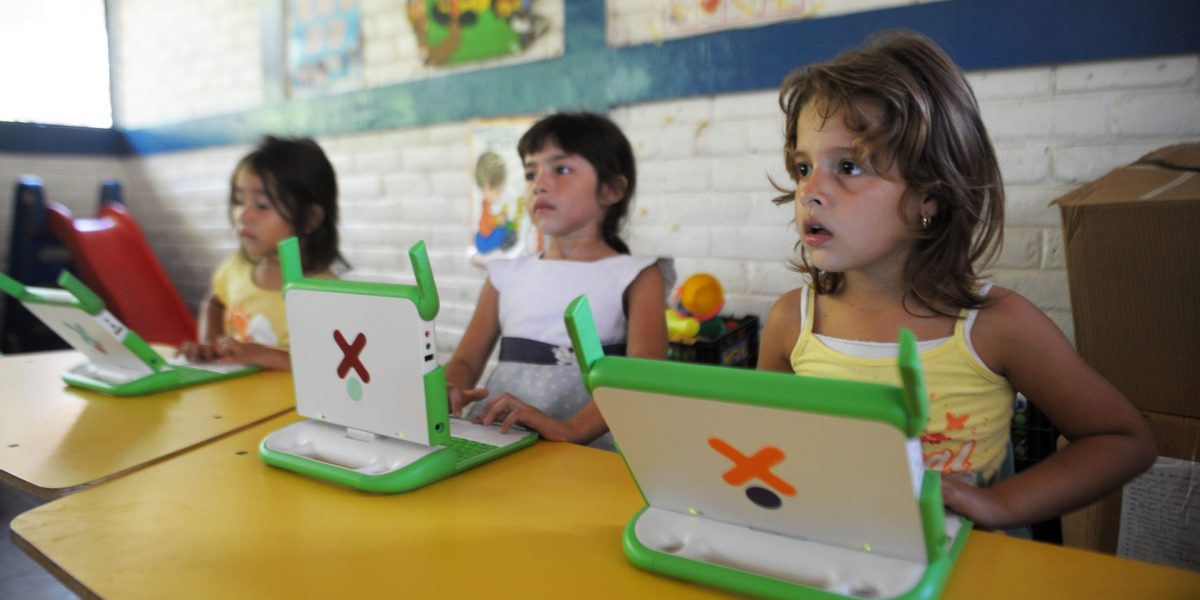
Dr Jared Cooney Horvath, a former teacher-turned-neuroscientist, revealed that the generation born between 1997 and the early 2010s has been cognitively stunted by their over-reliance on digital technology in school. Since records have been kept on cognitive development in the late 1800s, Gen Z is now officially the first group to ever score lower than the generation before them, declining in attention, memory, reading and math skills, problem-solving abilities, and overall IQ.
Not in the sense that truth has vanished or that learning no longer matters, but in the deeper, structural sense that knowledge as a stable possession-think dusty books and road maps-has lost its central role in human cognition. In a world where information is instant and increasingly available "on demand," the old idea of "knowing" seems to feel like an artifact of another era.
Like most Americans, my view of homeschooling was framed through the lens of abnormality. My own public-school education was my only frame of reference. Although my own experience wasn't great, it was familiar. It was the system I knew. As a college professor, I regularly saw the academic gaps my students carried with them from their public-school education. Yet even then, I struggled to imagine an alternative. My instinct was always to fix the existing system, not step outside of it.
Here's what I discovered: Genuine intelligence has almost nothing to do with your GPA or standardized test scores. Research from the American Psychological Association shows that traditional measures of intelligence often miss crucial cognitive abilities that matter in real life. So what does authentic intelligence actually look like? After diving deep into the research, I've found seven signs that genuinely intelligent people share, and none of them involve memorizing formulas or acing the SATs.