#pre-columbian-artifacts
#pre-columbian-artifacts
[ follow ]
#archaeology #cultural-heritage #museums #frida-kahlo #mexico-city #british-museum #ancient-mathematics


fromConde Nast Traveler
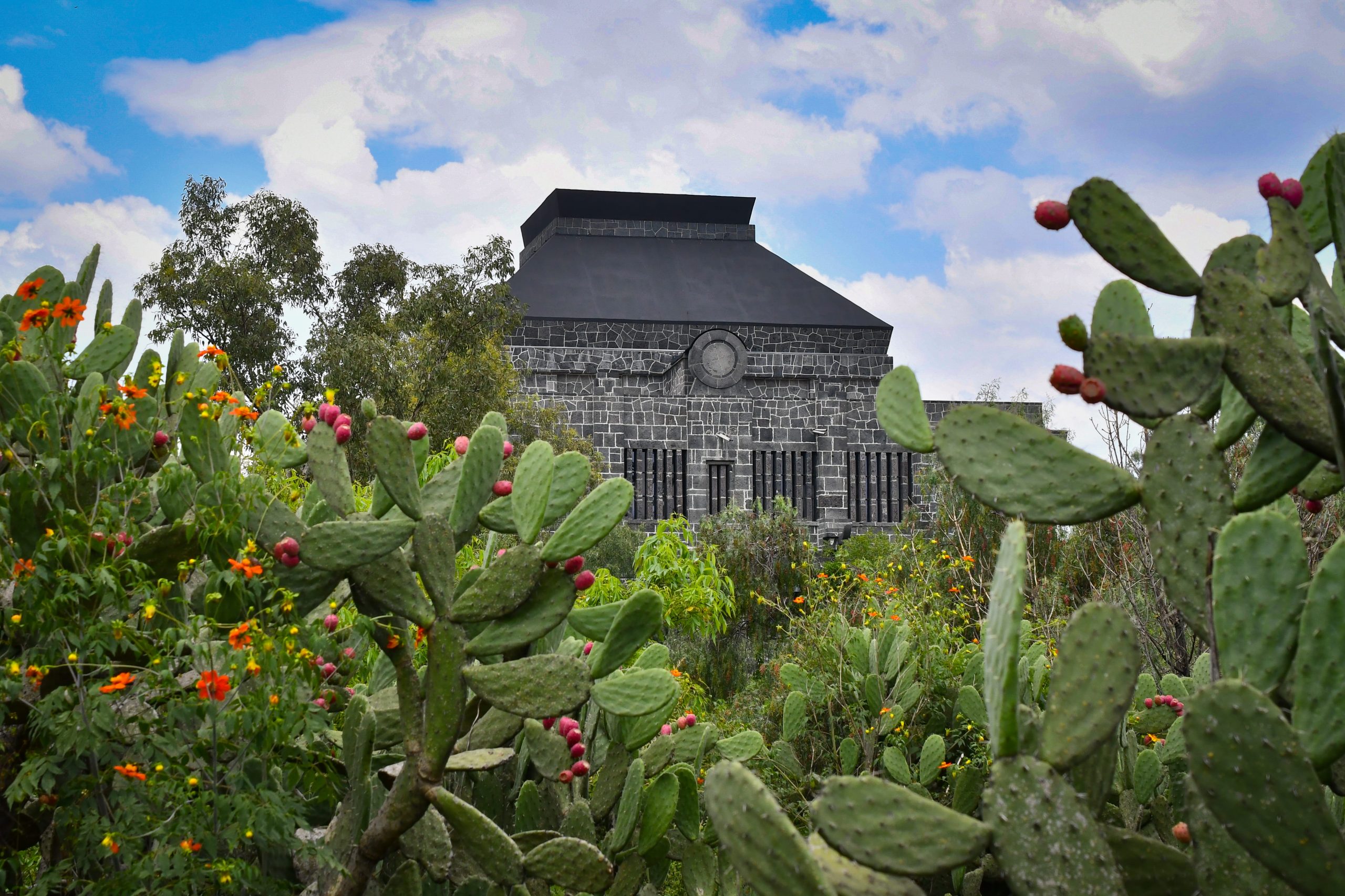
3 weeks agoThe Best Bakeries in Mexico City Showcase the City's Deep-Rooted Bread Culture
If there's an earthquake? You'll need a bolillo pa'l susto (a bread roll to calm the nerves). Constructing your Day of the Dead altar? Make sure there's a sugary, orange-flavored pan de muerto on there to guide your loved ones back to the land of the living. And lest we forget the rosca de reyes-oval-shaped sweet bread topped with jellies and dried fruits that's served on Kings' Day (January 6) and contains hidden baby Jesus figurines.
Food & drink

Madrid food
fromTravel + Leisure
3 weeks ago20 Best Things to Do in Oaxaca, Mexico-From Savoring Mole and Mezcal to Exploring Indigenous Art
Oaxaca offers Indigenous heritage, world-class cuisine featuring mole and mezcal, colonial architecture, traditional crafts, and legendary street food experiences.
History
fromArs Technica
3 weeks agoCenturies before the Inca, Peru's wealthy imported parrots from afar
The Ychsma kingdom maintained a sophisticated long-distance trade network spanning hundreds of kilometers across the Andes to import live parrots from the Amazon rainforest centuries before the Inca Empire.
:max_bytes(150000):strip_icc()/TAL-mexico-city-CULTRLYRICHDEST1225-9b03d517b80f4303aec7005290180b50.jpg)
fromMail Online
2 months agoLost tomb of mysterious 'cloud people' unearthed after 1,400 years
Archaeologists in Mexico have uncovered a 1,400-year-old tomb in the Central Valleys of Oaxaca that had been lost to history. The stone structure, built by the Zapotec culture, known as Be'ena'a, or 'The Cloud People', is adorned with sculptures, murals and carved symbols that suggest ritual significance. The Zapotec believed their ancestors descended from the clouds and that, in death, their souls returned to the heavens as spirits.
World news
fromColossal
1 month agoInside the Sacred Valley Ceramics Studio Referencing Ancient Peruvian Practices
It is not about reproducing the past but about engaging in dialogue with it. We apply the same level of care and rigor to all pieces. Many of our utilitarian pieces have a strong sculptural quality, and several of the more artistic works originate from everyday forms and functions. We do not establish rigid boundaries between these categories; all are part of the same vision.
Arts
fromThe Art Newspaper - International art news and events
1 month agoOrnate 1,400-year-old Zapotec tomb discovered in Mexico
"At Monte Albán alone, more than 200 tombs of varying size and decoration reflect social, political and economic differences among the ancient Zapotecs," Javier Urcid, an anthropology professor at Brandeis University in Massachusetts, tells The Art Newspaper. "Built beneath residences, tombs were reused over generations-with additional burials and occasional changes to offerings or decoration. The inscribed genealogies verified membership in family lineages."
Science
fromAeon
2 months agoHow islanders of Oceania built fearsome armour without metal | Aeon Videos
Visually striking and intricately crafted, the traditional armour and weaponry of the Kiribati islands in the Pacific Ocean were built from coconut fibre, human hair, sharks' teeth and porcupine fish. Yet, fearsome and lethal as these objects were, the people of this remote archipelago weren't especially warlike, as British colonists had long assumed, but were instead part of a ritualised style of combat intended to keep violence between clashing groups to a minimum.
Philosophy
fromOpen Culture
2 months agoHow the Incas Performed Skull Surgery More Successfully Than U.S. Civil War Doctors
Grant­ed access to a time machine, few of us would pre­sum­ably opt first for the expe­ri­ence of skull surgery by the Incas. Yet our chances of sur­vival would be bet­ter than if we under­went the same pro­ce­dure 400 years lat­er, at least if it took place on a Civ­il War bat­tle­field. In both fif­teenth-cen­tu­ry Peru and the nine­teenth-cen­tu­ry Unit­ed States, sur­geons were per­form­ing a lot of trepa­na­tion, or removal of a por­tion of the skull.
Medicine
fromCN Traveller
2 months agoThis underrated Mexican city's artisans have transformed their home into a shopaholic's paradise
Traveller check into hotels for easy access to historical Mayan sites and the cenotes beyond, with ambles through colourful squares and late, balmy nights digesting feasts over tequila tipples. Between cultural excursions and natural wonders, however, there's much to be said for the artisans in these parts. From crafted perfumes to handmade chocolates, these are the gifts and trinkets to make space for in your luggage.
Food & drink
History
fromNature
1 month agoHow infighting led the Maya civilization to catastrophic collapse
David Stuart's decipherment of Maya hieroglyphs revolutionized understanding of ancient Maya civilization, revealing complex political systems and cosmological beliefs previously hidden from scholars and modern Maya speakers.
fromwww.scientificamerican.com
2 months agoHumans Made Poisoned Arrowheads Thousands of Years Earlier Than Previously Thought
Researchers have found traces of what appears to be plant-derived poison on tiny stone arrowheads from South Africa dated to 60,000 years ago. The finding pushes back the origin of this revolutionary hunting technology by tens of thousands of years. Scientists have long been fascinated by the development of poisoned hunting weapons. For one thing, they would have seriously leveled up our ancestors' foraging game.
Science
Design
fromdesignboom | architecture & design magazine
1 month agoturquoise resin reimagines peruvian clay whistling vessels for vicus collection
VICÚS reinterprets ancestral Vicús ceramics as translucent resin sculptures that fuse pre-Hispanic forms, shared Mexican–Peruvian craft practices, and familial cultural continuity.
Arts
fromThe Art Newspaper - International art news and events
1 month agoBack to Assam: British Museum agrees to loan fragile tapestry showing Krishna's life
The Vrindavani Vastra, a 350-year-old Krishna tapestry, will return to Assam for six months starting in 2027 under a British Museum loan agreement contingent on constructing a new museum extension.
US politics
fromwww.independent.co.uk
2 months agoInside the hunt for British Museum's missing treasures
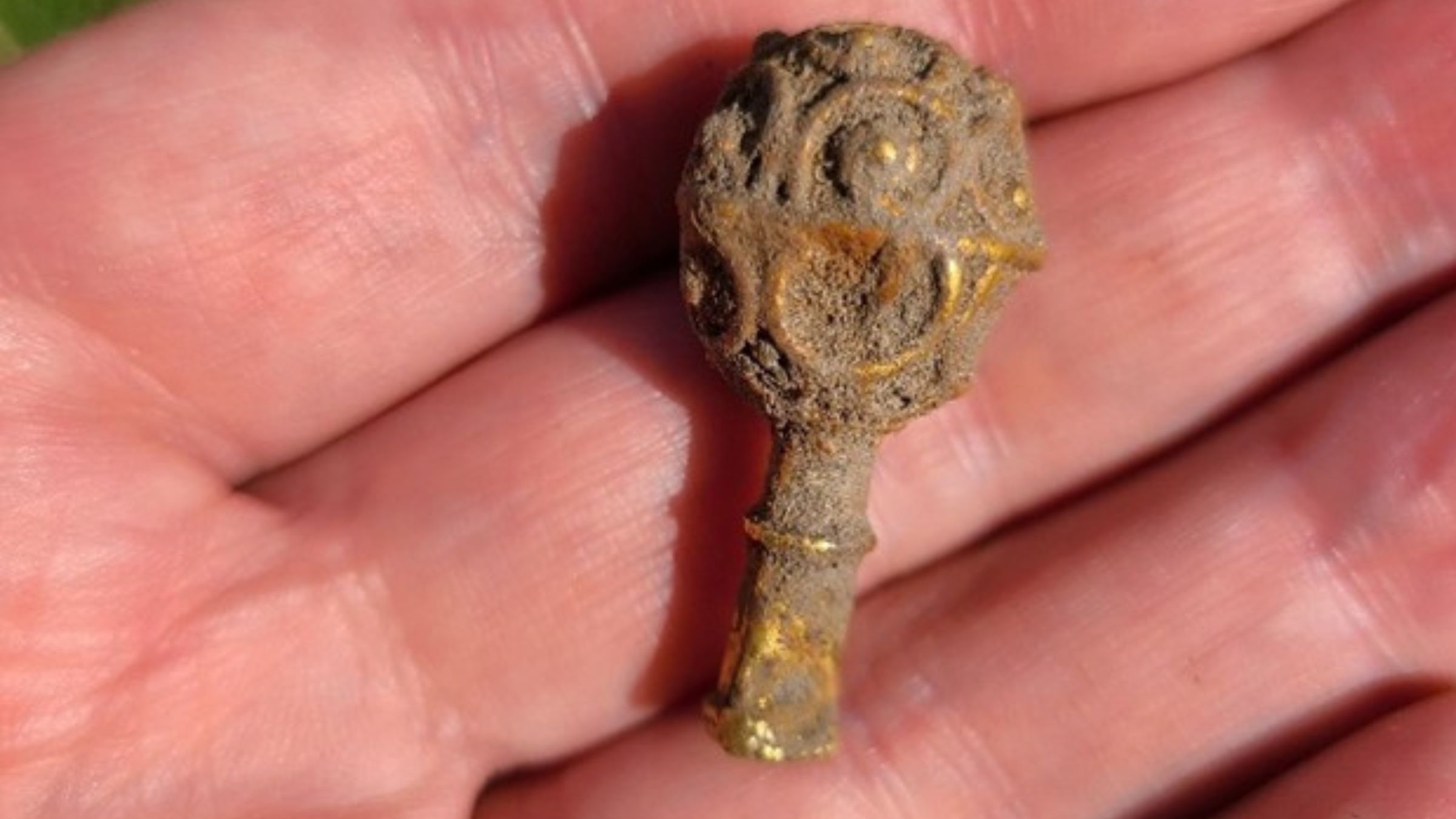
The Independent funds on-the-ground, paywall-free investigative reporting while a six-person British Museum team celebrates breakthroughs in tracing missing Greek and Roman treasures with a golden bell.
History
fromMedievalists.net
1 month agoDreaming of Owning a Medieval Artefact? Here's Your Chance - Medievalists.net
TimeLine Auctions' March 3 online sale features hundreds of medieval historical objects including a 13th-century Limoges cross, 1224 Chinese armor, Viking silver mount, and Anglo-Saxon brooch.
Arts
fromThe Art Newspaper - International art news and events
1 month agoEarthly delights: new book unravels the mysteries and enduring influence of rock art
Ancient petroglyphs like those at Mont Bégo emphasize concentrated animal imagery, uncertain dating, long-term production, and contested interpretations influenced by modern intellectual bias.
fromThe Art Newspaper - International art news and events
1 month agoNew York Historical receives gift of 150 works by Indigenous artists
"I rarely use the term collecting and collector," Hsu-Tang says. "We both see ourselves as messengers... I don't own these works of art. I'm here to be a temporary steward of these messages, and to pass on-it's my duty to connect the past, the present and the future."
Arts
fromThe Art Newspaper - International art news and events
1 month agoArizona museum hosts world hoop dance championship
Last February, master of ceremonies Dennis Bowen (a Seneca elder) welcomed the reigning champion into the 2025 World Championship Hoop Dance Contest arena at the Heard Museum in Phoenix, Arizona. Thousands of spectators joined them to watch more than 100 dancers compete across the two-day event. Bowen announced Josiah Enriquez's (Pueblo of Pojoaque, Navajo, Isleta) accomplishments as a top place finisher several years running in the teen division and as the surprise winner in an unprecedented tiebreaking round in the adult division the year before.
Arts
Arts
fromThe Art Newspaper - International art news and events
2 months agoMexico City exhibition explores dynamic exchange between Americas and Southeast Asia
An exhibition in Mexico City traces centuries-long cultural and economic exchanges linking Mexico, Manila and Southeast Asia through the galleon trade and shared art.
Arts
fromThe Art Newspaper - International art news and events
2 months agoGuatemala's Museo de Arte Colonial shut down by authorities
Guatemalan authorities forcibly relocated 287 colonial artworks from Antigua's Museo de Arte Colonial, prompting emergency storage, museum closure, and conservation and ownership concerns.
Arts
fromThe Art Newspaper - International art news and events
2 months agoFrance and Mexico trade loans of colonial codices, putting spotlight on calls for restitution
France and Mexico agreed to simultaneous loans of two colonial-era codices, Codex Azcatitlán and Codex Boturini, prompting renewed restitution debates.
fromMail Online
1 month agoMysterious symbols spanning the globe hint at a lost civilization
His investigation began after identifying recurring giant T-shapes, three-level indents, and step pyramids carved into ancient stones worldwide. 'These specific symbols that are built in different size proportions, and the symbols are found in ancient stones around the world, are not supposed to exist; no cultures are supposed to have any cross-platform,' LaCroix explained. The symbols appear in locations ranging from Turkey's Van region to South America and Cambodia.
History
History
fromMedievalists.net
1 month agoNew Online Course: The Americas during the Middle Ages - Medievalists.net
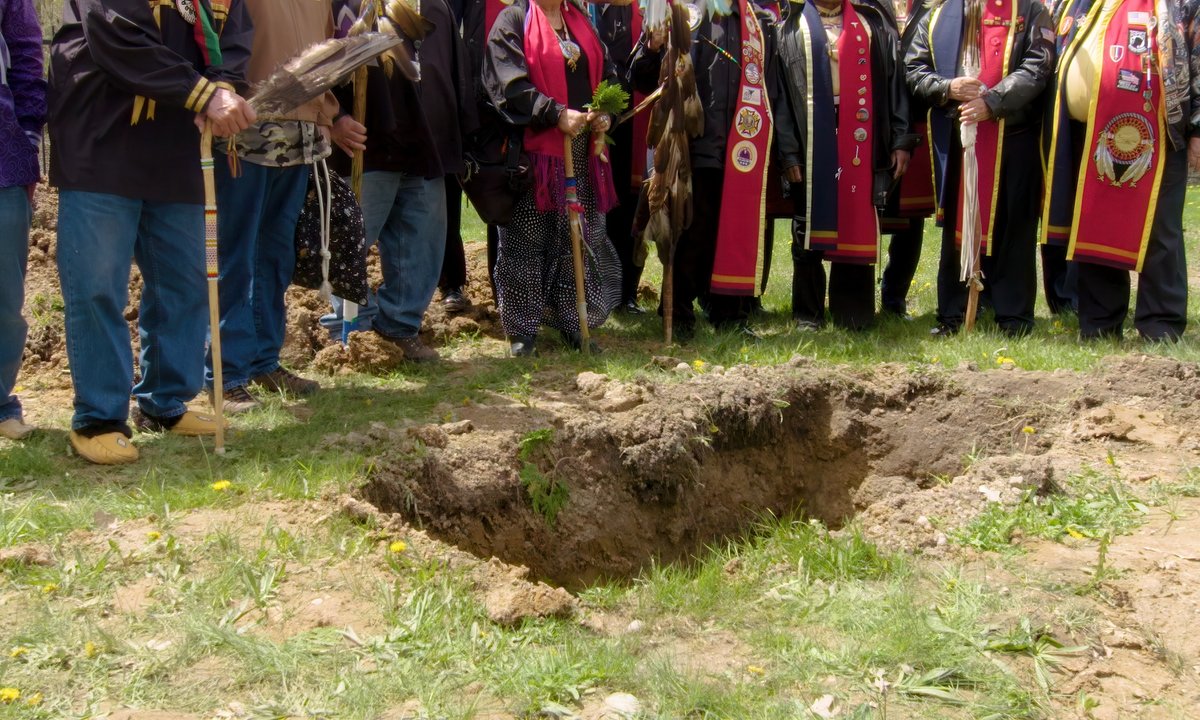
An online six-week course examines indigenous peoples of North America and Mesoamerica (500–1500 CE), emphasizing diverse peoples, environments, lifestyles, and pre-contact historical trends.
Arts
fromThe Art Newspaper - International art news and events
2 months agoBritish Museum reports record-breaking year for finding treasure in the UK
UK metal detectorists recorded a record 79,616 archaeological finds in 2024, including 1,540 treasures such as a 179-coin hoard and a Roman vehicle fitting.
History
fromSmithsonian Magazine
2 months agoArchaeologists Discovered the 'Holy Grail' of Shipwrecks a Decade Ago. Now, They're Finally Beginning to Unravel the Secrets of the 'San Jose'
A priceless 1708 Spanish galleon, the San José, was discovered in 2015 but remains contested amid political and legal battles over ownership and treasure.
fromThe New Yorker
2 months agoEaster Island and the Allure of "Lost Civilizations"
Finding out what actually happened in the deep past can be a slog, so when ancient history is packaged as mystery-spine-tingling but solvable-it's hard to resist. Who doesn't want to know how a lost civilization got lost, or where it might be hiding? The trouble is that what gets touted as a lost civilization often turns out to have been there all along.
fromwww.thehistoryblog.com
1 month agoRare Mithraic altars found in Scotland go on display for the first time
Two exceptionally rare and beautifully carved Mithraic altars found in Inveresk, East Lothian, Scotland, are going on display for the first time. They are not just the only Roman altars ever found in Scotland, but are among the finest examples of Roman sculpture in Roman Britain. They are also uniquely early in date, having been made in 140s A.D. during Antoninus Pius' reoccupation of southern Scotland, whereas most other archaeological materials related to the worship of Mithras in Britannia date to the 3rd century.
fromThe Art Newspaper - International art news and events
2 months agoA taster of the British Museum's Hawaii show in three objects
The accompanying catalogue for Hawai' i: a Kingdom Crossing Oceans features more than 150 works, from ancient Hawaiian treasures to important contemporary pieces, telling "a compelling story of movement, allyship and cultural exchange [between the UK and Hawaii]". An inventory of the entire collection of Native Hawaiian works housed at the British Museum, the largest collection outside of Hawaii, is included in the catalogue.
History
fromianVisits
2 months ago'Blimey, never knew that': the British Museum's Hawai'i exhibition surprises
Candidly, most people visiting the British Museum's Hawaii exhibition probably walk in with a lot of stereotypical preconceptions about the island nation. And will walk out with a totally different understanding of it. Understandably, we probably think of it as not much more than the Pacific island nation that's part of the USA, home to Pearl Harbour and the long-running TV show Hawaii 5.0.
History
[ Load more ]