#project-glasswing

[ follow ]
Mental health
fromPsychology Today
7 hours ago

A New Narrative for Planetary Health in the Hybrid Era

Perceiving crises as external leads to helplessness and disengagement, while recognizing agency fosters positive outcomes and behavior change.
fromwww.theguardian.com
13 hours ago

Houseplant hacks: do eggshells deter fungus gnats from laying eggs?

Crushed clean, dry eggshells, when scattered over the soil, are intended to stop adult gnats from laying eggs and potentially add natural fertilizer. However, they merely sit on the surface, collecting dust, while the gnats remain attracted to the damp compost.
Renovation
Photography
fromColossal
1 day ago

Hillary Waters Fayle Creates 'Portraits of Place' from Seeds, Foliage, and Petals

Hillary Waters Fayle creates cyanotypes using botanicals to capture the essence of specific places, preserving their unique characteristics and relationships with the land.
Science
fromwww.theguardian.com
2 days ago

Satellite mirror plans could disrupt sleep and ecosystems worldwide, scientists say

Deployment of reflective satellites could disrupt ecosystems and human health by altering natural night-time light environments.
US news
fromThe Washington Post
3 days ago

Birute Galdikas, authority on orangutans, has died. She was one of 'Leakey's Angels.'

Biruté Galdikas dedicated her life to studying orangutans in Borneo, overcoming immense challenges to conduct groundbreaking research.
Environment
fromEarth911
4 days ago

Earth911 Inspiration: Show Up for Planet Earth

Make Earth Day 2026 a pivotal response to environmental damage from recent U.S. policy reversals.
Pets
fromwww.theguardian.com
5 days ago

Swifts spark joy!' Why these beautiful birds need our help and 10 ways to give it

Swifts are declining in population due to habitat loss and reduced insect availability, necessitating conservation efforts.
fromwww.scientificamerican.com
5 days ago

See these ziti-sized fish scale a 50-foot waterfall

During major floods, thousands of tiny fish convene at Luvilombo Falls in the upper Congo River Basin to undertake a peculiar vertical migration, described for the first time today in Scientific Reports.
OMG science
#biodiversity
fromNature
2 weeks ago
Online Community Development

Scientists should join collaborative online editing communities for biodiversity

fromNature
2 weeks ago
Online Community Development

Scientists should join collaborative online editing communities for biodiversity

Science
fromFuturism
2 days ago

Chinese Scientists Bioengineering Plants With Firefly Genes to Glow, in Effort to Light Cities at Night

Genetically engineered bioluminescent plants can enhance urban environments, attract tourism, and provide alternative lighting solutions.
fromTheregister
1 week ago

Bees and hummingbirds get trace alcohol from nectar

A study by researchers at the University of California Berkeley has found that ethanol is surprisingly common in floral nectar, the sugary fuel that keeps pollinators alive. Yeast feeding on those sugars produces trace amounts of alcohol, and in this study, it showed up in 26 of the 29 plant species sampled.
Beer
Agriculture
fromTasting Table
1 week ago

5 Fruits To Plant That Attract Birds To Your Yard - Tasting Table

Transforming grass into fruit plants reduces yard work, provides fresh ingredients, and supports wildlife.
Non-profit organizations
fromNature
1 week ago

'Continuity over novelty': why environmental science needs to rethink its focus

The closure of forest-service research offices threatens long-term ecological research and institutional memory in the US.
Pets
fromwww.theguardian.com
6 days ago

Healthy hedgehogs are best left in the wild | Letters

Hedgehogs are wild animals that should not be kept as pets; they thrive best in their natural habitat.
fromNextgov.com
1 week ago

Citizen Science Month 2026 is about more than just stargazing

Citizen Science Month is built around a goal of 2.5 million 'Acts of Science,' tying the annual event to America's 250th birthday through a simple but powerful idea: lots of small contributions can add up to something really meaningful.
OMG science
fromMail Online
1 week ago

Britain has just 20 years to save its wildlife, experts warn

'Our results show that the next 20 years are critical,' lead author Dr Rob Cooke told the Daily Mail. 'By around 2050, we reach a point where the choices we make on emissions and land use will largely determine whether Britain moves towards a much more degraded or a much more nature‑positive future.'
Environment
Roam Research
fromwww.theguardian.com
1 week ago

Forget birdwatching, I'm into moth-watching: they're fascinating and misunderstood insects | Helen Pilcher

Learning to identify birds and moths can enhance brain function and protect against cognitive decline as we age.
Arts
fromLos Angeles Times
2 weeks ago

Photos: Butterfly Pavilion nets wide-eyed visitors

The Natural History Museum's Butterfly Pavilion features 30 butterfly and moth species, running through Aug. 23, with a $10 add-on ticket required.
#pesticides
#butterfly-conservation
London politics
fromwww.independent.co.uk
2 weeks ago

Market town pledges to save butterflies from shocking decline in UK first

Gillingham becomes the first UK local authority to commit to a nationwide challenge reversing butterfly population decline through habitat protection, pesticide elimination, and light pollution reduction.
London
fromwww.theguardian.com
4 weeks ago

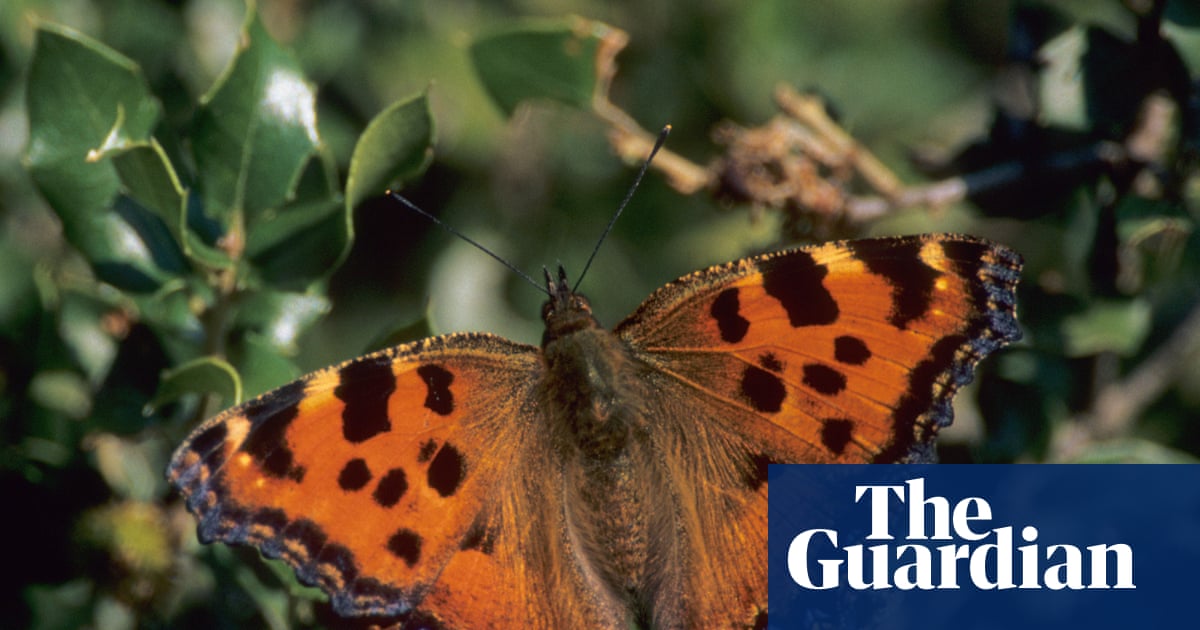
Large tortoiseshell butterfly confirmed no longer extinct in UK

The large tortoiseshell butterfly, extinct in Britain for decades, has returned as a resident species with spring sightings across southern England, increasing Britain's native butterfly count to 60.
fromwww.theguardian.com
6 days ago

Painting eyes on takeaway boxes can stop gulls stealing chips, study shows

When faced with a choice between a box with eyes painted on it and a plain box, the gulls were slower to approach the box with eyes and less likely to peck at it.
Pets
#monarch-butterflies
#insects
Roam Research
fromwww.theguardian.com
1 week ago

I discovered the elusive chestnut mining bee in New York after a gap of 119 years

Insects can be found in urban areas, and curiosity can lead to significant discoveries like the chestnut mining bee.
OMG science
fromArs Technica
1 week ago

Explanation for why we don't see two-foot-long dragonflies anymore fails

Breathing capacity may have allowed giant insects to thrive despite lower atmospheric oxygen levels.
Roam Research
fromwww.theguardian.com
1 week ago

I discovered the elusive chestnut mining bee in New York after a gap of 119 years

Insects can be found in urban areas, and curiosity can lead to significant discoveries like the chestnut mining bee.
OMG science
fromArs Technica
1 week ago

Explanation for why we don't see two-foot-long dragonflies anymore fails

Breathing capacity may have allowed giant insects to thrive despite lower atmospheric oxygen levels.
Environment
fromNature
1 week ago

How buildings and cities can be aligned with life

Buildings currently harm the environment, but regenerative design can restore ecological systems and reduce waste through nature-inspired strategies.
fromOpen Culture
2 weeks ago

In Her Final Reflections, Jane Goodall Issues a Warning: "Without Hope, We Fall Into Apathy"

Somebody sent to this world to try to give people hope in dark times, because without hope, we fall into apathy and do nothing, and in the dark times that we are living in now, if people don't have hope, we're doomed. How can we bring little children into this dark world we've created and let them be surrounded by people who've given up?
Writing
#macro-photography
Agriculture
fromwww.theguardian.com
2 weeks ago

Plantwatch: the Natal crocus co-opts fire, bees and ants to reproduce

The Natal crocus uses fire, bee pollination, and ant seed dispersal, with seeds mimicking ant larvae scent to trick ants into transporting them to nests.
Design
fromArchDaily
3 weeks ago

Rethinking Architecture at the Scale of Planetary Systems

Contemporary architecture operates within interconnected technological systems—energy networks, data infrastructures, and global logistics—that fundamentally shape what can be built, its affordability, performance, and waste production.
East Bay food
fromFuncheap
4 weeks ago

Family Nature Adventures: Insects

An interactive workshop and guided nature walk explore the vital roles of native insects and pollinators in ecosystems and flower reproduction.
fromwww.theguardian.com
4 weeks ago

Aerial athletes and unsung hunters by night, tawny frogmouths are more than just their Muppet looks | Debbie Lustig

Frogmouths have another life that few people see: like vampires, they wake at sunset and night-hunt until dawn. These stolid creatures turn into zephyrs that silently swoop, catching prey on the ground and in the air.
Miscellaneous
OMG science
fromwww.theguardian.com
2 weeks ago

Butterflies crossing oceans, moths navigating by the stars: unravelling the mysteries of insect migrations

Insects, including butterflies and dragonflies, undertake massive long-distance migrations across continents and oceans, with trillions traveling annually over previously unknown routes.
Roam Research
fromDefector
3 weeks ago

Even After Being Eaten, This Beetle Has Two Ways Out Alive | Defector

The Japanese water scavenger beetle Regimbartia attenuata survives passage through a frog's digestive system and exits alive within minutes to hours.
fromdesignboom | architecture & design magazine
1 month ago

EntoPedia magnetic camera turns insect encounters into digital specimens without capture

EntoPedia is a wearable digital collection system designed by Junfei Teng to reframe insect 'collecting' as documentation, turning everyday encounters into moments of observation, learning, and shared knowledge without physical capture. The project received the 2026 French Design Awards Gold (Professional) in Product Design, Educational Toys & Games, recognizing its approach to ecological education through wearable interaction and community-built datasets.
Wearables
fromwww.theguardian.com
3 weeks ago

Small changes in how we garden can make a big difference to birds | Letter

Around a third of UK gardeners use pesticides, and our studies found that house sparrow numbers, for example, were nearly 40% lower in gardens where the pesticide metaldehyde was used. By reducing pesticide use, you can actively encourage birds back into your outdoor spaces, as they rely on invertebrates such as slugs and snails as natural prey.
Pets
Science
fromDefector
3 weeks ago

This Pink Bug Is Not A 'Rare Freak Mutant' After All | Defector

A neon pink katydid discovered in Panama challenges the century-old assumption that pink coloration in these insects is a disadvantageous mutation, suggesting it may provide evolutionary advantages.
Pets
fromwww.theguardian.com
3 weeks ago

I love vultures, mosquitoes and, yes, even wasps. This is why you should too | Jo Wimpenny

Humans hold irrational emotional biases toward animals; wasps deserve reconsideration as valuable pollinators and pest controllers despite negative perceptions.
fromwww.independent.co.uk
3 weeks ago

Bees can breathe underwater for a week, scientists discover

This study started from a discussion with my co-author and postdoctoral researcher, Sabrina Rondeau, whose recent findings showed that these queens can survive submersion for over a week, which is extraordinary for a terrestrial insect. We wanted to understand how that's even possible.
Science
OMG science
fromwww.scientificamerican.com
3 weeks ago

We talked Hoppers science with a real-life beaver expert

Beaver researchers use drones, game cameras, and remote observation methods to study wild beavers, while robots and animal costumes remain largely fictional tools for scientific fieldwork.
Agriculture
fromMail Online
1 month ago

Gardeners urged to ALLOW caterpillars to destroy gardens this spring

Conservationists urge gardeners to allow caterpillars to feed on plants to support declining moth populations, which have dropped by a third since the 1960s.
fromwww.theguardian.com
1 month ago

Humanity heating planet faster than ever before, study finds

Climate breakdown is occurring more rapidly with the heating rate almost doubling, according to research that excludes the effect of natural factors behind the latest scorching temperatures. It found global heating accelerated from a steady rate of less than 0.2C per decade between 1970 and 2015 to about 0.35C per decade over the past 10 years.
Environment
Science
fromwww.scientificamerican.com
1 month ago

Scientists created a digital library full of ants

Researchers created Antscan, a digital library of 3D scans and morphological data from 2,193 ants across 212 genera, using particle accelerator technology to advance biodiversity research and understanding of ant anatomy.
Environment
fromNature
1 month ago

Limited thermal tolerance in tropical insects and its genomic signature - Nature

Tropical insects face severe heat vulnerability due to climate warming, with sparse data on thermal tolerances and limited capacity for adaptation to rising temperatures.
Science
fromwww.theguardian.com
1 month ago

Marsupials previously thought extinct for millennia discovered in New Guinea

Two marsupial species presumed extinct for 6,000 years were discovered alive in West Papua rainforests, representing rare Lazarus taxa that survived despite disappearing from fossil records.
Science
fromNature
1 month ago

Daily briefing: The return of the snail - the month's best science images

Cancer blood tests show promise but lack regulatory approval and randomized trials, with concerns about false positives outweighing benefits for widespread adoption.
fromwww.theguardian.com
1 month ago

I love midges because I know what their hearts look like': is the passion for taxonomy in danger of dying out?

When Borkent stops working, biting midges risk becoming an orphan group, a term that taxonomists give for a branch of the web of life that is no longer being studied. It is a pattern playing out across the field, he says. I am one of the last few standing. It's crisis all around. As the taxonomic community ages, we are not being replaced.
OMG science
fromMindful
1 month ago

Can Compassion Save the Planet?

When British author Karen Armstrong won the TED prize in 2008, she used the money to convene a group of religious thinkers from a wide range of faiths to craft an updated version of the Golden Rule for the 21st century. What emerged was the Charter for Compassion, which calls on people around the world "to work tirelessly to alleviate the suffering of our fellow creatures, to dethrone ourselves from the center of our world and put another there, and to honor the inviolable sanctity of every single human being, treating everybody, without exception, with absolute justice, equity and respect."
Philosophy
Social justice
fromwww.nature.com
2 months ago

A framework for addressing racial and related inequities in conservation

Conservation often violates Indigenous rights, perpetuates racial injustice and violence, and requires community-based standards, anti-racist reforms, and accountability measures.
Board games
fromBoard Game Quest
2 months ago

Wingspan: Americas Expansion

Wingspan: Americas Expansion adds hummingbird-focused mechanics, a hummingbird deck and boards, new birds, and a garden display across the Americas.
Environment
fromEarth911
1 month ago

Classic Sustainability In Your Ear: The Ocean River Institute's Natural Lawn Challenge for Climate Action

Natural lawn practices reduce water consumption, eliminate harmful chemicals, support pollinators, and store significantly more carbon than chemically-treated lawns, making healthy lawns powerful climate change solutions.
fromwww.theguardian.com
2 months ago

From scorpions to peacocks: the species thriving in London's hidden microclimates

London is the only place in the UK where you can find scorpions, snakes, turtles, seals, peacocks, falcons all in one city and not London zoo. Step outside and you will encounter a patchwork of writhing, buzzing, bubbling urban microclimates. Sam Davenport, the director of nature recovery at the London Wildlife Trust, emphasises the sheer variation in habitats that you find in UK cities, which creates an amazing mosaic of wildlife.
London
fromThe Conversation
2 months ago

Some companies claim they can 'resurrect' species. Does that make people more comfortable with extinction?

Less than a year ago, United States company Colossal Biosciences announced it had "resurrected" the dire wolf, a megafauna-hunting wolf species that had been extinct for 10,000 years. Within two days of Colossal's announcement, the Interior Secretary of the US, Doug Burgum, used the idea of resurrection to justify weakening environmental protection laws: "pick your favourite species and call up Colossal". His reasoning appeared to confirm critics' fears about de-extinction technology. If we can bring any species back, why protect them to begin with?
Philosophy
Environment
fromMail Online
2 months ago

Ominous warning for humanity as insects mysteriously 'fall silent'

Rapid global insect declines threaten pollination, food production, nutrient availability, and human health, signaling imminent ecological instability.
fromKqed
1 month ago

What an Insect View Really Looks Like | KQED

On a spring day in 1694, Antonie van Leeuwenhoek - the father of microbiology - used a magnifying lens to look at a candle through the dissected eye of a dragonfly. But instead of seeing 1 candle flame, he saw hundreds of tiny flames, repeated over and over. But spoiler alert - this is not how insects see. Hi, I'm Niba, and today we're going to explore how insects really see the world.
Science
Environment
fromKqed
2 months ago

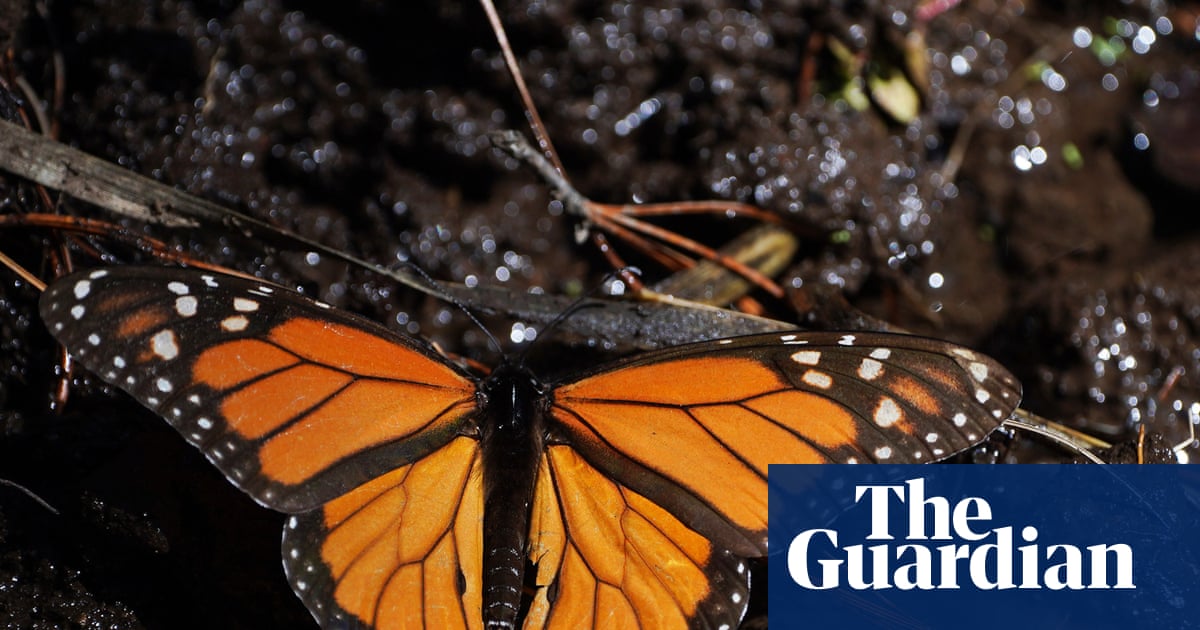
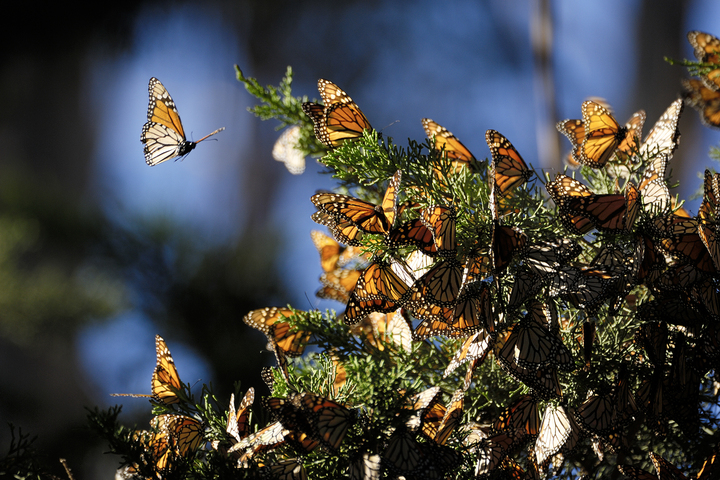
Western Monarch Butterfly 'Migration Is Collapsing,' Scientists Say. You Can Help | KQED

Western monarch populations have collapsed to fewer than 13,000 this winter, driven by long-term habitat loss, pesticide use, and climate change.
Science
fromwww.scientificamerican.com
2 months ago

Life's evil twins, called mirror cells, could wipe us out if scientists don't stop them

Engineered mirror-image bacteria used to manufacture durable drugs can evade immune detection and cause uncontrollable infections and environmental spread.
Environment
fromEarth911
1 month ago

Plant a Pollinator Garden To Support Butterflies, Bees, & Birds

Plant native, nectar-rich home gardens to support pollinators threatened by climate change, habitat loss, pesticides, and significant population declines.
Science
fromColossal
2 months ago

'Making the Invisible Visible' Highlights an Ambitious Digitization Project at Harvard

Digitizing museum analog catalogs and microscope-slide invertebrate collections preserves fragile records and makes thousands of specimens accessible to researchers and the public.
fromwww.theguardian.com
2 months ago

Rare butterflies bounce back after landowners in Wales cut back on flailing hedges

Conservationists have now persuaded landowners to cut hedges in a more gentle rotation, with sections left uncut for up to three years, to enable more eggs to survive over winter. The caterpillars emerge with the foliage in spring and hatch into adult butterflies in July. The brown hairstreak is difficult to spot as a butterfly but every winter volunteers assess its populations by counting its minuscule cream-coloured eggs, which with careful searching are visible on the bare branches of blackthorn.
Environment
fromNature
2 months ago

Biodiversity conservation has an evidence problem - it's time to fix it

Biodiversity loss is continuing at an unprecedented rate, with species becoming extinct at between 100 and 1,000 times the average pre-human, or 'background', rate. Human activities are the main cause. Although there are hundreds of local, regional and international initiatives to conserve and sustainably use species and ecosystems, many conservation scientists worry that measures such as interventions to conserve individual species or incentives to create protected areas are not supported by strong evidence from research.
Environment
Science
fromKqed
5 months ago

Pick Your Player: Dragonfly vs Damselfly | KQED

Damselflies stabilize and capture prey in turbulent vegetation via four-wing adjustments and panoramic binocular vision; dragonflies use independent wings and near-360° vision for high-speed interception.
Environment
fromwww.theguardian.com
1 month ago

How extreme flooding in Somerset has created birdlife winners and losers

Severe winter floods create winners (gulls, lapwings) and losers (barn owls), and increasing extreme weather threatens long-term bird survival.
Environment
fromLos Angeles Times
2 months ago

West Coast monarch butterfly populations hit historic low. This may be the 'new normal'

Western monarch butterfly populations remain at near-historic lows, with just 12,260 recorded this winter along California's coast, risking long-term survival.
Environment
fromPsychology Today
2 months ago

Rewilding Rejects the We're-So-Special Exceptionalism

Rewilding requires rehabilitating human hearts, overcoming self-centeredness, and treating nature with compassion so ecosystems and nonhuman lives can flourish.
fromwww.dw.com
2 months ago

The business of saving nature

The world spends 30 times more money destroying nature than protecting it. That's according to a new report from the United Nations Environment Programme (UNEP) that exposes a massive gulf between so-called "harmful investments" and financing that promotes nature preservation. The global environment agency's latest "State of Finance for Nature" (SNF) report is calling to phase out the US$7.3 trillion (6.2 trillion) in global investments that damage nature including into high-emissions energy infrastructure and manufacturing, for example.
Environment
Environment
fromSFGATE
2 months ago

Iconic species faces real trouble in California, new numbers show

Western monarch populations along California's coast have declined to near-record lows, signaling continued high risk of extinction.
Environment
fromwww.theguardian.com
2 months ago

Good luck Dua Leaper: scientists return frogs wiped out by fungal disease to wild

Green and golden bell frogs were reintroduced to the ACT after about four decades using immunised, microchipped individuals and engineered thermal refuges to combat chytrid fungus.
Environment
fromEarth911
1 month ago

Earth911 Inspiration: No Louder Voice?

Prioritize planetary care and a unifying universal value that emphasizes human dignity within a restored, regenerating nature over divisive identity politics.
[ Load more ]