#rices-whale
#rices-whale
[ follow ]


SF politics
fromFortune
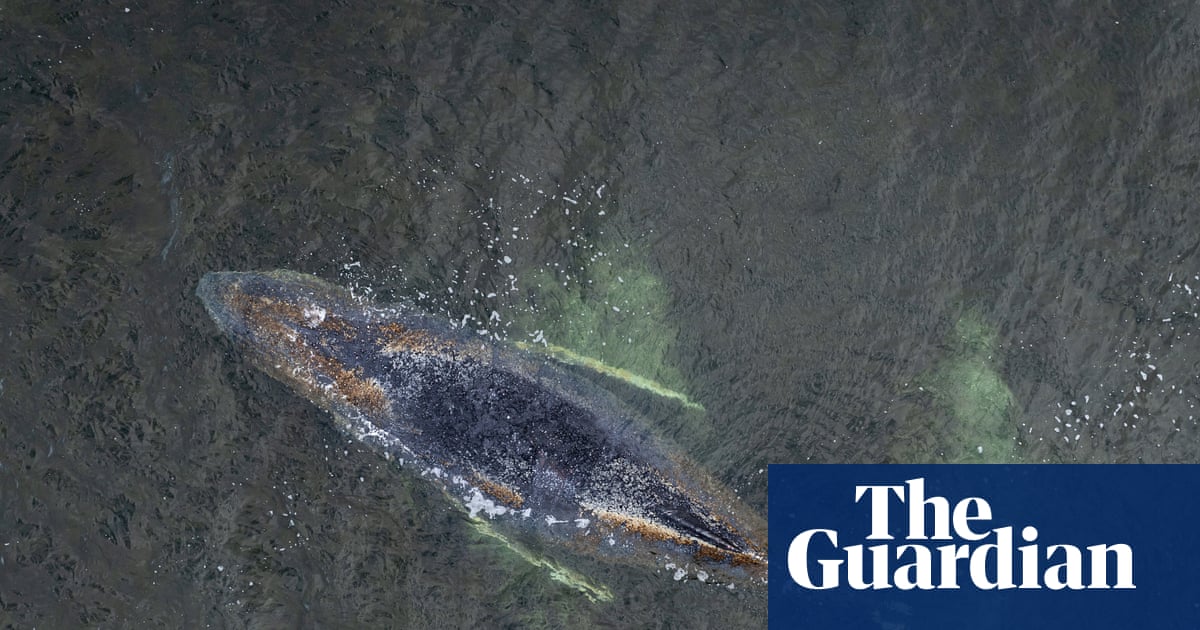
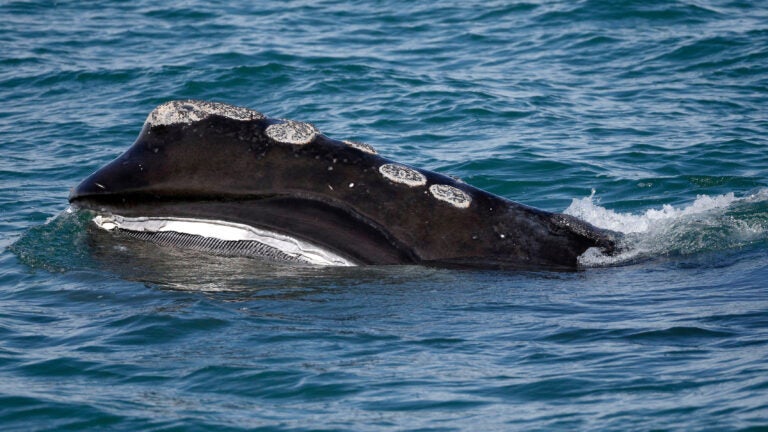
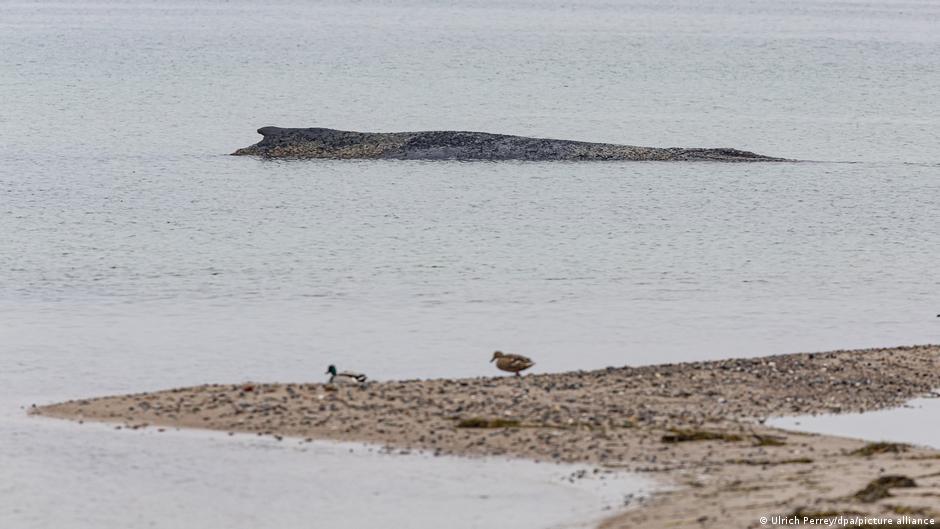
5 days agoWashington's 'God Squad' assembles to debate the fate of a rare endangered whale and drilling in the Gulf of Mexico | Fortune
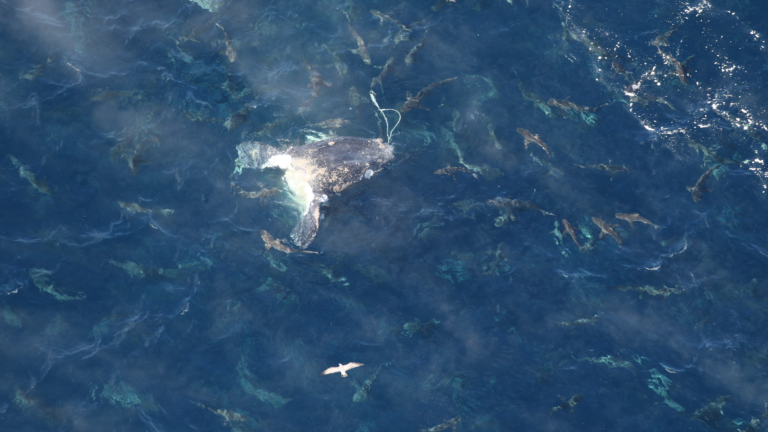
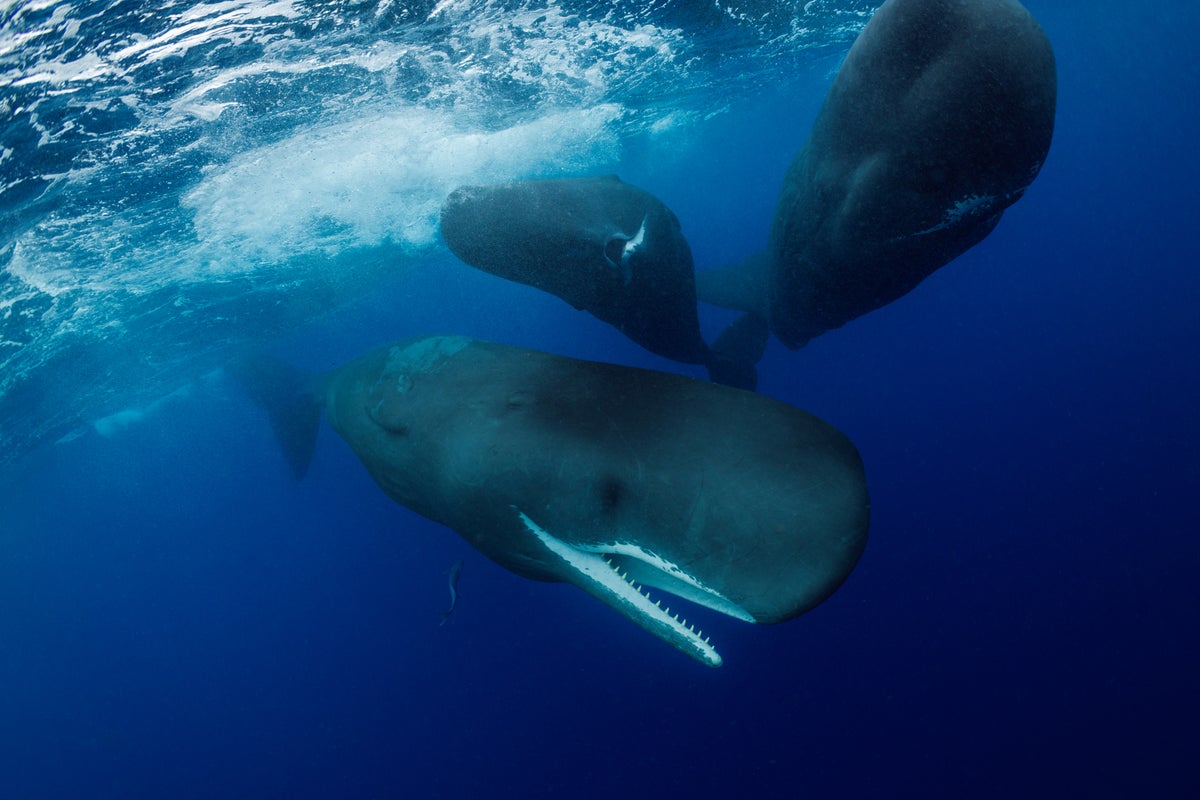
A U.S. panel is considering exempting Gulf oil drilling from the Endangered Species Act, raising concerns for marine life and a rare whale species.



fromSFGATE
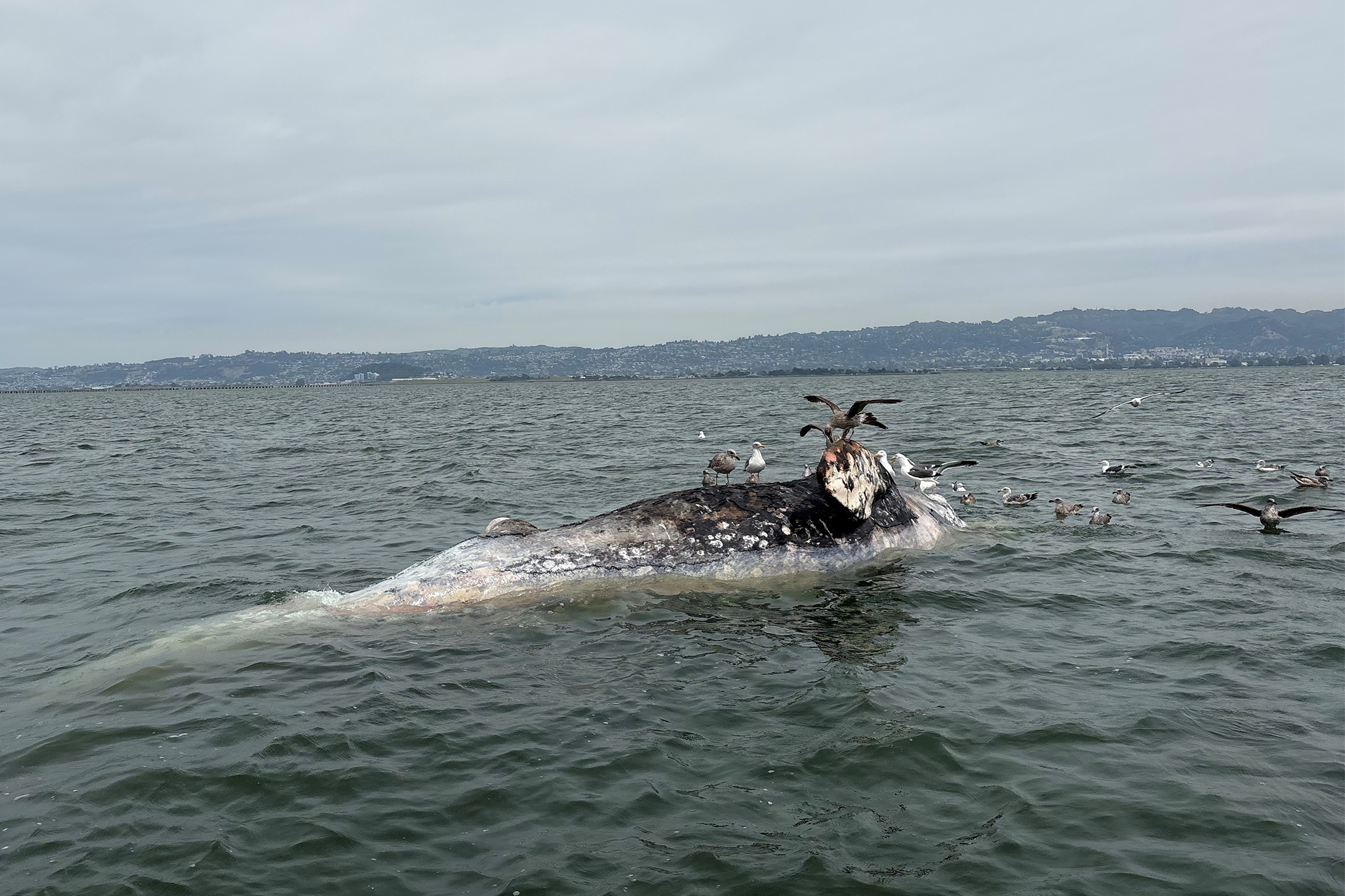
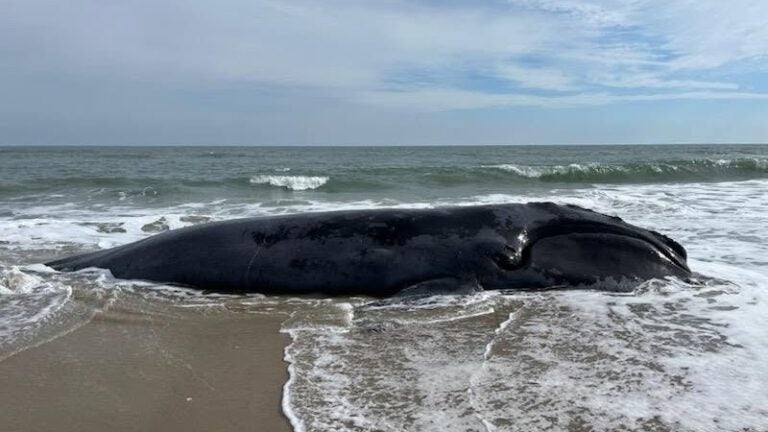
2 weeks agoFirst whale of the year found dead in San Francisco Bay
A whale's death offers a unique window and opportunity to study the animal up close and in this particular case, learn more about how this adult female gray whale may have been behaving in San Francisco Bay. We are hopeful that samples taken during the necropsy will shed some further light on the animal's death and help highlight the importance of keeping whales safe while they utilize this urban-wildlife habitat.
San Francisco
Science
fromThe Washington Post
1 month agoWhy older whale dads are now winning the mating game
Older male humpback whales became more likely to father offspring as populations recovered from whaling, revealing long-term demographic consequences of hunting that persist decades after population rebound.
fromThe Mercury News
1 month ago5 fantastic Whale Festivals in Northern California for spring 2026
Mendocino County is throwing four different whale fests, on the four weekends of March, each in a separate coastal community. After that comes Monterey, in April, with its big annual celebration full of science and wharf fun.
California
UK news
fromwww.independent.co.uk
1 month agoSeals have begun killing and eating dolphins and no-one knows why
Marine experts are investigating unprecedented grey seal attacks on common dolphins along the British coast, with specialists suspecting a single killer family or population may be responsible for the unusual behavior.
Environment
fromwww.theguardian.com
1 month agoA real dark situation to be in': thousands of starving seabirds stranded in biggest wreck' in a decade
Tens of thousands of seabirds, primarily puffins, have washed ashore across European coastlines due to starvation caused by severe Atlantic storms disrupting their ability to hunt.
California
fromwww.mercurynews.com
1 month ago5 fantastic Whale Festivals in Northern California for spring 2026
Northern California hosts multiple whale festivals in spring celebrating gray whale migration, featuring whale watching, food, music, and outdoor activities across Mendocino County and Monterey.
OMG science
fromFortune
2 weeks agoThe ocean was once 10 times quieter. A 1949 whale recording proves it | Fortune
Researchers discovered the oldest known humpback whale song recording from 1949, predating scientific documentation of whale song by nearly 20 years and providing insights into whale communication in a quieter ocean.
OMG science
fromNature
3 weeks agoDaily briefing: Genomes shake up the shark family tree
Doom's cultural impact extends beyond gaming into scientific research, with neurons playing the game and developers porting it to unexpected devices, while shark taxonomy may require reclassification based on genomic analysis revealing Hexanchiformes as a distinct evolutionary lineage.
fromThe Mercury News
1 month agoSonoma Coast named best place in the US for whale watching
For decades, whale watching has been a seasonal ritual along the Sonoma Coast, drawing locals to wind-swept bluffs, binoculars in hand. Now the pastime has earned national notice: Travel + Leisure has declared Sonoma County the best place in the country to see whales. In a story published Feb. 3, the magazine said there is "no better place" in the United States for whale watching than the stretch of coastline
California
Environment
fromABC7 San Francisco
1 month agoTracking fisherman to track fish: The new technological approach to better understand ocean life
Global Fishing Watch uses AIS transponder data and artificial intelligence to track fishing vessels worldwide, providing unprecedented visibility into global fishing fleet movements and activities.
fromAeon
1 month agoOrcas haven't changed, but our view of the killer whale has | Aeon Essays
'Orcas are psychos,' quipped a close friend recently. He wasn't joking, nor was he ill-informed. In fact, he is probably the world's leading historian of whales and people. He had just watched a BBC Earth clip, narrated by David Attenborough, in which three killer whales separate a male humpback calf from his mother in the waters of Western Australia. The video's closing footage, with two of the orcas escorting the naive youngster to his imminent death, resembles nothing so much as a kidnapping:
Philosophy
Environment
fromwww.theguardian.com
1 month agoChronic ocean heating fuels staggering' loss of marine life, study finds
Chronic ocean warming reduces fish biomass by 7.2% per 0.1°C of seabed warming per decade, with marine heatwaves masking long-term decline through temporary population booms in cold-water regions.
fromenglish.elpais.com
2 months agoSharks become easy prey for criminal groups
In February 2023, an article in the Mexican press announced the capture of a vessel some 195 nautical miles from the port of Lazaro Cardenas in the state of Michoacan. It had been carrying nearly 700 pounds of cocaine packaged in plastic-wrapped bricks, in addition to 1,650 liters of hydrocarbons in 33 plastic containers. Two Ecuadorian fishermen were among the five detainees, and their immigration records showed unusual activity.
Law
fromSFGATE
1 month agoRare footage captures a 'glass' animal deep in Monterey Bay
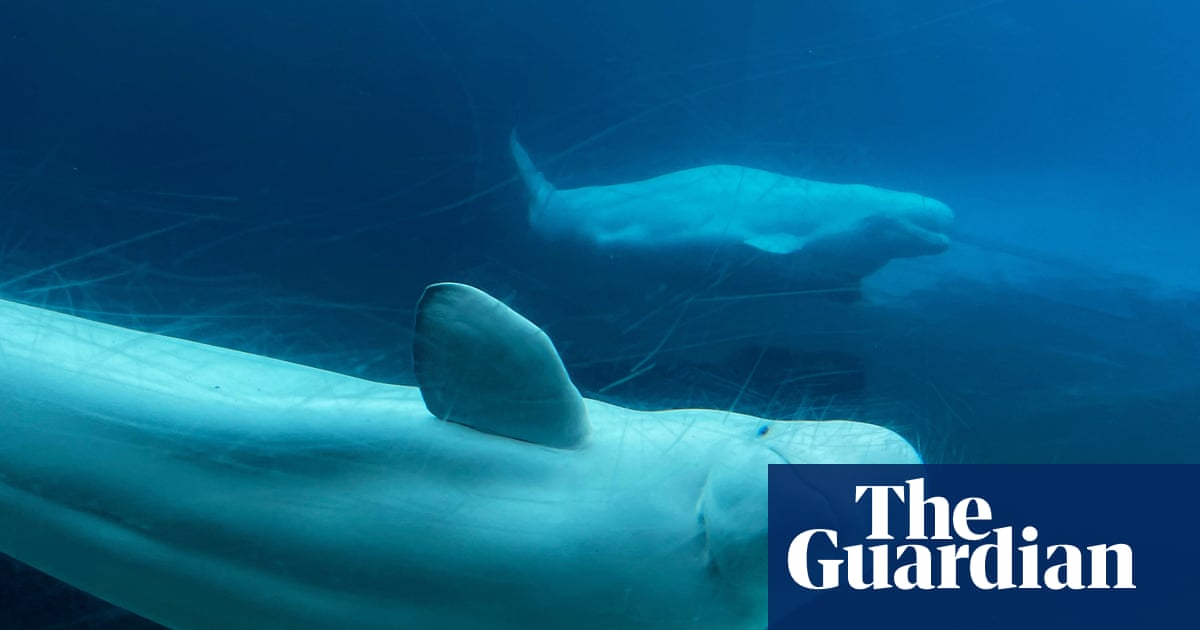
We've documented sightings of glass squids to better understand the remarkable transformations they undergo from hatchlings to adults. This new observation, captured in ultra high-resolution 4K, allowed us to zoom in on a juvenile likely no bigger than a baby carrot and reveal more details than we have been able to see before.
OMG science
fromArs Technica
1 month agoScientists hunting mammoth fossils found whales 400 km inland
At first glance, it looked like Wooller and his colleagues might have found evidence that mammoths lived in central Alaska just 2,000 years ago. But ancient DNA revealed that two "mammoth" bones actually belonged to a North Pacific right whale and a minke whale-which raised a whole new set of questions. The team's hunt for Alaska's last mammoth had turned into an epic case of mistaken identity, starring two whale species and a mid-century fossil hunter.
Science
fromwww.latimes.com
2 months agoCalifornia diver documents close encounter with lacy, undulating sea creature far from home
It looked like the silvery blade of a knife. Peering through his goggles, diver Ted Judah had laid eyes on a deep-sea creature rarely encountered by humans. He and wife Linda were diving off McAbee Beach in Monterey County in late December when, near the surface, he spotted the undulating thing. It was some kind of ribbon fish, he wrote in a post on the Facebook group Monterey County Dive Reports. Kevin Lewand solved the mystery.
Science
Environment
fromwww.theguardian.com
1 month agoClimate crisis linked to fall in southern right whale birth rates as researchers raise warning signal'
Southern right whales have shifted from three-year to four- or five-year calving cycles since 2017, linked to climate-driven changes in Antarctic foraging grounds.
[ Load more ]