#skeleton-discovery

[ follow ]
Los Angeles
fromLos Angeles Times
1 hour ago

Easter egg hunters reportedly come across possible human skull in Long Beach

Possible human remains were discovered at DeForest Park in Long Beach during an Easter egg hunt.
#archaeology
OMG science
fromHarvard Gazette
4 days ago

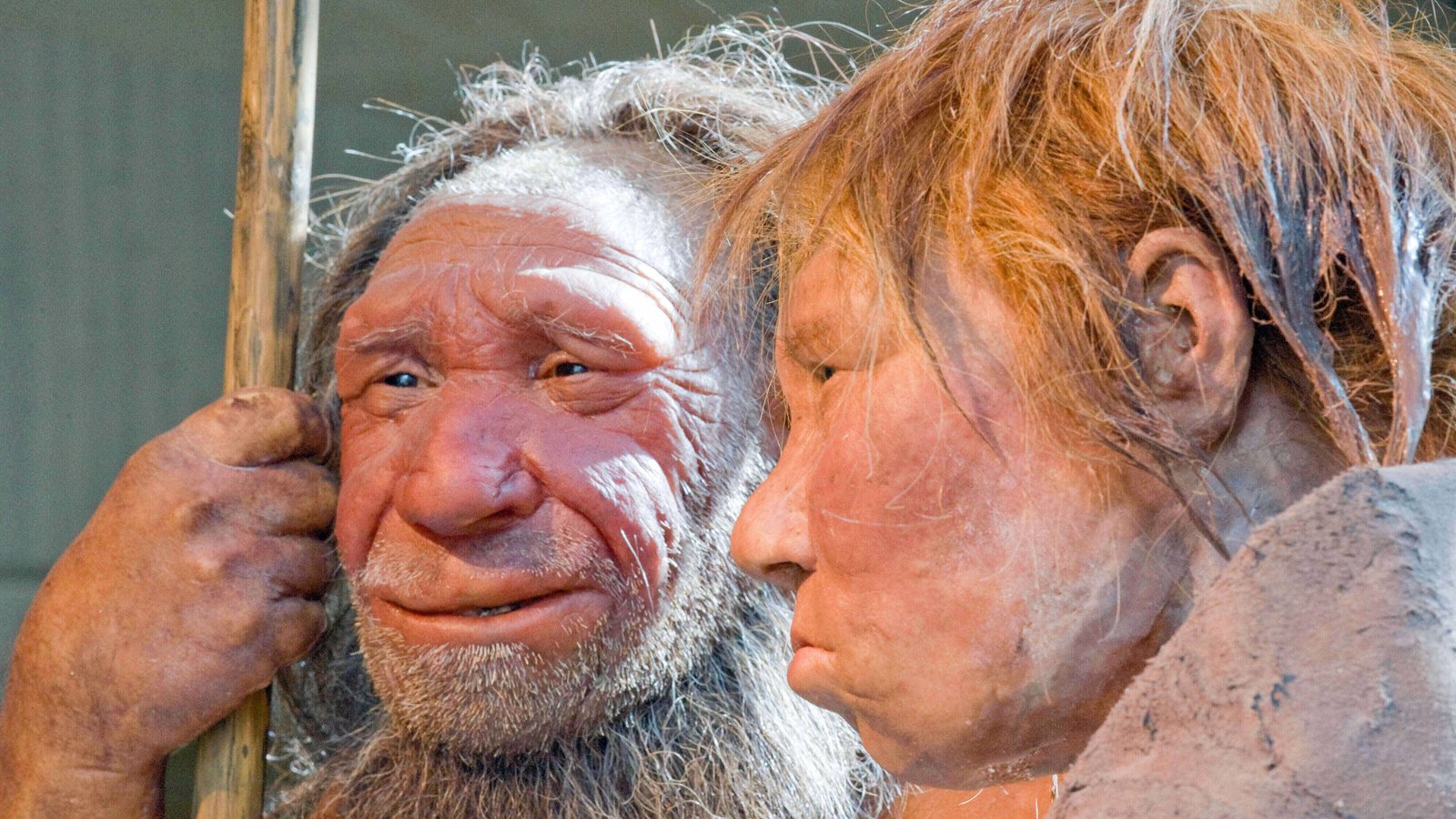
Anthropologist traces split between Homo sapiens and Neanderthals - Harvard Gazette

The transition from multiple human forms to Homo sapiens dominance involved interactions and interbreeding with Neanderthals, not a clear-cut victory.
#human-remains
SF parents
fromwww.theguardian.com
5 days ago

Human remains found on California beach in 2022 identified as missing man

Human remains found in California in 2022 were identified as Walter Karl Kinney, a banker who disappeared in 1999.
fromLos Angeles Times
6 days ago

Human remains found on a Bay Area beach in 1999 and 2023 have been identified

Human remains found on Bay Area beaches in 1999 and 2023 have been identified as those of Walter Karl Kinney, a banker who disappeared in 1999. The remains were discovered by a family searching for sea shells in 2022, leading to an investigation that linked the remains to Kinney's family through DNA analysis.
California
Arts
fromArtnet News
5 days ago

What Did Pompeii Smell Like? A New Study Analyzes Its Ancient Incense

Researchers analyzed ritual residues from Pompeii for the first time, revealing insights into ancient practices through preserved vessels and ash.
History
fromArs Technica
2 days ago

Ice Age dice show early Native Americans may have understood probability

Native Americans used dice for games of chance over 12,000 years ago, predating Old World dice by millennia.
fromArs Technica
3 days ago

New fossil deposits show complex animal groups predating the Cambrian

Four protrusions appear to be arranged in pairs, each consisting of two connected branches surrounding a central depression. We really don't understand what any of these features represent anatomically.
OMG science
fromwww.nature.com
1 week ago

Genomic history of early dogs in Europe

Genomic data indicates that early dogs in Europe underwent significant genetic changes as they adapted to diverse environments and human lifestyles, reflecting a complex interplay of domestication and natural selection.
Pets
Science
fromMail Online
6 days ago

Second Sphinx row erupts as scientists turn on each other

A public dispute has arisen between researchers over claims of a hidden second Sphinx beneath the Giza Plateau.
OMG science
fromwww.scientificamerican.com
3 days ago

Bizarre fossils reveal that complex life evolved far earlier on Earth than we thought

The Cambrian explosion may have occurred later than previously thought, as new fossils from the Ediacaran period suggest earlier complex life forms existed.
fromThe Local France
2 weeks ago

Mysterious ancient skeletons discovered sitting upright in France

Similar to four others unearthed nearby earlier this month, it is sitting upright at the bottom of a one-metre-wide pit. The skeleton's hands are resting in its lap. Like the others, its back is against the eastern wall, its face directed westward.
France news
Roam Research
fromArs Technica
2 weeks ago

Study pinpoints when bow and arrow came to North America

North Americans adopted the bow and arrow about 1,400 years ago, replacing the atlatl and dart, with rapid adoption in the south and gradual replacement in the north.
Alternative medicine
fromArs Technica
2 weeks ago

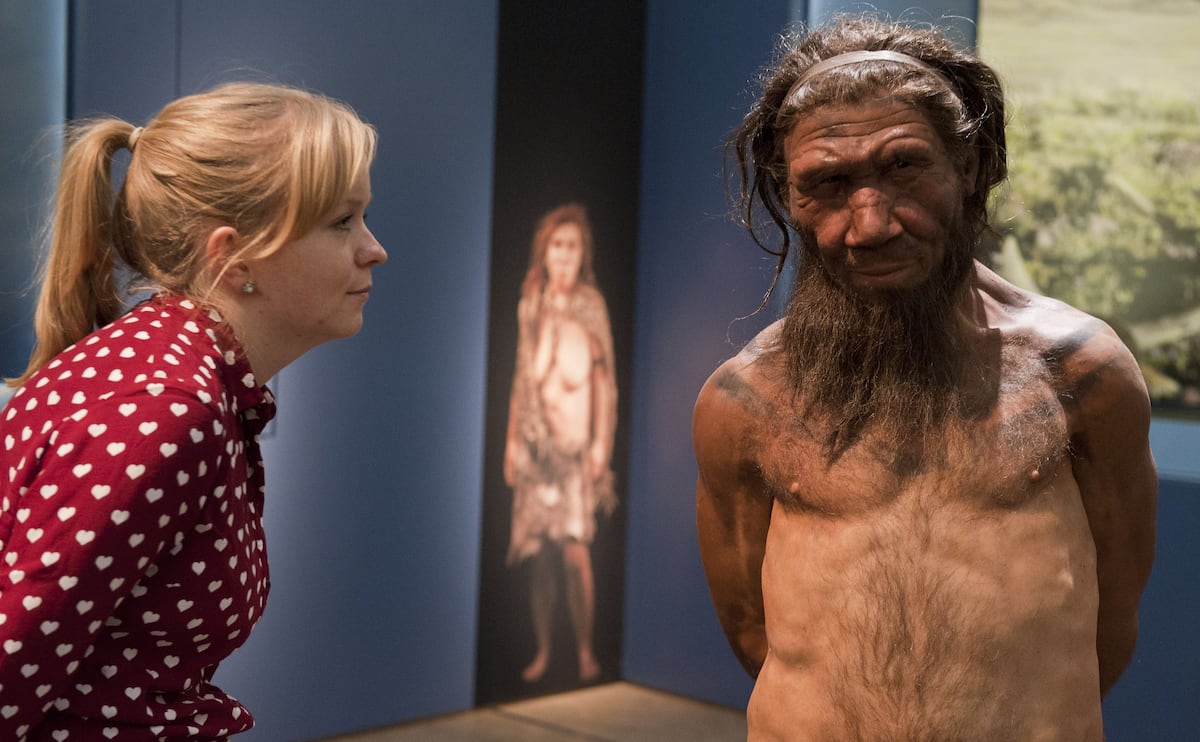
Never mind Band-Aids, Neanderthals had antiseptic birch tar

Neanderthals likely used birch tar for medicinal purposes, including treating infections and insect bites, beyond its known use as a weapon adhesive.
#mass-grave
Science
fromNature
2 weeks ago

Daily briefing: Tiny bones from Neanderthal fetus point to downfall of the species

A genetic bottleneck contributed to the Neanderthals' extinction, while AI-generated X-rays challenge radiologists' ability to discern real from fake.
fromMail Online
5 days ago

Mystery of 'second Sphinx' deepens as new footage reveals hidden clues

The footage captured by Trevor Grassi shows dozens of square shafts carved into bedrock, many extending deep underground but primarily filled with sand, raising new questions about what may lie beneath the surface.
OMG science
fromwww.theguardian.com
2 weeks ago

Ancient skeleton discovered sitting upright in France

Five tombs of Gauls buried in a seated position have been discovered in central Dijon. Similar to four others unearthed nearby earlier this month, it is sitting upright at the bottom of a one-metre-wide pit. The skeleton's hands are resting in its lap. Like the others, its back is against the eastern wall, its gaze directed westward.
France news
fromArtnet News
1 week ago

Massive Cache of 42,000 Pottery Shards Reveals Daily Life in Ancient Egypt

The ostraca show us an astonishing variety of everyday situations. We find tax lists, deliveries, short notes about everyday activities, religious texts, and priestly certificates attesting the quality of sacrificial animals.
Arts
Science
fromNature
1 week ago

Daily briefing: Earliest known dog genome pushes genetic record back 5,000 years

Early domestic dogs were crucial to diverse human communities, with their genomes dating back over 15,000 years.
fromwww.thehistoryblog.com
4 days ago

Neolithic axe found in Lake Constance

The axe was the most important find in the group and would have been highly valued in the Neolithic community. Experiments with fiddle bows have found that it takes more than a day of work to manufacture an axe like this one.
History
Brooklyn
fromBrooklyn, NY Patch
3 weeks ago

Human Remains Found Along Brooklyn's Red Hook Waterfront: NYPD

An unidentified man's body was discovered near Red Hook shoreline in Brooklyn on Saturday afternoon, with the investigation ongoing.
#ancient-dna
OMG science
fromNature
1 week ago

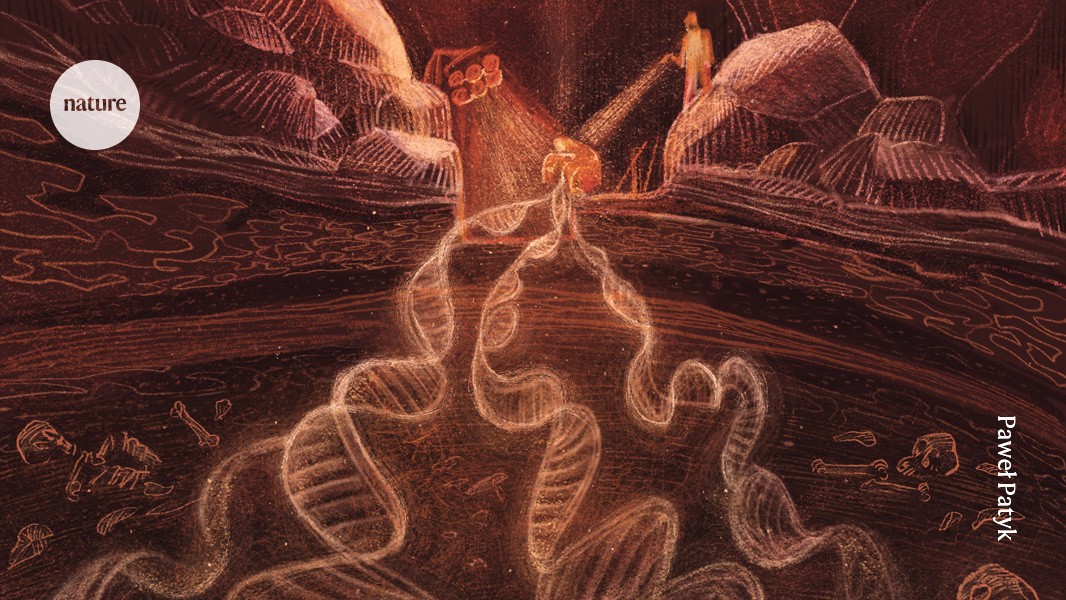
How DNA in dirt is shaking up the study of human origins

Ancient DNA can be recovered from sediments, revolutionizing the study of extinct species and the history of ecosystems.
History
fromMedievalists.net
1 week ago

Scientists Confirm Remains of Medieval Emperor Otto the Great - Medievalists.net

Emperor Otto the Great's identity has been confirmed through scientific research, including DNA analysis, after centuries of uncertainty.
#neanderthal-human-interbreeding
History
fromwww.thehistoryblog.com
2 weeks ago

New gold foil old man found in Norway

A rare Nordic Iron Age gold man was discovered in Norway, dating between 550 A.D. and 793 A.D., indicating significant cultural importance.
OMG science
fromMail Online
3 weeks ago

Scientists recreate the lost languages of ancient humans

Scientists reconstructed ancient human species languages by analyzing fossilized skeletal imprints of soft tissues like the larynx, tongue, and brain, revealing that Neanderthals likely spoke languages understandable to early Homo sapiens.
US news
fromwww.npr.org
1 month ago

Newly discovered dinosaur species was a fish-eater with a huge horn

Spinosaurus mirabilis was a school-bus-length, fish-eating spinosaur with a foot-long curved horn that lived in Cretaceous marshes about 95 million years ago.
fromArs Technica
4 weeks ago

A unicorn-like Spinosaurus found in the Sahara

The Spinosaurus is a sail-backed, crocodile-snouted dinosaur that Hollywood depicted as a giant terrestrial predator capable of taking down a T. rex in Jurassic Park 3. Then they changed their mind and made it a fully aquatic diver in Jurassic World Rebirth—a rendering that was more in line with the latest paleontological knowledge. But now, deep in the Sahara Desert, a team of researchers led by Paul C. Sereno discovered new Spinosaurus fossils suggesting both scientists and filmmakers might have got it all wrong again.
Science
History
fromMail Online
2 weeks ago

Roman artifact found in the Americas shatters New World history

A Roman terracotta head discovered in a sealed Mexican tomb in 1933 suggests Roman contact with the Americas around 200 AD, predating Columbus by over a thousand years.
OMG science
fromMail Online
3 weeks ago

Sea fossils atop world's mountains fuel claims of Noah's Great Flood

Marine fossils discovered atop mountains worldwide result from tectonic plate movement lifting ancient seabeds, not a global biblical flood.
History
fromMedievalists.net
2 weeks ago

Two Medieval Men Found Buried in Prehistoric Site - Medievalists.net

Medieval men were buried in the Menga dolmen, a Neolithic monument in Spain, over 4,000 years after its construction, demonstrating the site's enduring symbolic importance across millennia.
Social justice
fromwww.npr.org
1 month ago

How a Black fossil digger became a superstar in the very white world of paleontology

A Black South African fossil digger became a leading junior curator, reclaiming African human origins in a field long dominated by white researchers.
OMG science
fromwww.scientificamerican.com
1 month ago

Face of ancient human ancestor Little Foot' reconstructed for the first time

Little Foot, the most complete Australopithecus skeleton ever found, now has a reconstructed face showing large eye sockets and resemblance to other Australopithecus fossils from Africa.
Science
fromNature
1 month ago

Neanderthal dad, human mum: study reveals ancient procreation pattern

Female Homo sapiens and male Neanderthals mated more frequently than the reverse pairing, shaping human genetic ancestry patterns revealed through analysis of female Neanderthal specimens.
US news
fromwww.theguardian.com
2 months ago

Pennsylvania man charged after more than 100 human remains found in his possession

A Pennsylvania man faces hundreds of grave-robbery charges after authorities found over 100 human remains, including skulls and mummified parts, taken from Mount Moriah mausoleums.
History
fromOpen Culture
1 month ago

Behold the First Realistic Depiction of the Human Face (Circa 25,000 BCE)

The Venus of Brassempouy, a 25,000-year-old mammoth ivory carving, represents the earliest realistic human face depiction and marks the dawn of beauty in human culture.
fromBoston.com
2 months ago

Genealogists release image in attempt to identify child's skull found in N.H. store in the 1990s

Investigative genetic genealogists are asking for the public's help to identify a child whose skull was seized from a Seabrook, N.H., business more than 30 years ago. The DNA Doe Project, a California-based nonprofit that builds DNA profiles from unidentified human remains, released a new facial reconstruction on Monday. The group also announced that the skull - believed to belong to a girl between the ages of 7 and 9 - has ancestral roots on the Greek island of Chios.
US news
fromenglish.elpais.com
1 month ago

Ants trapped in amber reveal what diminutive life was like millions of years ago

Although there are many amber stones containing a single creature, there are fewer that include two or more, as is the case with a pair of mosquitoes trapped in amber 130 million years ago which tell us that, back then, males also sucked blood. Even more extraordinary is when several organisms can be seen interacting, either eating the other, acting as a parasite, or cooperating.
Science
Arts
fromHyperallergic
2 months ago

This Handprint May Be the World's Oldest Rock Art

A partial hand stencil in an Indonesian cave dates to about 67,800 years ago, making it the oldest known human-created rock art.
Science
fromwww.scientificamerican.com
1 month ago

Sex between Neandertals and anatomically modern humans tended to follow a specific pattern

Neandertal-human interbreeding was primarily between male Neandertals and female humans, evidenced by the absence of Neandertal DNA on modern human X chromosomes.
Science
fromArs Technica
1 month ago

"Million-year-old" fossil skulls from China are far older-and not Denisovans

Homo erectus fossils from Yunxian in China are dated to about 1.77 million years, making them the oldest hominins discovered in East Asia.
Science
fromenglish.elpais.com
1 month ago

A wonderful' new dinosaur species with a colorful crest is unearthed in the Sahara Desert

Spinosaurus mirabilis, discovered in Niger, was a 13-meter, piscivorous theropod with a scimitar-shaped skull crest and display sail.
fromwww.scientificamerican.com
1 month ago

Could aliens in another galaxy see dinosaurs on Earth?

For example, reader David Erickson had this on his mind: If there were aliens 66 million light-years from Earth, how big a telescope would they need to see dinosaurs? Ha! I love this question. I've thought of it myself but never worked out the mathexcept to think, Probably pretty big, which turns out to dramatically underestimate the actual answer.
Science
fromwww.scientificamerican.com
2 months ago

Meet the Ancestor That Connects Us to Neandertals and Denisovans

New research published today in Nature dates the boneschipped out from a cave called Grotte a Hominides and nearby it over decadesto about 773,000 years ago, during the era of the last common ancestor of Homo sapiens, Homo neanderthalensis and Denisovans (a group of humans that ranged across Asia and that does not have an agreed-upon species name). We can say that the shared ancestry between these three species is perhaps in Grotte a Hominides in Casablanca, says study co-author Abderrahim Mohib, a prehistorian at the National Institute of Archaeology and Heritage Sciences in Rabat, Morocco.
Science
fromArs Technica
1 month ago

Scientists hunting mammoth fossils found whales 400 km inland

At first glance, it looked like Wooller and his colleagues might have found evidence that mammoths lived in central Alaska just 2,000 years ago. But ancient DNA revealed that two "mammoth" bones actually belonged to a North Pacific right whale and a minke whale-which raised a whole new set of questions. The team's hunt for Alaska's last mammoth had turned into an epic case of mistaken identity, starring two whale species and a mid-century fossil hunter.
Science
History
fromMail Online
2 months ago

Father of alien archaeology says pyramids not built by human hands

Erich von Däniken claimed extraterrestrials aided ancient civilizations in building pyramids, but archaeological evidence attributes pyramid construction to organized human labor.
Science
fromArs Technica
2 months ago

We have a fossil closer to our split with Neanderthals and Denisovans

Casablanca fossils are North African counterparts to Homo antecessor, positioned near the split that led to Neanderthals/Denisovans and the lineage toward modern humans.
History
fromNature
1 month ago

An ancient Roman game board's secrets are revealed - with AI's help

An ancient Roman object from the southern Netherlands most likely functioned as a blocking board game, indicating such games existed in Europe earlier than believed.
fromwww.scientificamerican.com
2 months ago

A foraging teenager was mauled by a bear 27,000 years ago, skeleton shows

We have little physical evidence of these interactions turning violent, however, because burials were rare and carnivores were more likely to finish off their prey. That's why the embellished burial site of a 15-year-old from 27,000 years ago is an important window into the past: the teenager's bones indicate he was mauled by a bear. The finding represents some of the first evidence of its kind.
Science
fromDefector
2 months ago

Let The Record Show That Otzi Fucked | Defector

Ötzi, the 5,000-something-year-old man found frozen in the Alps, did not have an easy go of it. He was probably murdered, shot from behind with an arrow that missed his vital organs and led to heavy bleeding and a prolonged and painful death. Days before his death, he fought another person in hand-to-hand combat and gashed his right hand. The more scientists have been able to study his body, the more ailments they have unveiled.
Science
History
fromwww.thehistoryblog.com
2 months ago

Unique bone box found in Roman-era grave

A tiny Roe-deer bone box with sliding lid and ring-and-dot decoration was buried as a prized cosmetic container in a Late Roman woman's grave.
Science
fromwww.dw.com
1 month ago

Tiny dinosaur fossil could provide evolutionary clues: study

A newly discovered tiny ornithopod, Foskeia pelendonum, exhibits unusually complex anatomy that reshapes understanding of ornithopod evolution.
Science
fromwww.scientificamerican.com
2 months ago

Scientists Find Extinct Rhino DNA in Mummified Wolf Puppy's Stomach

Woolly rhinoceros genome was sequenced from tissue in a mummified Pleistocene wolf pup, showing genetically healthy, stable population around 14,400 years ago.
Science
fromNature
2 months ago

A mysterious ancient fingerprint and a lemon-shaped planet - the stories you've missed

A 4,400-kilometre undersea fibre-optic cable can detect seismic waves by measuring light reflections from glass impurities along its length.
Science
fromwww.scientificamerican.com
2 months ago

This is the most complete skeleton yet of our ancestor Homo habilis

A new, unusually complete Homo habilis skeleton from Lake Turkana shows a small, less modern body with long, ape-like arms and primitive proportions.
fromwww.dw.com
1 month ago

New dinosaur fossils could provide evolutionary clues: study

From the beginning, we knew these bones were exceptional because of their minute size. It is equally impressive how the study of this animal overturns global ideas on ornithopod dinosaur evolution,
Science
Science
fromwww.nature.com
2 months ago

Afar fossil shows broad distribution and versatility of Paranthropus

Pliocene and Late Miocene East African fossil evidence reveals diverse early hominin taxa, varying dental and skeletal morphologies, and debates over taxic diversity.
fromArs Technica
2 months ago

These 60,000-year-old poison arrows are oldest yet found

Poisoned arrows or darts have long been used by cultures all over the world for hunting or warfare. For example, there are recipes for poisoning projective weapons, and deploying them in battle, in Greek and Roman historical documents, as well as references in Greek mythology and Homer's Iliad and Odyssey. Chinese warriors over the ages did the same, as did the Gauls and Scythians, and some Native American populations.
Science
fromwww.scientificamerican.com
2 months ago

Humans Made Poisoned Arrowheads Thousands of Years Earlier Than Previously Thought

Researchers have found traces of what appears to be plant-derived poison on tiny stone arrowheads from South Africa dated to 60,000 years ago. The finding pushes back the origin of this revolutionary hunting technology by tens of thousands of years. Scientists have long been fascinated by the development of poisoned hunting weapons. For one thing, they would have seriously leveled up our ancestors' foraging game.
Science
Science
fromArs Technica
2 months ago

Earliest African cremation was 9,500 years ago

A 9,500-year-old intact hunter-gatherer cremation pyre containing an adult woman's remains was found at Mount Hora, Malawi, indicating organized communal ritual and labor.
Science
fromwww.scientificamerican.com
2 months ago

Mystery tower fossils may be a whole new kind of life

Prototaxites represents a previously unknown, distinct branch of life that dominated terrestrial landscapes before trees, separate from fungi and plants.
Science
fromwww.npr.org
1 month ago

Searching for dinosaur secrets in crocodile bones

Counting growth rings in fossil bones can overestimate dinosaur ages because rings may not form strictly once per year.
fromBig Think
2 months ago

The dinosaur that vanished twice: How WWII nearly erased Spinosaurus from history

Dinosaur fever gripped the Western world during the early 1900s, fueled by the discovery of new, ever larger and more spectacular dinosaurs in Europe and especially in North America. Interest in these fossils was not merely driven by academic curiosity. Dinosaur skeletons and research had become a status symbol for museums and their financiers, whether government or private, and colonial powers turned to their areas of influence to find new remains.
Science
[ Load more ]