Software development
fromInfoQ
3 days agoHow Slack Manages Context in Long-running Multi-agent Systems
Slack engineers improved long-running agent systems by using structured memory and validation to maintain coherence and accuracy.
It's easy to tell who the top slacker is in your office. Slack, the ubiquitous workplace messaging app that has been changing workplaces since 2014, makes it easy to see who sent the most messages this past year. Unfortunately, there is no glitzy presentation like Spotify Wrapped, but if you want to know who is blowing up your notifications the most, here is how to do it.
Slack CEO Denise Dresser is leaving the company and joining OpenAI as the company's chief revenue officer, multiple sources tell WIRED. Marc Benioff, the chief executive of Salesforce, which owns Slack, shared news of Dresser's departure in a message to staff on Monday evening. At OpenAI, Dresser will manage the company's enterprise unit, which has been growing rapidly this year. She will report to chief operating officer Brad Lightcap. She starts next week.
Since Slack's launch in early 2013, the company has raised more than $320 million in funding-its $160 million round in April boosted the San Francisco company's private valuation to nearly $3 billion. The workplace messaging software has amassed 2 million daily active users since the service officially launched in February 2014-that's almost double the tally from six months ago. And many Slack users stay connected to the service an average of 10 hours daily, Underwood said.
John Mazotis, CIO at Corsearch, shares the strategic thinking, implementation challenges, and measurable wins from their three-month migration journey. Corsearch, a leader in IP services since 1949, recently completed a comprehensive migration from what Mazotis calls their "legacy" Microsoft environment to a modern workspace powered by Google and Slack. The decision wasn't taken lightly, given that the company operates globally and relies heavily on collaboration tools for its trademark services and brand protection operations.
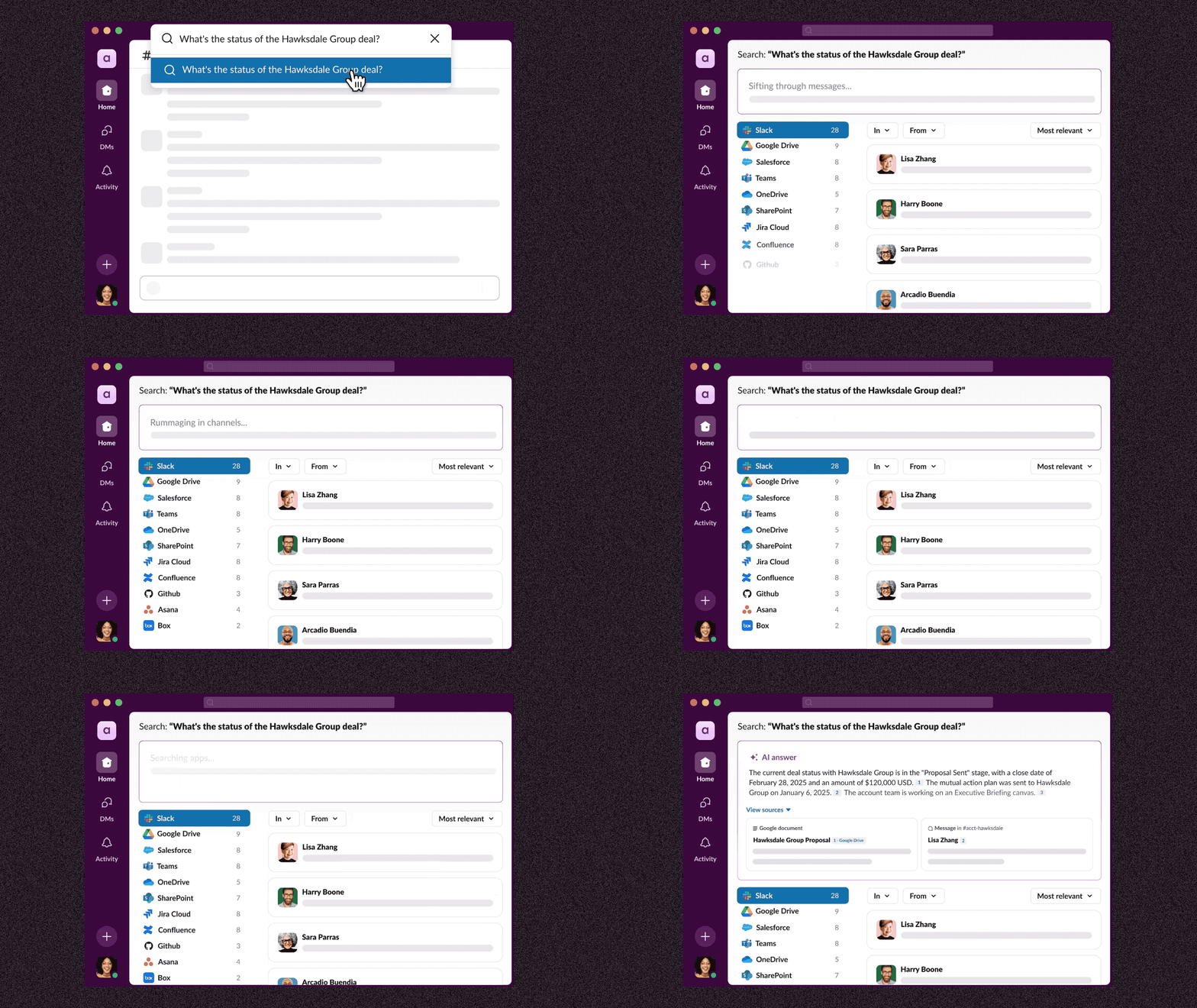
A huge amount of knowledge, information, and context is hidden in Slack conversations. This can now be used by AI. Slack has been critically examined by many organizations and developers in recent years. It was the preferred platform for many developers, but was then acquired by Salesforce. After that, the focus was heavily on integrating Slack into the Salesforce ecosystem.
If your workday lives on Slack, you already know how noisy it can get. Threads spiral into chaos. Messages get lost in the shuffle. And before you know it, someone's asking for the third time, "Hey, just checking in on this?" That's where a well-written message makes all the difference. A quick reminder, a friendly nudge, or a clear update sent at the right time can keep everyone in sync without sounding overbearing.
Slack sent a nonprofit hacking club for teens a demand for $50,000, payable within a week, and threatened to delete the club's message archive if it did not pay. That horror scenario came to light in a Thursday post by Mahad Kalam, who helps out at Hack Club, a nonprofit that works to run coding clubs at high schools. Slack is an integral part of the org's offline community.