#ancient-mediterranean
#ancient-mediterranean
[ follow ]
#archaeology #ancient-mesopotamia #mesopotamia #sumer #pompeii #ancient-egypt #archaeological-discovery




:max_bytes(150000):strip_icc()/TAL-rhodes-old-town-RHODESGR0124-1453db92296f45a6a1add11c976d8fd9.jpg)




US news
fromwww.npr.org
3 weeks agoOpinion: An ancient, sophisticated palate
Ancient people 5,000-8,000 years ago in northern Europe prepared sophisticated, carefully selected meals combining hunted fish, gathered plants, roots, and berries, suggesting deliberate culinary practices rather than simple subsistence eating.
fromArtnet News
2 weeks agoJust How Much Did Pompeii's Prized Blue Paint Cost? | Artnet News
In the Roman Empire, Egyptian blue was typically traded in the form of small pellets, which were ground into a useable powder, and researchers estimate between six and 10 pounds were used to coat the Blue Room. Using prices quoted by Pliny the Elder (who died in nearby Stabiae during the eruption), the researchers estimate this much paint would have cost 93 to 168 denarii, perhaps equivalent more than 1,000 loaves of bread or 90 percent of a soldier's annual salary.
Arts
History
fromWorld History Encyclopedia
3 weeks agoSargon of Akkad: From Gardener to King of the Four Corners of the World
Sargon of Akkad founded the first multinational empire in history, uniting Mesopotamian kingdoms under central authority and establishing bureaucratic administration standards that influenced rulers for 1,500 years.
fromJezebel
1 month agoThe Time I Learned Greek Scholars Are Canonically Hotter Than Roman Scholars
It started with a book launch in 2021. I'd been living in London as a social media journalist when I asked my then-publication's culture editor to send me to one of these exclusive-sounding events, as 1) I'd never been and 2) I just really wanted to be a person who "has a book launch to go to." Thankfully, there was one that exact day-and he put my name on the list for the release of Mary Beard's Emperor of Rome. Huzzah.
Books
fromwww.thehistoryblog.com
3 weeks agoSamnite burials of children with bronze warrior belts found
The excavation ultimately unearthed 34 burials, 15 of them belonging to children between two and ten years old when they died. The graves are clustered in groups, probably reflecting family nuclei. Most the grave types are earthen pits covered with roof tiles angled against each other.
History
fromWorld History Encyclopedia
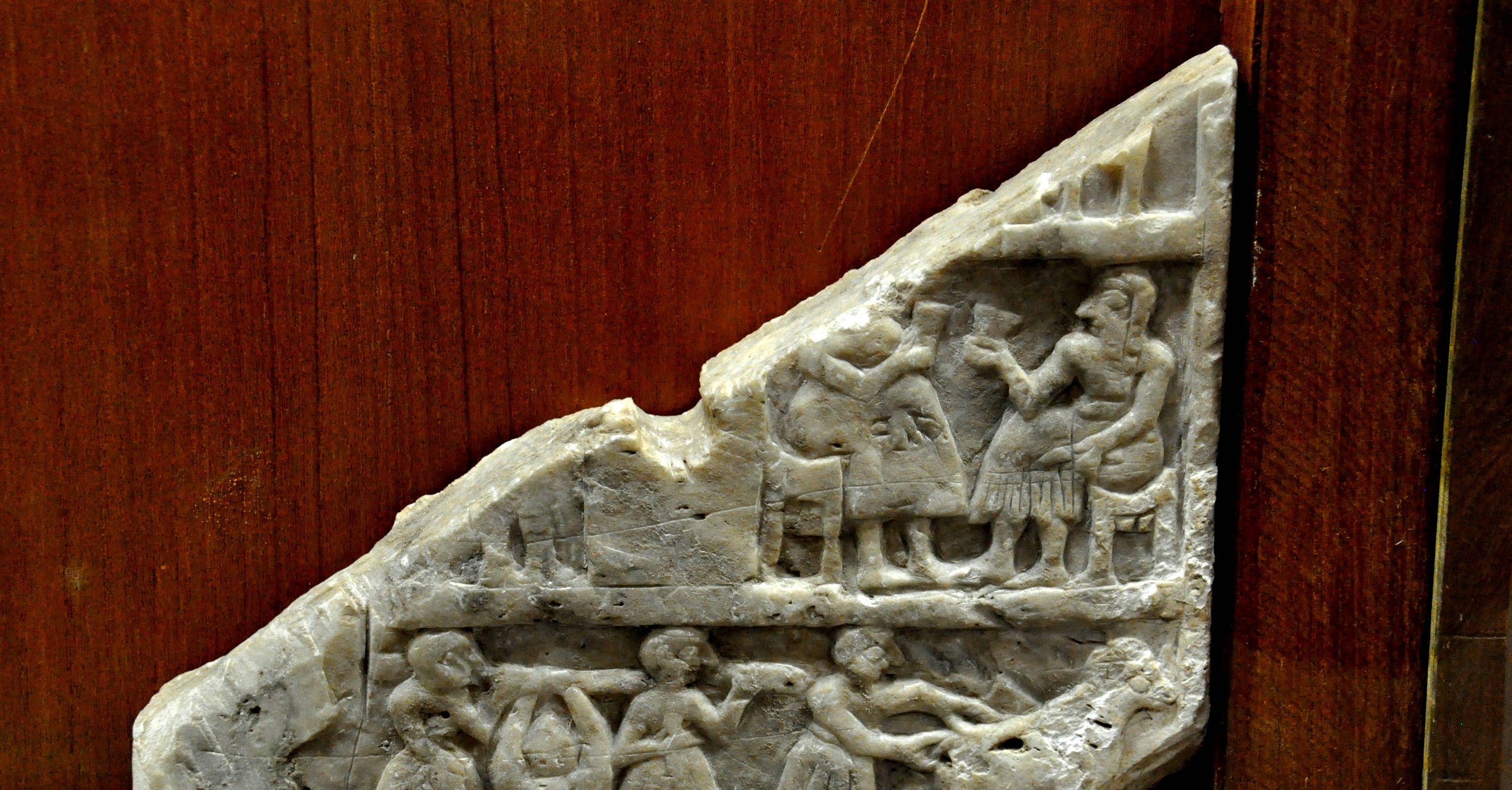
3 weeks agoCuneiform: From trade lists to epic tales of gods
Cuneiform is a system of writing first developed by the ancient Sumerians of Mesopotamia circa 3600/3500 BCE. It is considered the most significant among the many cultural contributions of the Sumerians and the greatest among those of the Sumerian city of Uruk, which further developed and advanced cuneiform circa 3200 BCE and allowed for the creation of literature.
History
fromConde Nast Traveler
2 months agoA Guide to Viking's 'Ancient Mediterranean Treasures' Cruise, On and Off the Ship
Onboard/Offboard is a series that explores the can't-miss highlights of our favorite cruises-from the shore excursions to book to the spa treatments too relaxing to pass up. A new ship sometimes needs time to work out the kinks, but at this point-more than 100 vessels later- Viking has the routine down pat. In early November, I boarded the Viking Vesta, the line's 12th ocean vessel, in Istanbul, a few months into service.
Travel
Gadgets
fromOpen Culture
1 month agoAn Animated Introduction to the Antikythera Mechanism: The World's First Analog Computer from Ancient Greece
The Antikythera Mechanism is a 2nd-century BCE geared analog device functioning as an ancient computer for modeling astronomical cycles and predicting celestial events.



Science
fromwww.nature.com
2 months agoAuthor Correction: Hunter-gatherer sea voyages extended to remotest Mediterranean islands
Corrections to regional radiocarbon uncertainties do not meaningfully change conclusions about timing of the Mesolithic–Neolithic transition or maritime voyages in the central Mediterranean.
fromOpen Culture
1 month agoSeven Wonders of the Ancient World: From the Walls of Babylon to the Sewers of Rome
Seven were the strings of the lyre (unless there happened to be eight or nine), seven were the gates of Thebes, and seven were the "wandering stars" in the night sky (if you count the sun and moon). The identity of the wonders was less important than the length of their list, and indeed, additions and changes were proposed since the beginning.
History
fromMail Online
2 months agoLong-lost Egyptian scroll fuels debate over real-life biblical giants
An ancient Egyptian papyrus held by the British Museum has been cited as possible evidence supporting some of the Bible's most controversial claims about giants. The 3,300-year-old document, known as Anastasi I, has been in the museum's collection since 1839 and has recently resurfaced on the Associates for Biblical Research, renewing interest in its possible links to biblical accounts. The papyrus describes encounters with the Shosu people, said to stand 'four cubits or five cubits' tall, up to eight feet in height.
Books
fromOpen Culture
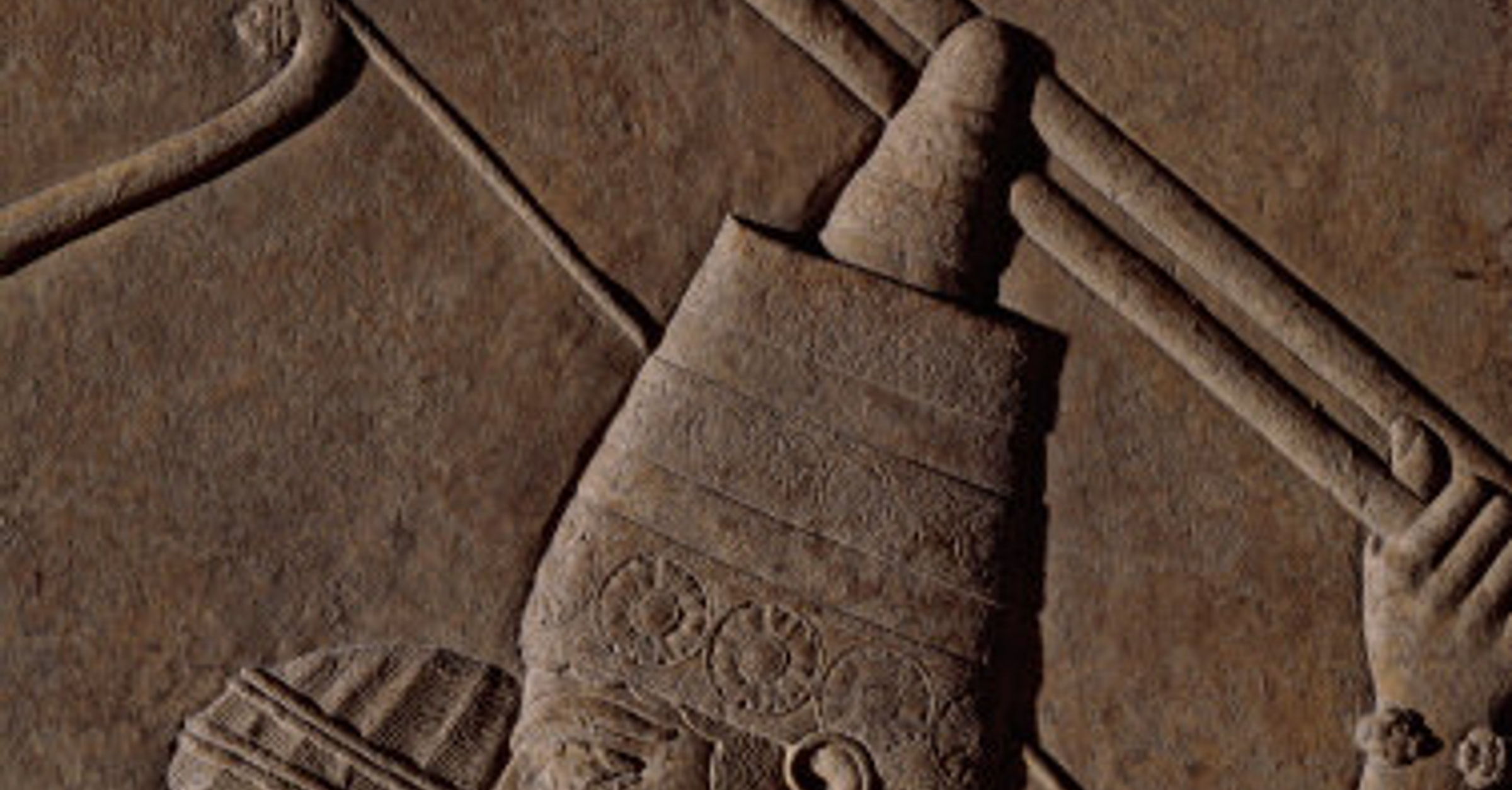
1 month agoRoman Statues Weren't White; They Were Once Painted in Vivid, Bright Colors
One tenet of classical idealism is the idea that Roman and Greek statuary embodied an ideal of pure whiteness-a misconception modern sculptors perpetuated for hundreds of years by making busts and statues in polished white marble. But the truth is that both Greek statues and their Roman counterparts were originally brightly painted in riotous color.
History


History
fromWorld History Encyclopedia
1 month agoAkkad and the Akkadian Empire: The First Multinational Empire in the World
The Akkadian Empire, founded by Sargon the Great around 2350 BCE, was the first multinational political entity that unified Mesopotamia and established governmental, administrative, and military systems adopted by subsequent civilizations.
History
fromWorld History Encyclopedia
1 month ago12 Great Cities of Ancient Mesopotamia: The Rise and Fall of the Earliest Cities in the World
Twelve major Mesopotamian cities including Nineveh, Uruk, Babylon, and Ur became legendary through Greek writings and yielded significant archaeological discoveries, each connected to a patron deity whose prestige determined the city's fate.
History
fromMedievalists.net
1 month agoEast Roman Archaeology: Goals and Challenges, with Marica Cassis - Medievalists.net
Archaeology reveals material evidence of daily life, settlement patterns, and economic systems in the East Roman world that textual sources cannot provide, while facing challenges in establishing itself as a distinct field separate from classical and Islamic archaeology.
History
fromwww.theguardian.com
1 month agoScholar, seductress, alchemist: who was the real Cleopatra?
Cleopatra VII's legacy has been corrupted by ancient male sources portraying her as exotic and seductive, yet her name endures with greater recognition than her chroniclers, and historical evidence reveals her as a polyglot scholar interested in alchemy and healing remedies.
fromMail Online
1 month agoThe bone that proves Hannibal really DID cross the Alps with elephants
While the bone was worn and poorly preserved, archaeologists managed to identify its origin by comparing it with modern elephant and mammoth bones. Despite there not being enough DNA to confirm the exact species, the researchers were able to carbon date a tiny sample of the bone. This places the elephant's death between the late fourth and early third centuries BC - right in the middle of the Second Punic War.
History
fromMail Online
1 month agoMysterious symbols spanning the globe hint at a lost civilization
His investigation began after identifying recurring giant T-shapes, three-level indents, and step pyramids carved into ancient stones worldwide. 'These specific symbols that are built in different size proportions, and the symbols are found in ancient stones around the world, are not supposed to exist; no cultures are supposed to have any cross-platform,' LaCroix explained. The symbols appear in locations ranging from Turkey's Van region to South America and Cambodia.
History
History
fromMedievalists.net
2 months agoReading in Byzantium: Literacy, Books, and a World of Texts - Medievalists.net
Byzantine reading was communal and performative, woven into religious, educational, and administrative life while preserving classical learning within a Christian intellectual framework.


fromMedievalists.net
1 month agoWhy were pseudo-Arabic inscriptions placed on churches in Greece?, with Alicia Walker - Medievalists.net
A conversation with Alicia Walker on the pseudo-Arabic inscriptions (or pseudo-kufic) that appear on a number of tenth- and eleventh-century churches in Greece, most notably at the monastery of Hosios Loukas. What did the Arabic script signify in Orthodox culture at the time if not tension with Islam? Alicia Walker is Professor of History of Art at Bryn Mawr College.
History
History
fromWorld History Encyclopedia
2 months agoMesopotamian Art and Architecture: The Birth of Art and Architecture in the Ancient World
Mesopotamian art and architecture began over 7,000 years ago, evolving from northern sites into Sumerian innovations and sustained through multiple ancient Mesopotamian periods.
fromwww.thehistoryblog.com
2 months agoLate Antique necropolis with deliberately broken pottery found in France
Adjacent to the masonry house is a burial ground in use from the 4th century through the first half of the 6th century. Approximately 60 individual inhumation burials have been unearthed, arranged in rows that are increasingly dense with graves as they approach the dwelling. The deceased were buried in cysts formed by reused tegulae (large clay roof tiles) or by rubble walls that supported wooden planks. They were placed in the graves in supine position facing west, north or south.
History
fromMedievalists.net
2 months agoByzantine Monastic Site Found in Upper Egypt - Medievalists.net
The team identified multiple buildings aligned roughly west-east, in several sizes, ranging from about 8 × 7 metres to 14 × 8 metres. Within these structures are rectangular halls-some interpreted as spaces for worship-alongside smaller rooms that may have served devotional or practical functions for the monks. Excavators also noted evidence of plastered wall surfaces and tiled floors, as well as architectural features such as entrances and surviving supports, including beams.
History
History
fromTime Out London
1 month agoA new 'Cleopatra' immersive experience in London will be all about Ancient Egypt
Cleopatra: The Experience opens at Immerse LDN as a 3,000 square metre, nine-gallery immersive exhibition tracing the late Ptolemaic dynasty with artefacts, AR, VR and staged environments.
[ Load more ]