Information security
fromTechzine Global
3 days agoWiz: AI is infrastructure, even if not everyone realizes it yet
AI has become integral to cloud infrastructure, with significant adoption but also governance challenges and visibility issues.
The attacks forced a reckoning with one of the most consequential design flaws in global digital infrastructure: the concentration of military and civilian data on the same physical servers, in facilities that could become military targets the moment a conflict begins.
Native has developed a platform designed to translate a company's security policies into provider-specific controls that can be enforced across Amazon Web Services, Microsoft Azure, Google Cloud, and Oracle Cloud Infrastructure. Rather than layering on additional monitoring or detection tooling, the platform works through the native enforcement mechanisms already built into those cloud providers.
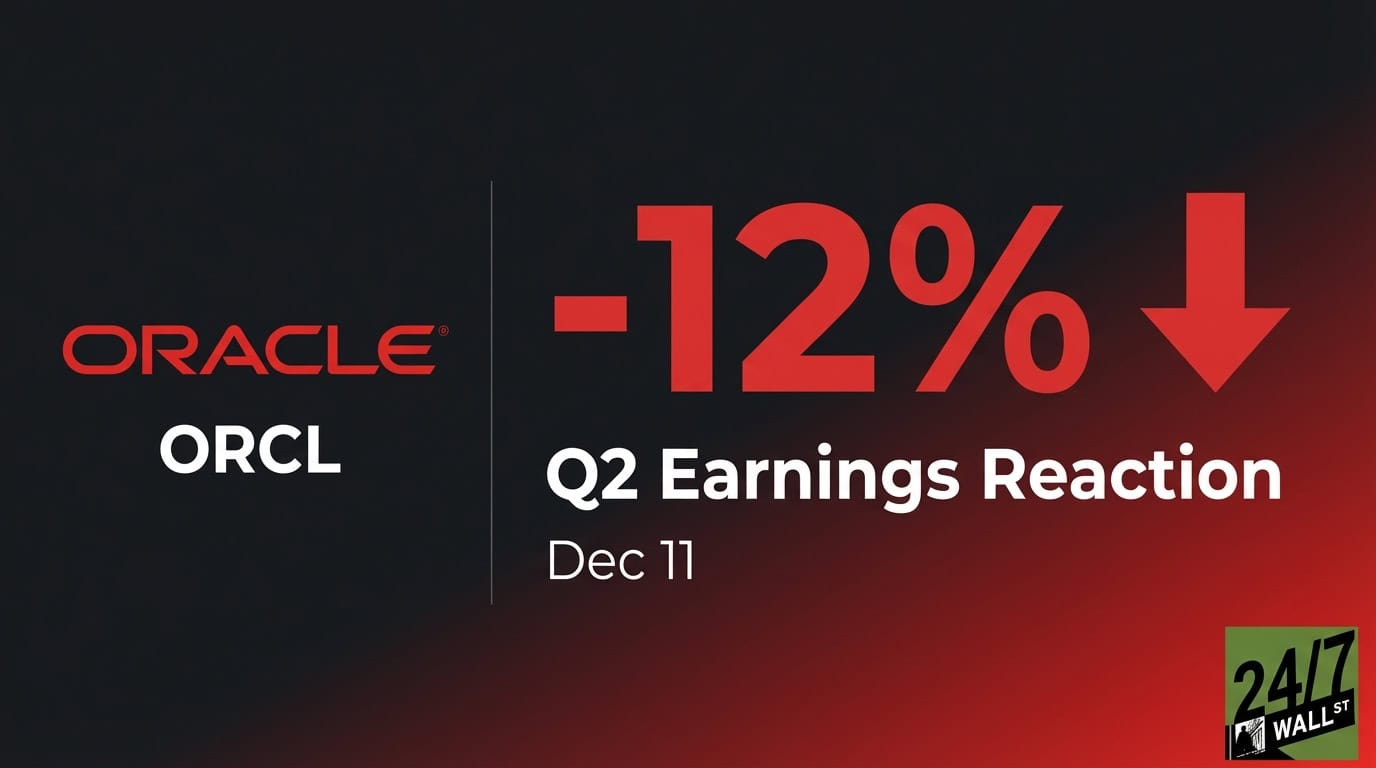
Our Multicloud database business is our fastest growing business - up 817% in Q2. Oracle is building 72 multicloud datacenters embedded within Amazon, Google, and Microsoft clouds, and has over 211 live and planned cloud regions worldwide, more than any competitor. That's the "chip neutrality" strategy in action: Oracle runs wherever the customer wants to run, which is why hyperscalers are signing contracts, not competing with them.
In a notice sent to customers on Monday and seen by The Register, the EV charging outfit said that it detected "unusual activity" on its AWS cloud platform on March 7 and quickly discovered that attackers had launched a ransomware attack against parts of its infrastructure. According to the message, some databases were both encrypted and copied during the intrusion, meaning that the crooks likely walked off with user information before the company pulled the plug.
Apple had already announced in January that Google's Gemini AI models would help power the upgraded version of Siri it delayed last year, but The Information's report indicates Apple might lean even more on Google so it can catch up in AI.
Uber's engineering team has transformed its data replication platform to move petabytes of data daily across hybrid cloud and on-premise data lakes, addressing scaling challenges caused by rapidly growing workloads. Built on Hadoop's open-source Distcp framework, the platform now handles over one petabyte of daily replication and hundreds of thousands of jobs with improved speed, reliability, and observability.
Wolfjaw Studios offers a comprehensive array of proprietary tech combined with best-in-class development, production, and engineering expertise, and architectural innovation to deliver fully customized, mission critical backend systems and solutions for many of the most popular multiplayer game franchises in the world. The company's unblemished track record of zero failed launches stands alone in the video game industry, across more than 600 million unique players and peak CCUs of >30 million (and growing).
ChatGPT, launched in 2022, began making a significant impact on the market by late 2023, according to Synergy Research Group. The company's chief analyst, John Dinsdale, points out that cloud market leaders have experienced accelerated revenue growth over time. Additionally, the emergence of numerous neocloud companies ( see box: What is a neocloud?) has further strengthened the already positive momentum in the market.
Startup founders are being pushed to move faster than ever, using AI while facing tighter funding, rising infrastructure costs, and more pressure to show real traction early. Cloud credits, access to GPUs, and foundation models have made it easier to get started, but those early infrastructure choices can have unforeseen consequences once startups move beyond free credits and into real cloud bills.
It's about replacing entire layers of business process management with intelligent systems that route work, make recommendations, and execute decisions autonomously. PEGA builds workflow automation and CRM software specifically designed for this transformation. The company generates $1.73 billion in trailing revenue with a 16.1% profit margin, focusing on AI-driven customer engagement and process automation. Recent quarters show dramatic profitability improvement, with Q1 2025 delivering $85.4 million in net income after the company posted losses in 2022.
Agentic artificial intelligence tools are slated to dominate federal and consumer markets in the coming year, major tech players predict, underscoring the role data organization and cloud computing will play in delivering tailored agentic solutions. Agentic AI, which describes autonomous AI systems that are capable of executing specific tasks with little to no human interaction required, was a hot topic in federal and private sector procurement. Major vendors are responding to the ongoing demand for agentic technology with a holistic infrastructure approach for the coming year.
In its reply to the General Court, CISPE argued in a statement that Broadcom's aim to increase EBITDA by 60 to 80 percent in three years in a market growing 5-8 percent annually could only be achieved through "aggressive monetization of VMware's locked-in customer base through steep price rises and forced bundling." It thereby created "a powerful financial incentive to extract cash rapidly from VMware's installed base," CISPE said.
Broadcom divided it across VMware Cloud Foundation (VCF), , and Application Networking and Security (ANS) divisions. Broadcom president and CEO Hock Tan presides over division heads Krish Prasad (VCF), Purnima Padmanabhan (Tanzu), and Umesh Mahajan (ANS). Senior vice president for global commercial sales and partners Brian Moats oversees roughly remaining VMware partners since the r Registered tier was jettisoned. Pre-acquisition, VMware turned over $13bn.
Modern software companies no longer run on a single cloud; they're spread across dozens of specialized providers, from AI platforms to data warehouses to edge networks. This fragmentation creates a problem: today's developers grew up building apps in the cloud, but most lack the network engineering skills needed to securely connect all these different services together. The capabilities that tech giants spent years building - private network connections, global infrastructure, and sophisticated traffic routing - remain out of reach for smaller teams.
Amazon Web Services' big annual event, re:Invent 2025, is getting into full swing in Las Vegas this week. Last year's event was largely focused on their AI efforts, including new foundation models, services tackling AI hallucinations, and new security measures. And this year is likely to follow suit, based on what Amazon has announced so far and the lineup of speakers and programming that you can explore in more detail below.
But over the summer, Bedrock hit "critical capacity constraints" that drove some customers to rival services, such as Google's cloud service, according to an internal July document obtained by Business Insider. The shortages led to tens of millions of dollars in lost or delayed revenue. Epic Games shifted a $10 million Fortnite project to Google Cloud after AWS failed to provide enough quota for Bedrock, according to the document. (Quota limits control how much intelligence customers can access via AI cloud services).
We are a Berlin company with international employees working on decentral collaborative AI services in real estate. We change how people live and work, by making buildings think and act adaptive to occupant needs. It is not another App. We save highest possible energy and run AI in compliance with GDPR. We look for developers who know AI on edge as well as power of Edge&Cloud.
The platform tackles problems familiar to many platform engineering teams: sprawling cloud estates, drift between code and live environments, and fragile toolchains. According to Pavlo Baron, co-founder and CEO of Platform Engineering Labs, the tool emerged from direct experience with these challenges: We built formae out of our own pain. It is the first platform that starts from reality, not from an idealised plan. It accepts even the messiest truth of any cloud environment and provides a safe, reliable way to evolve it.
Last week, the privacy-focused messaging service Signal was temporarily shut down when Amazon Web Services (AWS) suffered a major outage. This led to criticism of Signal's use of such a dominant provider as AWS.