#eqs-prototype
#eqs-prototype
[ follow ]
#ai-agents


Artificial intelligence
fromMedium
2 weeks agoDesigners, your next user won't be human
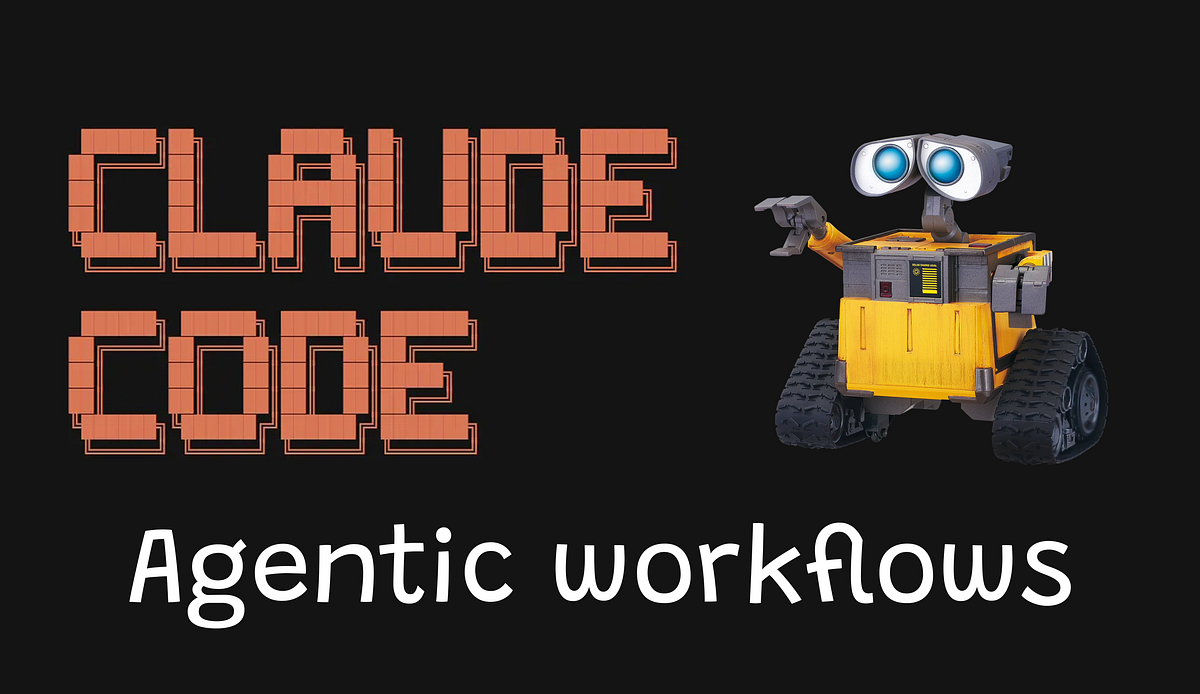
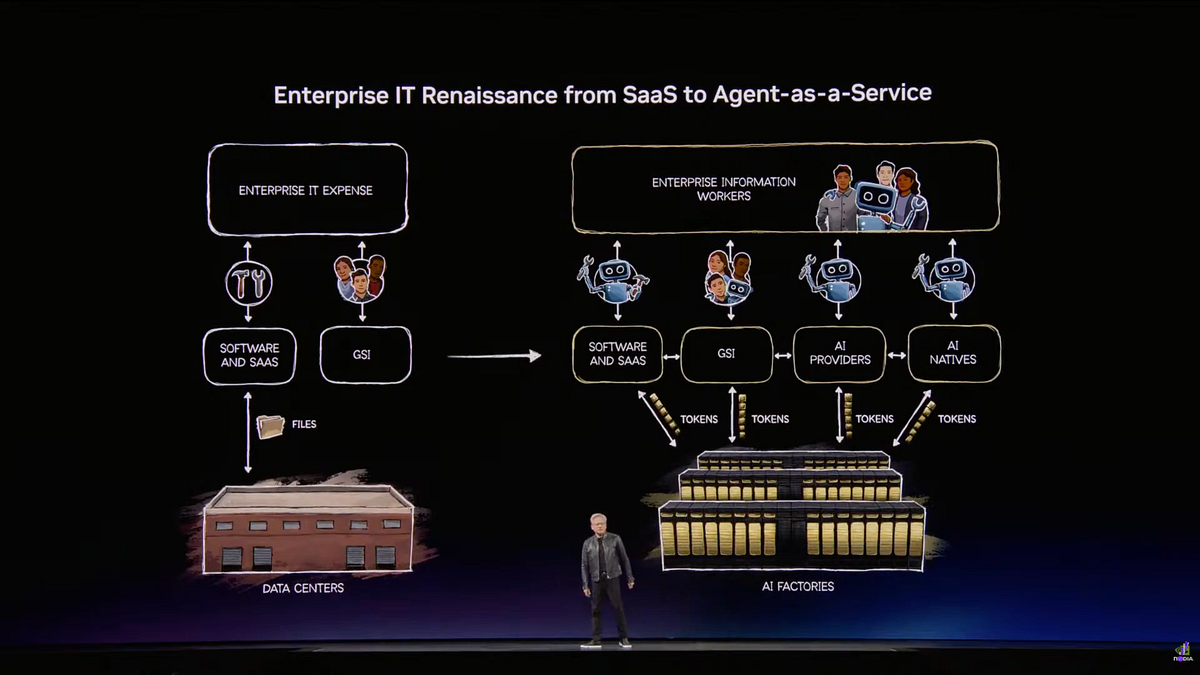
Every SaaS company will transform into agentic-as-a-service platforms, requiring designers to solve fundamental problems in agent interaction, behavior, and user experience as AI agents become central to enterprise software.
fromTheregister
1 week agoJunior disobeyed orders, tried untested feature during demo
Lydia noticed the machine's battery was running low and told two other team members. The more senior went to fetch the backup battery, while the junior team member suggested a quicker method that Lydia firmly rejected.
Gadgets
Online learning
fromeLearning
2 weeks agoBuilding Realistic Software Simulations with Enhanced Shapes in Adobe Captivate - eLearning
Adobe Captivate records software actions and converts them into interactive eLearning courses with three modes: Demo for viewing, Training for practicing, and Assessment for testing.

fromMedium
3 weeks agoThe hidden cost of AI design tools - What we're outsourcing without noticing
The blank canvas wasn't a hurdle; it was an invitation. An invitation to think, to wrestle, to connect disparate dots until a clear, compelling strategy emerged. Today, that invitation often comes in the form of a blinking cursor in a prompt box. The promise is seductive: speed, efficiency, and democratized creativity.
Design
fromYanko Design - Modern Industrial Design News
3 weeks agoThis Foldable DIY Cyberdeck Has Breadboards Built In and Runs Doom - Yanko Design
What separates this from a standard Raspberry Pi build is the pair of breadboards soldered directly to the GPIO pins, seated inside the case, and accessible through a removable back panel. Connecting a sensor no longer means hunting for a separate breadboard and a tangle of jumper wires. PickentCode plugged in a temperature and humidity sensor and had it reading live data within minutes.
Gadgets
Venture
fromTechCrunch
1 month agoHardware testing startup Nominal hits $1B valuation, raises $155M in 10 months | TechCrunch
Nominal raised $80M Series B extension at $1B valuation led by Founders Fund, following $75M Series B from Sequoia, to expand hardware testing software beyond defense into industrial sectors.
fromMedium
1 month agoThe craft of the instruction
Instructions I created. Instructions I am continuing to hone - instructions that required me to study my own old essays, identifying what I do when I write. The sentence rhythms. The way I move between timescales. The zooming in and out from concept to detail. The instructions tell Claude how I would like ideas composed. I pull together concepts and experiences from my lived expertise to formulate a point of view - in this case, on this new AI technology.
Design
fromMedium
2 months agoBuilding technology products is easy, but we made it complicated
It's been almost 20 years since I started my career in product design, and, as you might imagine, many things have changed dramatically since then. One of the main characteristics of the technology industry is the constant evolution of its dynamics, roles, processes, technologies, experiences, and even business models. Those changes are inevitable and will continue. In retrospect, I see that there is one reality that has not changed much over the last 20 years and remains a constant issue to this day: building technology products can sometimes be a discouraging and exhausting process, from junior positions to senior management levels. Why do we suffer every time we need to build something? Why is there so much burnout among today's tech professionals? Why is it that, regardless of the industry, company, or technology, we always hear the exact phrases: "I'm exhausted, I feel drained by this job."? Well, those are valid questions that still haunt me 20 years after my first web design job. It seems like there's no choice in this environment but to suffer.
Agile
fromEntrepreneur
1 month agoThis Is the Secret to Building Products Customers Actually Love
Her payment form wasn't connecting to the payment processor, and every attempt ended in an error message that made no sense. I understood her frustration. As a founder myself, I was acutely aware of the pain of trying to run a business and feeling like nothing was going your way. When I dug into her form, I found the problem a few minutes later: a mismatch between test mode and live credentials.
Startup companies
fromMedium
1 month agoInnovation is not magic; it's technique
Maybe this stake is more prominent in start-up environments, where new ideas surface every day and the opportunity for growth is potentially wider. Philosophies like "Build fast, fail fast" are at the core of an agile mindset, helping us determine whether an idea is viable in the early stages or whether a pivot is necessary to achieve the desired numbers and experience.
Startup companies
fromTheregister
1 month agoCadence opens the door to chips designed for AI by AI
The idea of machines that can build even better machines sounds like sci-fi, but the concept is becoming a reality as companies like Cadence tap into generative AI to design and validate next-gen processors that also use AI. In the early days of integrated circuits, chips were designed by hand. In the more than half a century since then, semiconductors have grown so complex and their physical features so small that it's only possible to design chips using other chips.
Artificial intelligence
fromJakub
2 months agoUsing AI as a Design Engineer
When I work on something, whether it's at Interfere or my personal projects, I like to experiment a lot. Design engineering is a lot about trial and error, and I often spend hours trying to find the "this feels right" moment. This is where AI helps. Instead of spending hours on a concept that I'm unsure of, I try that concept out in a matter of minutes, and throw it away if it doesn't feel right.
Software development
fromYanko Design - Modern Industrial Design News
2 months agoTeenage Engineering-inspired Music Sampler Uses AI In The Nerdiest Way Possible - Yanko Design
Junho Park's graduation concept borrows all the right cues from TE's playbook, that modular control layout, the single bold color, the mix of knobs and buttons that practically beg to be touched, but redirects them toward a gap in the market. Where Teenage Engineering designs for people who already understand synthesis and sampling, the T.M-4 targets people who have ideas but no vocabulary to express them.
Gadgets
Gadgets
fromdesignboom | architecture & design magazine
1 month agoold typewriter comes back as functional 'gaming' computer that slides to the side
An old mechanical typewriter is converted into a functional gaming computer that physically slides to the side with each keystroke while preserving vintage mechanisms.
fromv buckenham
2 months agoSome thoughts about tool design and AI
The normative form for interacting with what we think of as "AI" is something like this: there's a chat you type a question you wait for a few seconds you start seeing an answer. you start reading it you read or scan some more tens of seconds longer, while the rest of the response appears you maybe study the response in more detail you respond the loop continues
Artificial intelligence
fromMedium
1 month agoAI's text-trap: Moving towards a more interactive future
LLMs have made AI assistants a standard feature across SaaS. AI assistants allow users to instantly retrieve information and interact with a system through text-based prompts. Mathias Biilmann, in his article " Introducing AX: Why Agent Experience Matters," discusses two distinct approaches to building AI assistants. The Closed Approach involves a conversational assistant embedded directly within a single SaaS product. Examples include Zoom's AI Companion, Salesforce CRM's Einstein, and Microsoft's Copilot. The Open Approach involves external conversational assistants, such as Claude, ChatGPT, and Gemini,
Artificial intelligence







fromMedium
2 months agoUI Design with Nano Banana Pro
Nano Banana Pro (Gemini 3 image model) is particularly strong for UI design because of its 99% text accuracy, its ability to understand spatial layout, and its support for high-resolution 4K output. In this article, I want to share my 5 favorite cases of using this model for UI design tasks. ( Quick note: I won't dive into a critique of the output generated by AI in this article, letting you decide whether you like it or not)
UX design
fromMedium
7 months agoWho are we designing for now?
AI is disrupting more than the software industry, and is doing so at a breakneck speed. Not long ago, designers were deep in Figma variables and pixel-perfect mockups. Now, tools like v0, Lovable, and Cursor are enabling instant, vibe-based prototyping that makes old methods feel almost quaint. What's coming into sharper focus isn't fidelity, it's foresight. Part of the work of Product Design today is conceptual: sensing trends, building future-proof systems, and thinking years ahead.
UX design
[ Load more ]