#flora-and-fauna
#flora-and-fauna
[ follow ]
#biodiversity #conservation #climate-change #wildlife-conservation #food-security #biodiversity-loss


Pets
fromThe Boutique Adventurer
2 days agoThese Are the U.S. Zoos Animal Lovers Should Visit at Least Once - The Boutique Adventurer: Luxury Adventure Travel Blog focussed on Emerging Destinations for those over 35
Zoos in the US can be ethical, focusing on conservation, education, and research, with many being AZA-accredited for animal care standards.
fromSFGATE
2 days agoSeabirds are dying in large numbers along California beaches
"They didn't even try to fly away. They just feebly made noise," a woman told the Santa Barbara Independent on Saturday after spotting over two dozen dead or dying cormorants near Goleta Beach. "A few were on their stomachs, wings spread [and] gasping for breath.... Heartbreaking."
Miami Marlins
fromMail Online
5 days agoBritain has just 20 years to save its wildlife, experts warn
'Our results show that the next 20 years are critical,' lead author Dr Rob Cooke told the Daily Mail. 'By around 2050, we reach a point where the choices we make on emissions and land use will largely determine whether Britain moves towards a much more degraded or a much more nature‑positive future.'
Environment

fromTheregister
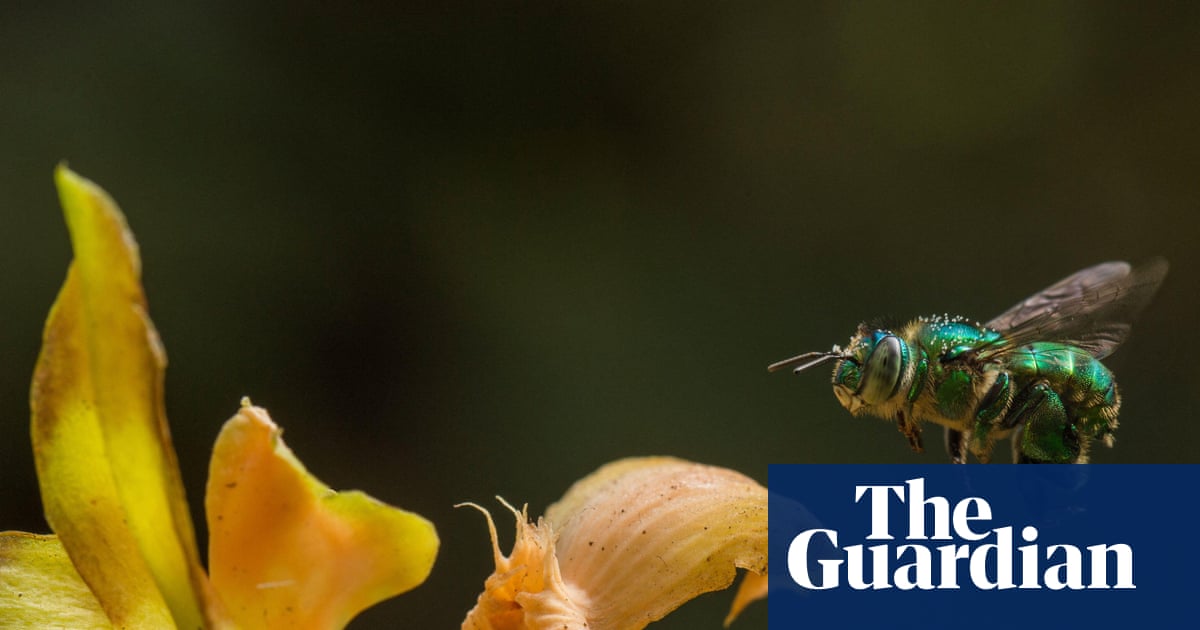
1 week agoBees and hummingbirds get trace alcohol from nectar
A study by researchers at the University of California Berkeley has found that ethanol is surprisingly common in floral nectar, the sugary fuel that keeps pollinators alive. Yeast feeding on those sugars produces trace amounts of alcohol, and in this study, it showed up in 26 of the 29 plant species sampled.
Beer
fromwww.scientificamerican.com
3 days agoSee these ziti-sized fish scale a 50-foot waterfall
During major floods, thousands of tiny fish convene at Luvilombo Falls in the upper Congo River Basin to undertake a peculiar vertical migration, described for the first time today in Scientific Reports.
OMG science
London politics
fromwww.independent.co.uk
2 weeks agoMarket town pledges to save butterflies from shocking decline in UK first
Gillingham becomes the first UK local authority to commit to a nationwide challenge reversing butterfly population decline through habitat protection, pesticide elimination, and light pollution reduction.
fromwww.theguardian.com
2 weeks agoSmall changes in how we garden can make a big difference to birds | Letter
Around a third of UK gardeners use pesticides, and our studies found that house sparrow numbers, for example, were nearly 40% lower in gardens where the pesticide metaldehyde was used. By reducing pesticide use, you can actively encourage birds back into your outdoor spaces, as they rely on invertebrates such as slugs and snails as natural prey.
Pets
fromHigh Country News
1 month agoCoyotes and cougars and rats, oh my! - High Country News
An unnamed tourist saw it and told Aidan Moore, who works for Alcatraz City Cruises. Moore told SFGATE that he was initially skeptical, but the guest's iPhone footage left little room for doubt. The video shows, not a sea lion or an otter, but an actual Canis latrans, doggedly dogpaddling, then clambering out of the water, noticeably shaky and struggling to settle tired paws on the craggy rocks.
California
Pets
fromwww.scientificamerican.com
3 weeks agoWhat would happen if snakes disappeared like in Zootopia 2? An investigation
Zootopia 2 defends snakes as misunderstood creatures while highlighting their critical ecological importance as mesopredators that control rodent populations and sustain food chains.
Science
fromwww.theguardian.com
1 month agoMarsupials previously thought extinct for millennia discovered in New Guinea
Two marsupial species presumed extinct for 6,000 years were discovered alive in West Papua rainforests, representing rare Lazarus taxa that survived despite disappearing from fossil records.
fromwww.theguardian.com
1 month agoHumanity heating planet faster than ever before, study finds
Climate breakdown is occurring more rapidly with the heating rate almost doubling, according to research that excludes the effect of natural factors behind the latest scorching temperatures. It found global heating accelerated from a steady rate of less than 0.2C per decade between 1970 and 2015 to about 0.35C per decade over the past 10 years.
Environment
fromwww.theguardian.com
1 month agoI love midges because I know what their hearts look like': is the passion for taxonomy in danger of dying out?
When Borkent stops working, biting midges risk becoming an orphan group, a term that taxonomists give for a branch of the web of life that is no longer being studied. It is a pattern playing out across the field, he says. I am one of the last few standing. It's crisis all around. As the taxonomic community ages, we are not being replaced.
OMG science
Environment
fromwww.theguardian.com
1 month agoAustralian wildlife in harm's way' with volunteers left to pick up the pieces' amid climate crisis, fires and floods
Labor is urged to establish national wildlife protection standards for disaster response, with advocates warning biodiversity risks could become irreversible without coordinated government-funded rescue and rehabilitation services.
fromYanko Design - Modern Industrial Design News
1 month agoWhen Zoo Design Tells the Story of Life Itself - Yanko Design
The House of Elements, set to become the crown jewel of Orientarium Zoo in Łódź, Poland, takes the classical elements (earth, ice, water, fire, and air) and transforms them into a 6,000-square-meter narrative experience. Rather than designing a building where you walk from exhibit to exhibit, VMA created a continuous downward-then-upward journey that mirrors the evolution of life itself. Designer: VMA Design Studio for Orientarium Zoo
Design
fromwww.theguardian.com
2 months agoFrom scorpions to peacocks: the species thriving in London's hidden microclimates
London is the only place in the UK where you can find scorpions, snakes, turtles, seals, peacocks, falcons all in one city and not London zoo. Step outside and you will encounter a patchwork of writhing, buzzing, bubbling urban microclimates. Sam Davenport, the director of nature recovery at the London Wildlife Trust, emphasises the sheer variation in habitats that you find in UK cities, which creates an amazing mosaic of wildlife.
London
fromwww.scientificamerican.com
2 months agoHow zoos are preparing animals for this weekend's massive winter storm
In Texas, the Houston Zoo has prepared its buildings and barns with heaters designed to withstand extreme conditions, the zoo said in a blog post on Friday. Animals will have access to extra hay and bedding, and food was stocked in advance. Across the Zoo, sensitive plants are being protected with coverings, and generators are positioned to provide backup power if needed, the blog post said.
US news
fromThe Conversation
2 months agoSome companies claim they can 'resurrect' species. Does that make people more comfortable with extinction?
Less than a year ago, United States company Colossal Biosciences announced it had "resurrected" the dire wolf, a megafauna-hunting wolf species that had been extinct for 10,000 years. Within two days of Colossal's announcement, the Interior Secretary of the US, Doug Burgum, used the idea of resurrection to justify weakening environmental protection laws: "pick your favourite species and call up Colossal". His reasoning appeared to confirm critics' fears about de-extinction technology. If we can bring any species back, why protect them to begin with?
Philosophy
fromwww.mercurynews.com
2 months agoFrom fuzzy flowers to see-through sea slugs, here are some of the new species discovered last year by California scientists
But as he swept his flashlight through the dark waters, something unexpected emerged. Inching through the beam of light, an alien creature crawled across the surface of the sand, resembling an inch-long cluster of ghostly leaves fringed with silvery filigree and capped with a pair of antennae-like stalks. It immediately caught my eye, said Gosliner, Invertebrate Zoology Curator for the California Academy of Sciences. I've been diving there for 30 years and this one immediately struck me as different.
Science
Environment
fromFortune
1 month agoAnimal behavioralists saved a rhino with bleeding eyes by giving it eye drops, in a "ridiculous idea" gone right | Fortune
Voluntary training allowed caretakers to safely administer eyedrops to an endangered white rhino in Zimbabwe, preserving vision and protecting a community reintroduction program.
fromwww.theguardian.com
2 months agoPesticides may drastically shorten fish lifespans, study finds
Signs of ageing accelerated when fish were exposed to the chemicals, according to the study, which could have implications for other organisms. Chemical safety regulations tend to focus on short-term exposure to high doses of pesticides and other chemicals, but the study focused on long-term exposure. Low doses of pesticides are widespread in the environment, so their effects should be studied and understood, the authors said.
Science
fromwww.theguardian.com
2 months agoNothing is sacred to them': the race to save rare plants as Russian troops advance
In the basement laboratory of the National Dendrological Park Sofiyivka, Larisa Kolder tends to dozens of specimens of Moehringia hypanica between power outages. Just months earlier, she and her team at this microclonal plant propagation laboratory in Uman, Ukraine, received 23 seeds of the rare flower. Listed as threatened in Ukraine's Red Book of endangered species, Moehringia grows nowhere else in the wild but the Mykolaiv region of Ukraine.
Environment
Environment
fromDesign You Trust - Design Daily Since 2007
2 months agoSpectacular Winning Images From The Ecology Photo Contest 2025
Powerful ecological photographs reveal nature's indifference, global biodiversity, and collaborations that highlight ecology's immediacy and deep ties to human existence.
fromwww.dw.com
2 months agoThe business of saving nature
The world spends 30 times more money destroying nature than protecting it. That's according to a new report from the United Nations Environment Programme (UNEP) that exposes a massive gulf between so-called "harmful investments" and financing that promotes nature preservation. The global environment agency's latest "State of Finance for Nature" (SNF) report is calling to phase out the US$7.3 trillion (6.2 trillion) in global investments that damage nature including into high-emissions energy infrastructure and manufacturing, for example.
Environment
fromwww.theguardian.com
2 months agoBiodiversity collapse threatens UK security, intelligence chiefs warn
The global attack on nature is threatening the UK's national security, government intelligence chiefs have warned, as the increasingly likely collapse of vitally important natural systems would bring mass migration, food shortages and price rises, and global disorder. Food supplies are particularly at risk, as without significant increases, the UK would be unable to compete with other nations for scarce resources, a report to ministers warns.
Environment
fromSun Sentinel
1 month ago'We got lucky': How Florida wildlife died - or survived - in the brutal February freeze
The record-breaking arctic blast that hit Florida earlier this month may have sent humans scurrying for winter coats, but it sent wildlife scurrying, swimming and slithering for their lives. Some of those animals were native, some were invasive. Some survived. Thousands of others did not. The benchmark for cold snaps in Florida is the 2010 freeze, which killed manatees, crocodiles, iguanas, thousands of snook and goliath grouper, and caused 50% to 90% of invasive pythons to die in some areas.
Environment
[ Load more ]