In practice, however, Google applies its 'Religious belief in personalized advertising' policy to reject advertisements because they contain religious content, regardless of how the audience is targeted," ACLJ Executive Director Jordan Sekulow writes, along with Nathan J. Moelker, senior associate counsel, and Mark Kelly, the organization's director of government affairs.
The listings embedded in the search results included all of the property's details, along with links to request a tour or contact a buyer's agent. In an article published by Barron's last week, a Google spokesperson told the publication the program was a small experiment, and did not specify how long it would last. In an emailed statement, a HouseCanary spokesperson told HousingWire that any reports that the experiment had been shut down were untrue.
Google paid just €47.8m in tax against earned revenues of €22.6bn (£20.1bn) made across Europe, the Middle East and Africa which were funneled through its advertising sales business in Dublin. According to the Guardian, referencing company filings in Ireland, revenues at Google Ireland Limited rose 23% in 2015 to €22.6bn (a third of its global income) with an estimated $7bn (£5.6bn) coming from transactions with advertisers in the UK.
Character.AI and Google have reached settlements with several families whose teens harmed themselves or died by suicide after interacting with Character.AI 's chatbots, according to new court filings. The details of the settlements are still unknown. The parties notified a federal court in Florida that they had reached a "mediated settlement in principle to resolve all claims," and asked to pause the case to finalize the agreement. A spokesperson for Character.AI, Kathryn Kelly, declined to comment.
The company told staff in a December newsletter that employees eligible for PERM would hear from its outside lawyers in Q1, according to a copy of the memo seen by Business Insider. PERM allows employees to move from working on a visa to securing a green card. Tech companies commonly use it to transition staff from H-1 B status to a green card, which allows them to live and work permanently in the US.
Google has no plans to build a standardized API or universal licensing system for news content, the company's search chief said last week, pushing back on proposals from media advocates who see such arrangements as the industry's best path to AI-era revenue. "The short answer is no," Nick Fox, Google's SVP of knowledge and information, told me on the AI Inside podcast when asked whether Google would pursue a standardized licensing model.
It may sound like a trip through the produce aisle, but leading AI companies have something much more important on their lists. Meta, OpenAI, and Google have all relied on food-related names for their sometimes secretive plans for future AI models. Thinking with your stomach is nothing new for Silicon Valley, just look at the assortment of desserts Android assembled over the years before Google had its fill.
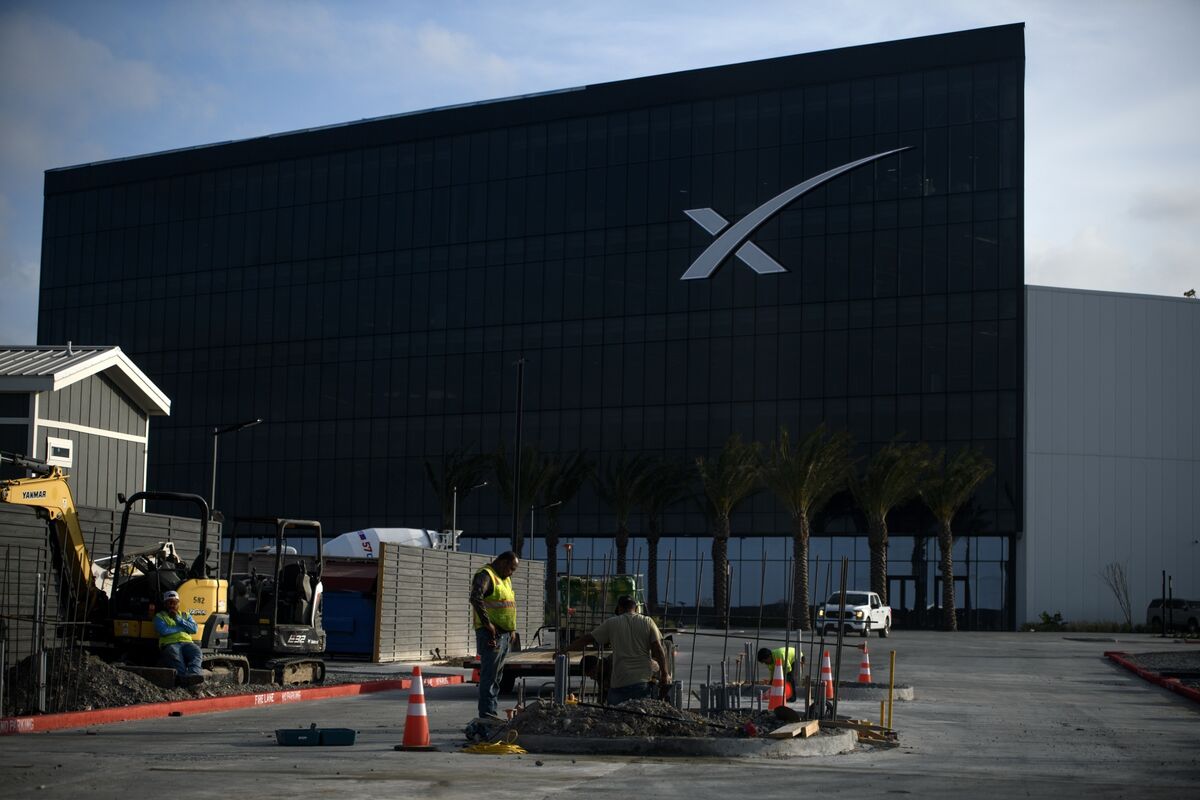
Alphabet, parent company of Google, has been one of the best-performing stocks of the year, up nearly 70%, and now has a market capitalization of $3.8 trillion. The company also happened to make what could turn out to be one of the most lucrative startup investments of all time, which could finally bear fruit next year. In 2015, Google invested around $900 million in SpaceX for a stake of around 7% in Elon Musk's space company, which was then valued at $12 billion.
Reinforcement learning (RL) is the next frontier, Google is surging, and the party scene has gotten completely out of hand. Those were the through lines from this year's NeurIPS in San Diego. NeurIPS, or the "Conference on Neural Information Processing Systems," started in 1987 as a purely academic affair. It has since ballooned alongside the hype around AI into a massive industry event where labs come to recruit and investors come to find the next wave of AI startups.
Google plans to launch smart glasses powered by artificial intelligence (AI) in 2026, after its previous high-profile attempt to enter the market ended in failure. The tech giant set expectations high in 2013 when it unveiled Google Glass, billed by some as the future of technology despite its odd appearance with a bulky screen positioned above the right eye. Google pulled the product in 2015 less than seven months after its UK release, but is now planning
The investigation will notably examine whether Google is distorting competition by imposing unfair terms and conditions on publishers and content creators, or by granting itself privileged access to such content, thereby placing developers of rival AI models at a disadvantage, the commission said. It said it was concerned that Google may have used content from web publishers to generate AI-powered services on its search results pages without appropriate compensation to publishers and without offering them the possibility to refuse such use of their content.
Google has been saying that no one uses the LLMs.txt file, that Google won't use it, that it can be useless, and you probably should noindex it if you do use it. Well, Google itself uploaded an LLMs.txt file for the Google Search Central portal. The file is over here: developers.google.com/search/docs/llms.txt. This was spotted by Lidia Infante who posted it on Bluesky and asked John Mueller of Google, "Is this an endorsement of llms.txt or are you trolling us, John?"
I started there in November 2006, when there were only around 10,000 employees, and became an executive - the director of American media relations - in 2022. Google's amazing; I bleed Google colors. I loved the impact I was having, the future of opportunities I saw for myself, and the feedback I was getting as a leader. I'm also the breadwinner for my family.