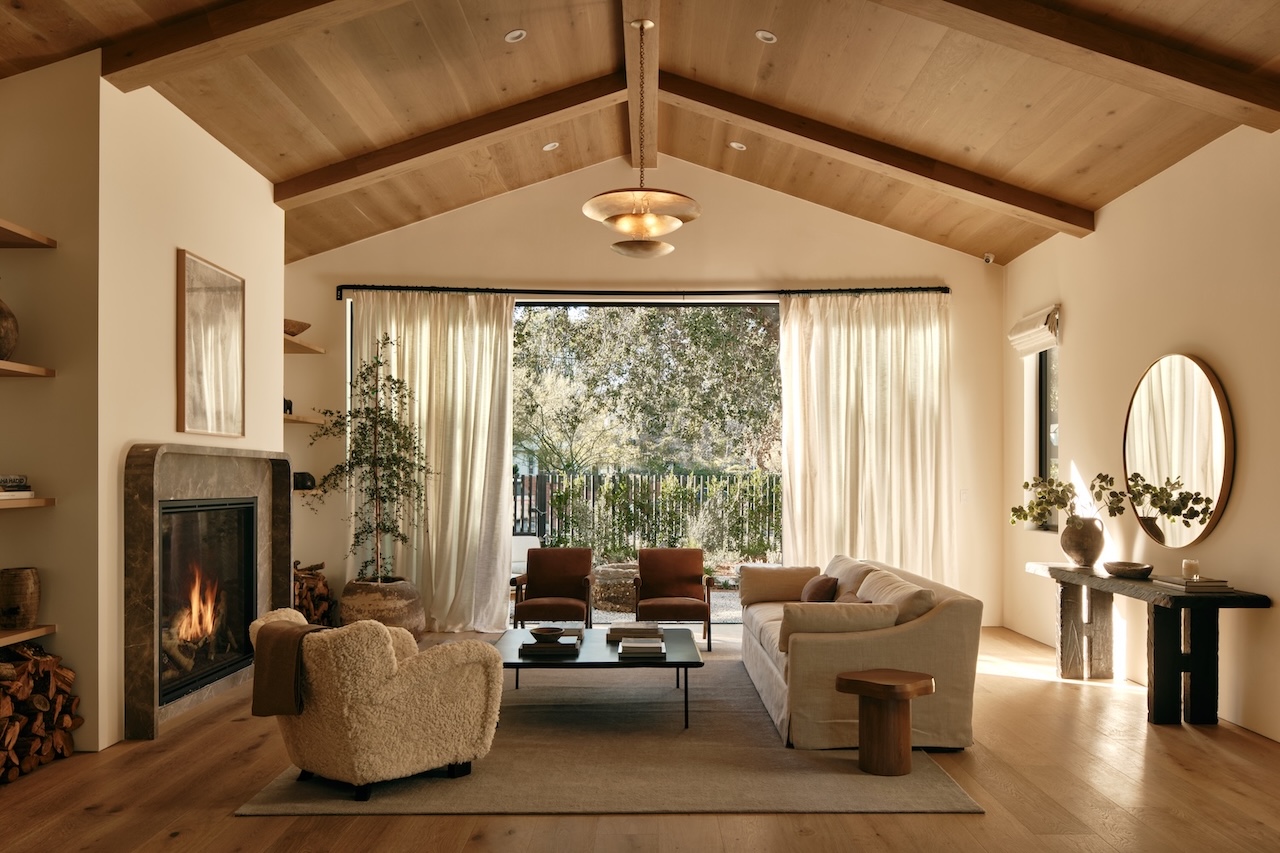
Much has been mythologised about Laurel Canyon in the 1970s, the loose hillside network of rented houses, recording studios, informal salons and open doors in the hidden in the Hollywood Hills. Musicians, artists and writers moving between kitchens, gardens and living rooms - stars like Joni Mitchell, The Byrds, The Doors, Frank Zappa are said to have played songs for one another, partied, took drugs and slept with each other, living freely while writing the music we still listen to today.
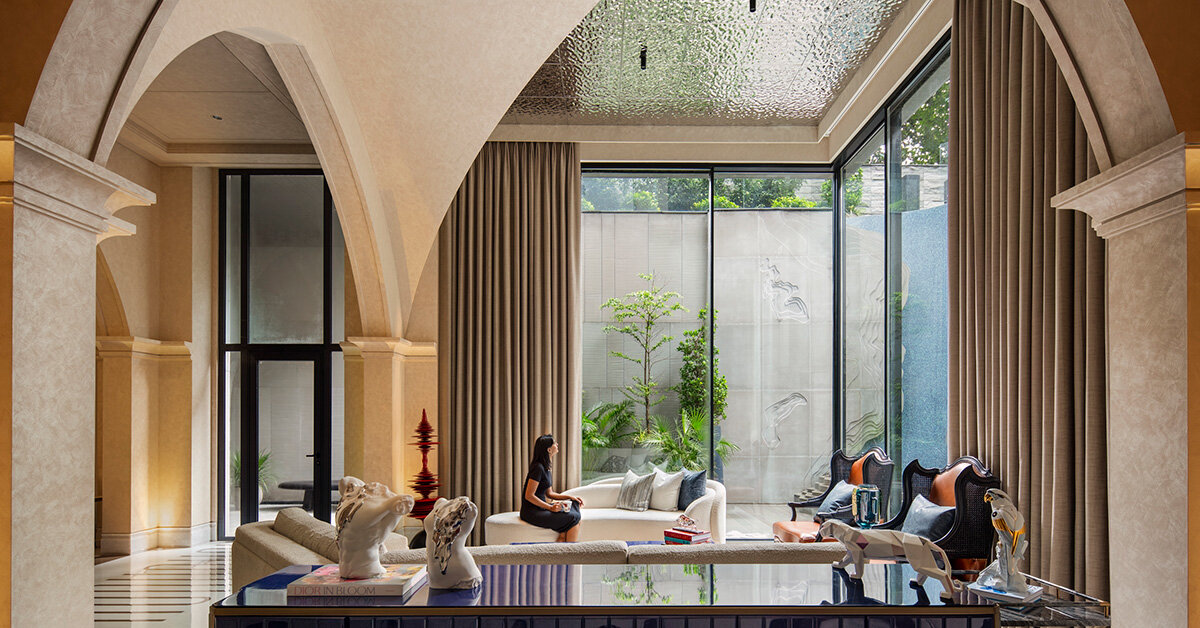
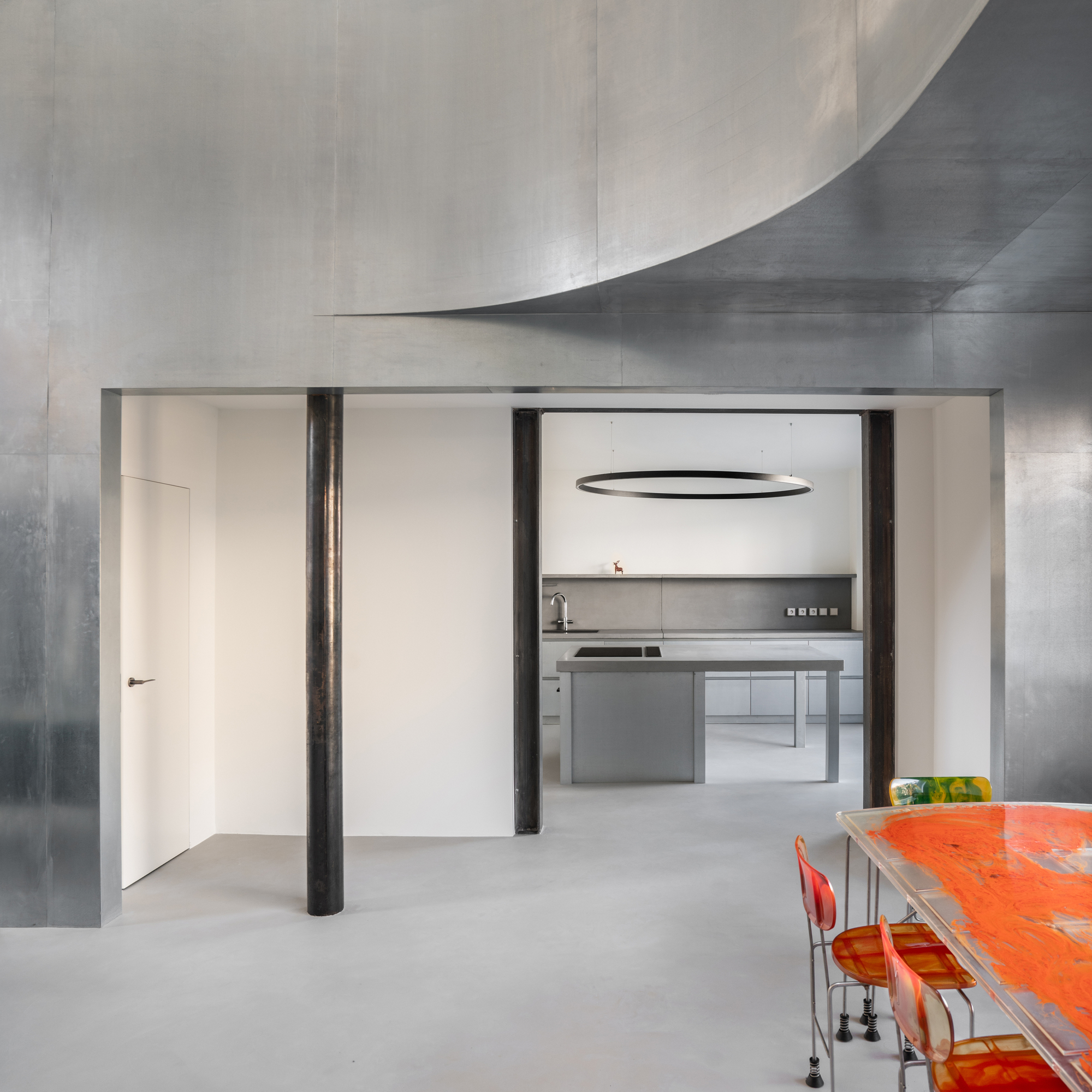
The penthouse residence by Metaphors is defined by a balance of extremes, where bold neo-classical elements are combined with the raw mass of brutalism. The architectural program rejects a singular aesthetic, instead opting for a material collision that pairs deep-veined, sculpted marbles with intricately detailed ceilings and embossed wall panels. This allows the residence to function as a versatile home, shifting between an expansive stage for high-society hosting and a series of intimate, quiet sanctuaries for family life.
Cubism and Reality is his return to the works by Georges Braque, Pablo Picasso and Juan Gris that define early Cubism. The book has many strands but turns around a highly informed reconstruction of the processes by which their interactions with reality resulted in physical works of art, what Green terms "material things to be looked at". The revolutionary works discussed remain visually difficult; as he acknowledges, they are "most often only slowly penetrated by looking, imagining, reflecting and looking again".
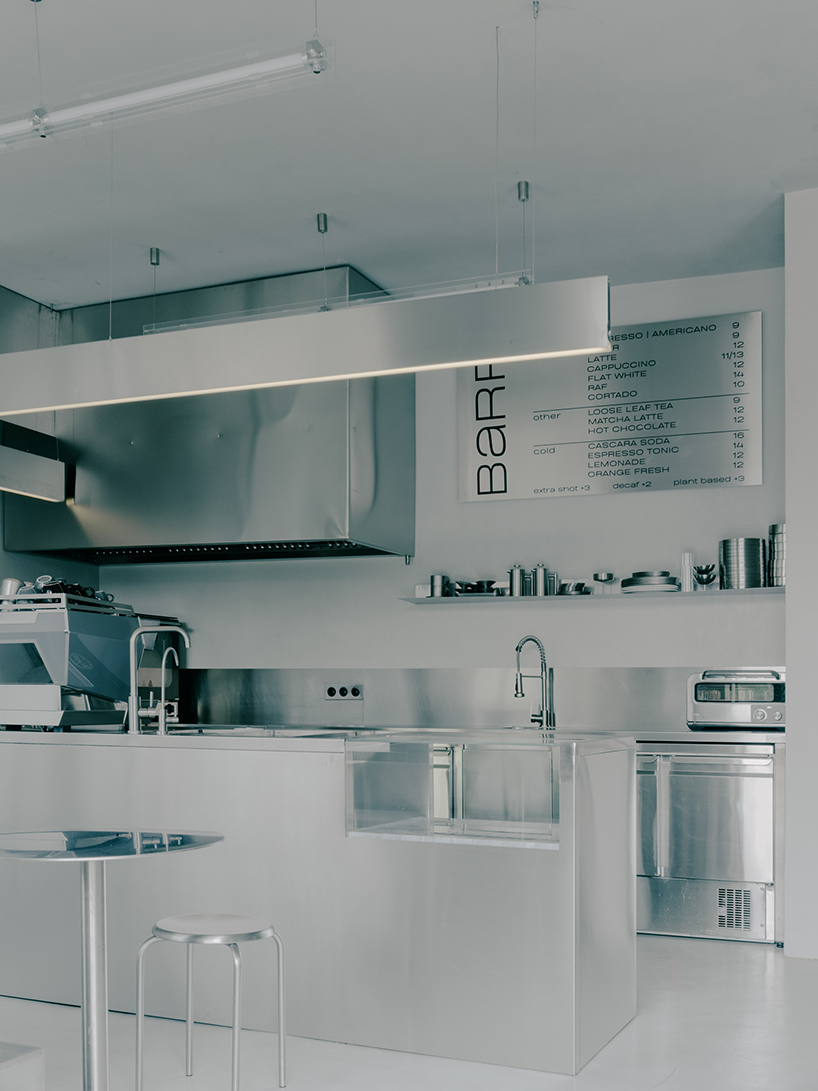
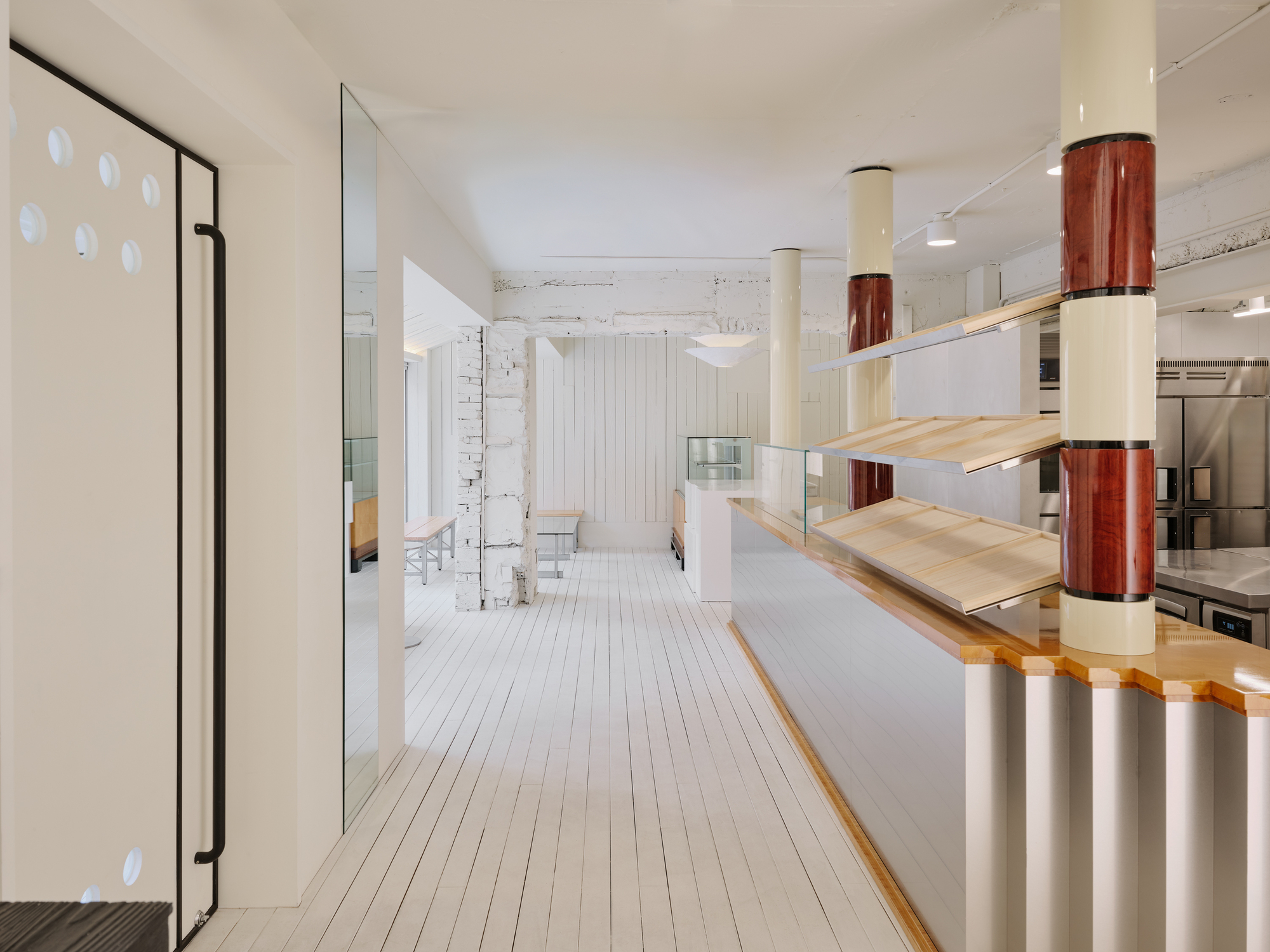
Text description provided by the architects. An Mien is a coffee brand built on pride in the authentic values of quality coffee, closely associated with the image of the roasting workshopwhere aroma, heat, and the rhythm of industrial operations coexist. The space is conceived as an extension of this spirit, where the act of enjoying coffee is framed through materiality, light, and emotion.
Quiet and understated, the show presents the work of 17 artists, who are either represented by the gallery or part of its wider network. In the exhibition text, the smallness in question is discussed not on the level of "scale or spectacle," but rather speaks to the idea of "concentration over expansion." The intention of the exhibition, positioned as a "living index," very much depends on where we place our attention.
Perched at 10,600 feet in Colorado's Rocky Mountains, this home is a quietly powerful study in restraint, trust, and dialogue with the landscape. Designed by Gabriel Yuri of New Operations Workshop as an addition to his parents' retreat, the project balances a charred Shou Sugi Ban exterior with a luminous, oak-lined interior. Rooted in Japanese and Scandinavian traditions yet unmistakably American, the house preserves the original structure while reframing it around light, views, and family life.
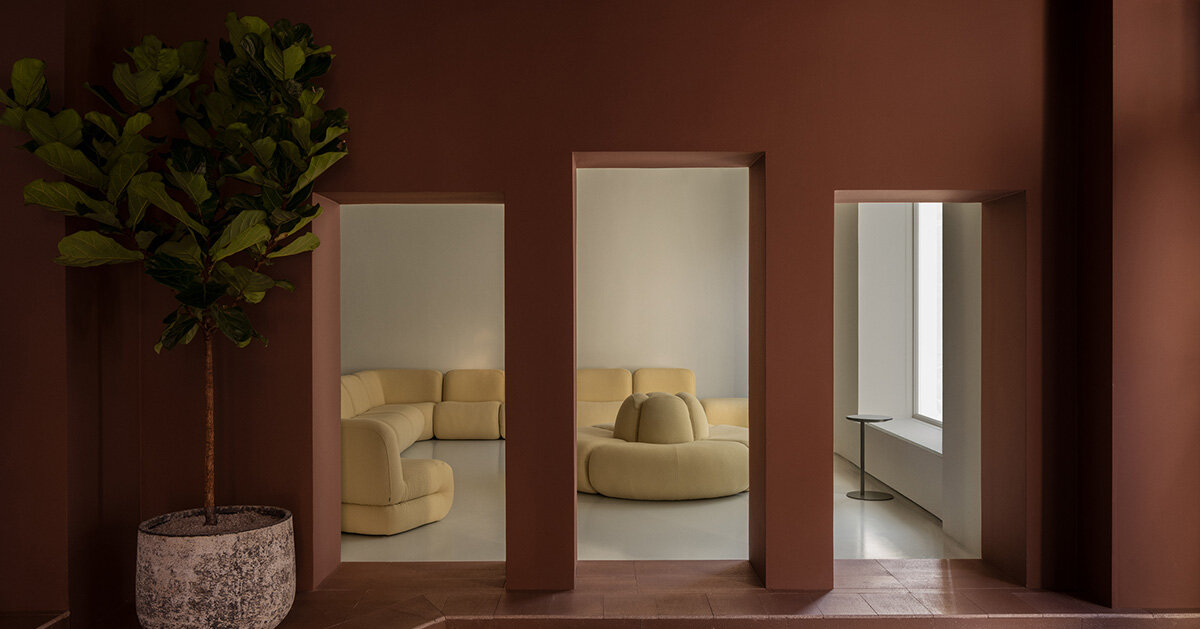
Light, for instance, is not only a technical requirement but also an architectural material in its own right. It can structure space, animate surfaces, define textures, and shape atmosphere while influencing well-being. At the same time, the characteristics between minimalism and maximalism shape how atmospheres are perceived, prompting reflection on how approaches to simplicity or exuberance might influence mood. Rather than existing as opposing aesthetics, these tendencies explore how interiors interact with mental states, reflect personal identity.
THE MAGARIGAWA CLUB Clubhouse is nestled into the forested hills of Chiba, Japan as a study in managed contradiction - a private driving club's hospitality venue where Joyce Wang Studio choreographed the psychological arc of high-performance driving into architectural form. Automotive culture demands contradictions that few spaces manage to resolve - the heightened alertness required for performance driving exists in direct opposition to the restoration needed afterward.
Over time, shelters began to be made from materials found in nature, such as branches, leaves, and animal skins, evolving into more permanent and complex homes, with walls made of stone, bricks or wood, roofs to protect against rain and sun, and doors to control access. As we developed more advanced building skills, we used materials such as wood, stone, and clay and architecture evolved significantly, with the construction of temples, palaces, and fortifications.
The project translates the Spanish brand's concept into architecture through a physical vocabulary of texture and reflective materials. The design is anchored by a system of soft modules - foam-filled cushions wrapped in sustainable metallic Italian fabric - referred to as 'rellenos,' the Spanish word for 'fillings.' These elements line the space in a geometric grid, shaping an interior that is both tactile and immersive. Each piece reflects the product's essence: the act of filling, of enclosing something within.
There is no recipe, there is no formula, there is no direction. I never know if and when a painting is going to feel real, or if it is going to feel like it is alive...The materials themselves have to guide the painting. The materials have to present an image or an idea that did not come from me.
On Prince Street in SoHo, New York, artist Cj Hendry transforms her popular Flower Market installation into a permanent Flower Shop. The small storefront, unveiled on November 10th, 2025, is the artist's first fixed space - a brick-and-mortar expression of her long fascination with turning ephemeral subjects into tactile and enduring experiences. From the sidewalk, Flower Shop presents as a white pavilion framed by polished metal and a scalloped awning. Behind clear panels, hundreds of vividly colored plush flowers line the walls in ordered rows, evoking the dense, chromatic rhythm of a typical New York bodega.
The editorial explores the connection and symbiosis between the material of the clothing and the human body. Material once worn becomes a vital part of the living mechanism of the body, becoming not only its decoration, but also its continuation. The material is not only a means for the realisation of one's project of themselves, but also a vital element of such a project.
Few commissions allow architects to focus on non-human users, and fewer still involve horses. While domestic pets like cats and dogs are common muses, the particular needs of horses present a unique challenge when designing stables. Since the horses, who are the stable's primary inhabitants, cannot articulate their needs, design relies on the rigorous requirements dictated by human caretakers, requiring a balance between streamlined human operations and maximized horse comfort and safety.
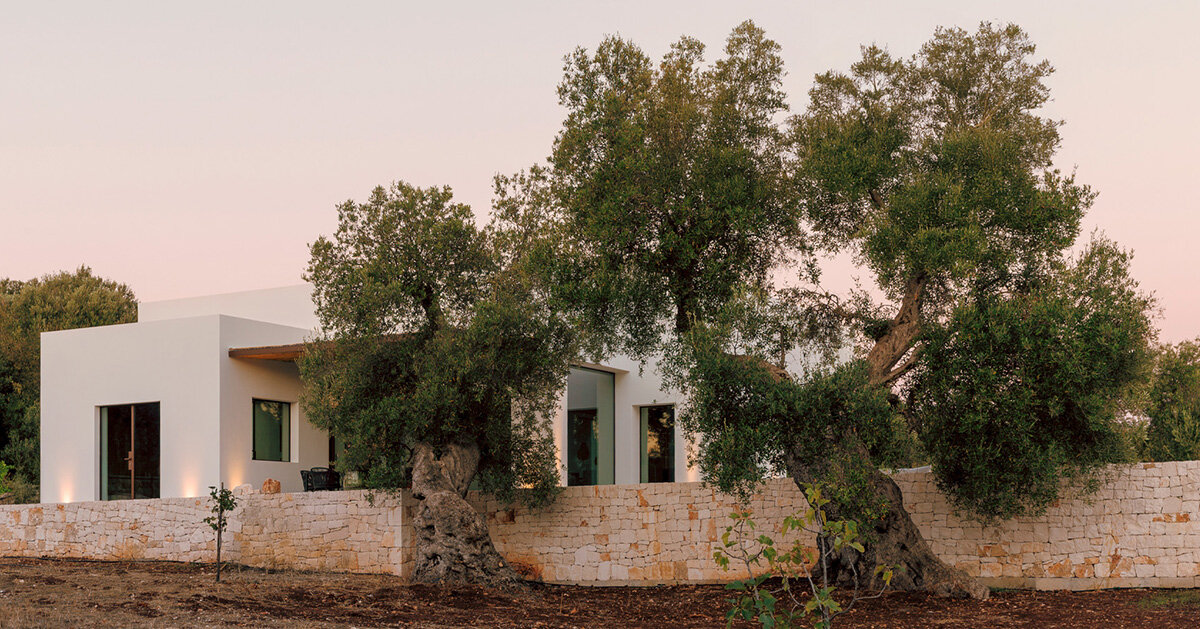
The design is organized around a sequence of covered spaces supported by evenly spaced columns, forming a balanced geometric composition. This spatial rhythm establishes continuity between interior and exterior areas, emphasizing openness and measured scale. Material selection plays a central role in the architectural expression. White plaster, metal columns, rammed earth, and travertine are combined to create a unified palette of textures and tones.
Occupying an 11-by-17-meter plot, the project rethinks the conventional trade fair booth, prioritizing openness and spatial clarity within the visually dense exhibition environment. While exhibition halls often favor maximum density, A Nest in the Tree introduces restraint as a design strategy. By stepping back from the aisle and allowing the space to breathe, the booth establishes a clear threshold, inviting visitors to experience it as a unified spatial composition before entering.
In the world of interior architecture, where creativity and culture intersect, Tola Ojuolape stands as a designer whose work is a testament to personal narrative. From her early studies in art and construction to her degree in interior architecture, Tola's career has been shaped by a deep connection to her Nigerian heritage, discovered during her travels back to the African continent. This journey has profoundly influenced her design philosophy, creating a process tightly woven with history, culture, and a sense of place.
The relationship between Adebunmi Gbadebo and her material, clay, is one of supplication-on the part of Gbadebo. The churched among us consider a potter something of an autocrat; they find masochistic affinity with the idea of clay as the humble, dumb stuff of life of which they are made. But clay will give its protest. In certain environmental situations, clay will choose catastrophe.
I find them so alluring, almost like perfume bottles or snow globes, but so grotesque, she explains as we handle the etched and sculpted objects, which each have a precious drop of crude oil at their centre. They have these shiny, dazzling exteriors, but when you get close you see the death mulch inside. All presentations of power are fragile; they collapse once you get close enough.
In southern Mexico City, within a double-height house designed by OW Arquitectos, two pieces by Omar Wade, Banca Tres (Bench Three) and Silla Cuatro (Chair Four), investigate the relationship between space, materiality, and light. The , characterized by skylights and large windows, provides the setting for this dialogue, framing the interaction of furniture and architecture. Together, the two wooden pieces present an exploration of scale and construction.