#regional-challenges
#regional-challenges
[ follow ]
#infrastructure #public-health #climate-change #geopolitics #architecture #data-centers #sustainability
fromThe Atlantic
1 hour agoA Pillar of the Economics Establishment Admits That It Was Wrong
The World Bank's recent report argues that government intervention, when done right, can actually be an essential ingredient of economic success, reversing decades of opposition to industrial policy.
World politics
Psychology
fromSilicon Canals
1 day agoThere's a version of strength that only develops in people who had to figure out the rules of a place nobody explained to them. They don't talk about it because the people who had the rules handed to them wouldn't understand what was hard about it, and the people who also had to figure it out don't need the explanation. - Silicon Canals
Onsighting in climbing parallels navigating social systems, emphasizing perceptual capacity over resilience in understanding unwritten rules.

#climate-change

Online Community Development
fromInside Higher Ed | Higher Education News, Events and Jobs
1 week agoA Town-Gown Partnership Focused on Climate Resilience
Agnes Scott College collaborates with Decatur to address climate change through a joint Climate Resilience Plan, focusing on sustainability and community engagement.
Online Community Development
fromInside Higher Ed | Higher Education News, Events and Jobs
1 week agoA Town-Gown Partnership Focused on Climate Resilience
Agnes Scott College collaborates with Decatur to address climate change through a joint Climate Resilience Plan, focusing on sustainability and community engagement.
London startup
fromComputerWeekly.com
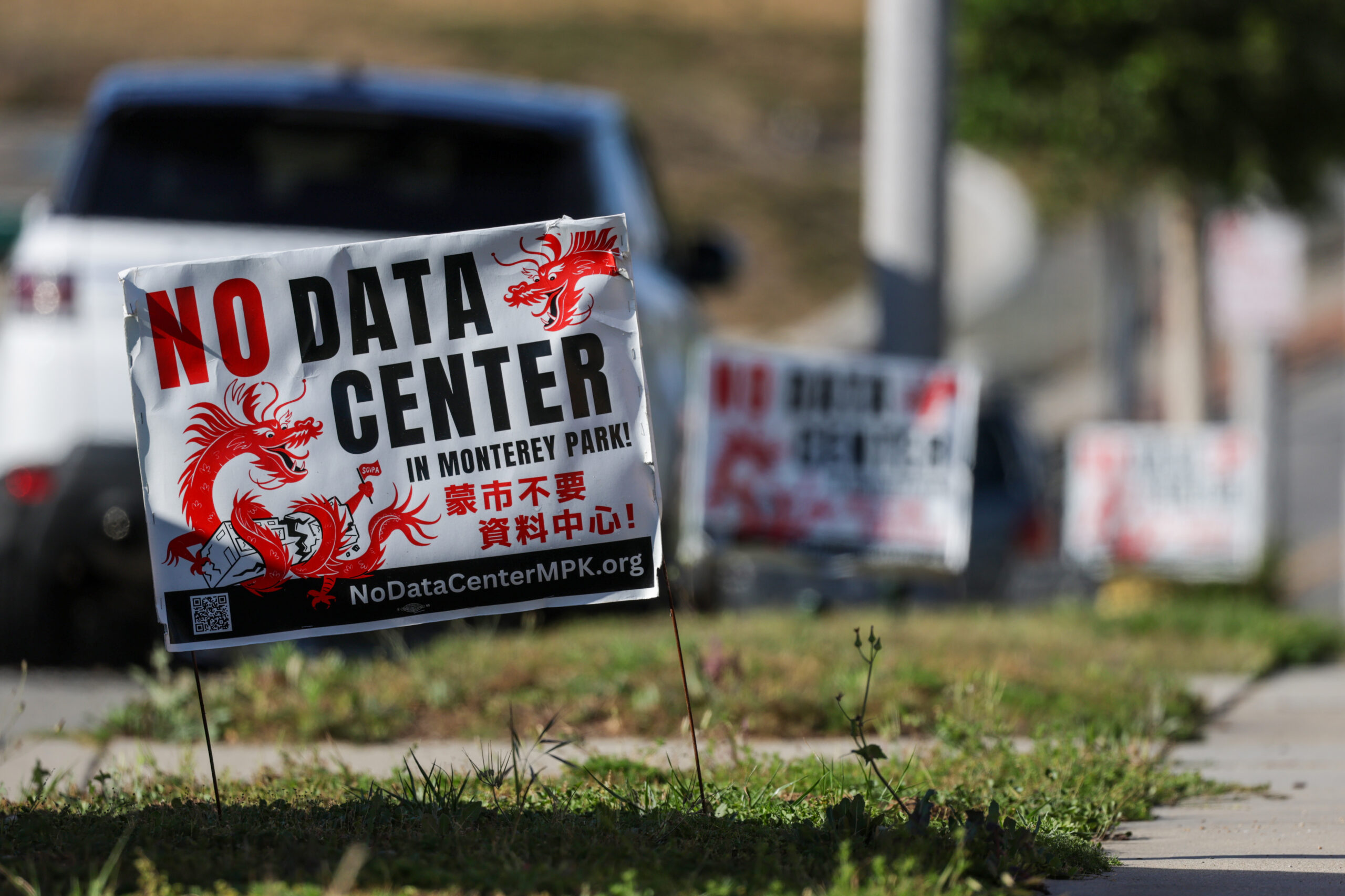
2 days agoDatacentre developers tout benefits to local communities, but do they deliver? | Computer Weekly
Datacentre developments are causing challenges for local businesses, raising concerns about energy consumption and community impact despite potential local benefits.
Business intelligence
fromLondon Business News | Londonlovesbusiness.com
2 weeks agoWhy GIS matters in modern infrastructure and urban planning: Building smarter, future-ready cities - London Business News | Londonlovesbusiness.com
GIS is essential for effective urban planning, enabling data-driven decisions that enhance infrastructure and quality of life in rapidly growing cities.
fromwww.bbc.com
3 weeks agoCampaigners celebrate after new town plans dropped
Campaigner Aysha Hawcutt stated that residents were 'not anti-homes', but believed the Adlington plan was 'the wrong proposal in the wrong place'. She expressed pride in the community's resilience against the development threats.
London politics
fromDefector
3 weeks agoDam It All To Hell | Defector
Hoppers, like Pixar's pre-Disney films, is a delight. The beavers' world is immersive and richly realized, grounded in science but never dry. The plot zigs and zags between moments of absurdity and emotional heft to stirring effect; I cried multiple times, and not just because of the low-hanging fruit of grandma death.
Independent films
Alternative transportation
fromStreetsblog
4 weeks agoWhy Some Congresspeople Want to Go Big on Greenways - Streetsblog USA
The Parks to People Act proposes $300 million in federal funding for walking and biking infrastructure as essential transportation tools, despite political opposition dismissing them as distractions.
fromHarvard Business Review
1 month agoHow To Deliver on ESG Initiatives in Emerging Market
Multinational firms are under rising pressure-from investors, regulators, and employees-to demonstrate positive societal impact in the places where they do business. With ESG-focused institutional investments projected to reach nearly $34 trillion this year and roughly 90% of large U.S. companies now disclosing ESG reports, these pressures are now a central part of corporate strategy.
Business
fromThe Cipher Brief
2 weeks agoTaking a Stand on Adversaries' Influence in the Western Hemisphere
The January 3rd Operation Absolute Resolve ousted Venezuelan Dictator Nicholas Maduro, marking a significant shift in US policy towards countering adversarial influence in the western hemisphere.
World politics
fromArchDaily
1 month agoMobility Justice: Urban Equity in an Era of Innovation
Every city contains two transportation systems. One is the visible network of roads, rail lines, sidewalks, and bus routes mapped in planning documents. The other is the invisible geography of privilege and exclusion embedded within it: the neighborhoods that received highways instead of parks, the communities whose bus routes were cut, the sidewalks that abruptly end at the edge of a district.
Alternative transportation
Psychology
fromPsychology Today
1 month agoHow to Help Communities Rebound from Crisis and Disaster
Disaster psychology provides an empirically-based framework for building community resilience and growth during crises through understanding predictable psychological phases and natural recovery mechanisms.
Environment
fromNature
1 month agoClimate change and geopolitics threaten water supplies - but disaster is not inevitable
Global water systems face crisis from overuse, pollution, and climate change, requiring urgent strengthening of international water-sharing treaties with dynamic monitoring systems.
fromPsychology Today
2 months agoAmerica Is Fraying, What Comes Next?
The air feels heavier. And the struggles are changing shape. Beyond my office walls, the world is shifting, and my clients sense the tremors. The things they once trusted, global order, democratic norms, and even their own personal safety, no longer feel solid. They feel brittle, as if one strong wind could bring it all down. And what they're sensing isn't imagined.
Relationships
fromArchDaily
2 months agoMoving Capitals Across Global Contexts: From Strategic Planning to Environmental Necessity
Across history, the relocation of capital cities has often been associated with moments of political rupture, regime change, or symbolic nation-building. From Brasília to Islamabad, new capitals were frequently conceived as instruments of centralized power, territorial control, or ideological projection. In recent decades, however, a different set of drivers has begun to shape these decisions. Rather than security or representation alone, contemporary capital relocations are increasingly tied to structural pressures such as demographic concentration, infrastructural saturation, environmental risk, and long-term resource management.
World news
EU data protection
fromInfoWorld
1 month agoSovereignty isn't a toggle feature
European cloud alternatives like Hetzner and Scaleway can deliver comparable performance and capabilities to AWS while significantly reducing costs, though they require greater operational responsibility and architectural commitment to sovereignty.
fromBusiness Matters
1 month agoThe impact of road signs on economic development
When routes are well organized, there are clear directional signs, and speed limits become reasonable. The early installation of warning signs allows transport companies to plan deliveries more accurately and avoid delays. For businesses, time is money. When a truck carrying goods does not spend hours detouring due to an unclear traffic scheme or stuck in traffic where it could have been avoided thanks to competent traffic management, fuel costs, driver wages, and vehicle maintenance costs are reduced.
Alternative transportation
fromNieman Lab
2 months agoMany people who live in "local news deserts" don't feel deprived of local news, study finds
The industry's attempts to educate consumers "[seem] to largely have gone unheard," Amy Mitchell, then Pew's director of journalism research (she now heads the Center for News, Technology, and Innovation) said in a briefing at the time. "There's really a disconnect there between the public's knowledge and understanding about the industry and how it's functioning, compared with what we see in headlines day in and day out about budget cuts and revenue declines."
Media industry
fromAxios
2 months agoExclusive: Inside Google's push to sell AI to cities
Between the lines: This isn't benevolence. It's customer acquisition. Mayors don't just buy "AI." They buy cloud, data modernization, cybersecurity, services, and long-term support - the tech stack underneath any serious deployment. In return, cities get tools that could fix long-standing challenges, Cris Turner, vice president of government affairs at Google told Axios last June when it first released its playbook.
Artificial intelligence
fromFingerlakes1.com
1 month agoIN FOCUS: Making Upstate communities stronger will require tradeoffs (podcast) | Fingerlakes1.com
While remote work has expanded opportunity and demand for high-amenity, walkable communities, it has also intensified housing shortages in desirable regions. Zoning reform alone will not solve the housing crisis, warning that regulatory changes must be paired with coordinated public-private investment to deliver meaningful supply.
Online Community Development
Business
fromHarvard Business Review
1 month agoRethinking Strategy in a Hyperpolitical World
Corporate decisions face intense public scrutiny for political implications, resulting in boycotts, revenue loss, reputational damage, and executive terminations, yet political engagement remains unavoidable for businesses.


fromFortune
2 months agoAsia is one of the world's least insured places, even as it's battered by climate change and natural disasters | Fortune
A lack of insurance coverage in Southeast Asia threatens an increasingly important hub for supply chains, as the region is battered by tropical storms, major flooding, and other natural disasters. Total losses from natural disasters across Asia-Pacific last year totaled $73 billion, yet just $9 billion was insured, according to Germany reinsurance company Munich Re. That makes Asia one of the world's least insured regions against natural disasters.
Business
fromArchitectural Digest
2 months agoDesigning When Your City Is Under Siege
Life doesn't pause for grief or fear. You might be going through something devastating but you're still packing lunches, still driving your kids to baseball practice, still showing up to work. One minute I find myself prepping for a whole home presentation and the next minute I'm checking the news, hoping and praying that no one has been killed on the streets today.
Design
fromNature
2 months agoI know science can't fix the world - here's why I do it anyway
His message is clear: our world is built on abundant energy, around 80% of which has come from fossil fuels over the past 50 years. Because supplies are limited, energy consumption will peak in decades - sooner if humans attempt to limit climate change. To keep global warming below 1.5 °C by 2100, the use of fossil fuels must fall by 5-8% each year - a pace that is too fast for low-carbon energy to keep up with.
Environment
Design
fromFast Company
2 months agoTop architects on the biggest challenges they'll face in 2026
Architects must prioritize collaboration, community-centered design, faster delivery without quality loss, clear high-performance standards, streamlined approvals, and AI-enabled workflows to address housing and infrastructure crises.
fromThe Globe and Mail
2 months agoBusiness Brief: Heralding the age of Western decline
U.S. President Donald Trump, with his lust for Greenland and hectoring of Europe, thinks the world is at his mercy,and thatthe U.S. is invincible. He's right on the first point. But he discovered this week that he's wrong about the second one. In Davos at the World Economic Forum, Trump climbed down on his Greenland threats after his actions caused chaos in the markets.
World news
Environment
fromLondon Business News | Londonlovesbusiness.com
1 month agoBuilding a liveable capital by 2040 - the infrastructure, talent and sustainability trade-offs - London Business News | Londonlovesbusiness.com
Liveability depends on functioning infrastructure, a thriving talent ecosystem, and sustainable resilience, achieved through deliberate, transparent trade-offs focused on long-term outcomes.
fromNature
2 months agoHow to rescue the aid industry: focus on conflict prevention, not just relief
In 2025, the administration of US President Donald Trump ordered the US Agency for International Development to be closed; this year, it withdrew the country from 66 international organizations. Other Western nations that are plagued with high levels of debt and pressure to prioritize domestic challenges have slashed their foreign aid, too. According to projections, official development assistance dropped by 9-17% in 2025, amounting to some US$55 billion.
World news
[ Load more ]