Retirement
Retirement
[ follow ]


:max_bytes(150000):strip_icc()/TAL-house-mississippi-RETIREMISSISSIPPI0226-ac1cee1fd9854bf2860b09867aa8308e.jpg)
fromwww.independent.co.uk
9 hours agoHow to prep your pension - and how you use it - against new inheritance tax changes
Currently, pension savings are not used for estate valuations when calculating IHT charges when someone dies. This means money left in a pension can be passed on without worrying about generating a tax bill. But from the new tax year in April 2027, pensions will be included in estate calculations. This creates a higher chance of pushing the value of an estate above the IHT threshold, currently 325,000.
Retirement
from24/7 Wall St.
5 hours ago5 High Yielding Stocks that Raised their Dividends by 50% over the last five years
Aggressively invest in high-yielding stocks and reinvest the dividends continuously until you consider retirement. After all, each reinvested dividend payout buys you more income-producing shares without any out-of-pocket expenses. Better, by doing so, you're compounding the earnings and expediting the growth of your portfolio.
Retirement



Retirement
fromFortune
1 day agoThe great (small business) wealth transfer: McKinsey sees $5 trillion of baby boomer companies coming up for sale over the next decade | Fortune
Six million small businesses face ownership transitions by 2035, representing $5 trillion in value, but 92% currently close rather than transfer, threatening economic stability.
from24/7 Wall St.
1 day agoI'm 58 With $800,000 Saved, Can I Retire in 5 Years Without Social Security Yet?
At 2.16% annual inflation, purchasing power erodes slowly but steadily. Using the 4% withdrawal rule, $800,000 supports roughly $32,000 per year in initial withdrawals, adjusted annually for inflation. The critical nuance: withdrawing 4% during the first 7 years exposes you to sequence-of-returns risk. A 20% market drop in year one means selling assets at depressed prices, permanently reducing recovery potential.
Retirement


Retirement
from24/7 Wall St.
1 day agoHow Dwindling Social Security Trust Fund Could Impact Your Benefits in Just 6 Years
Social Security's trust fund will become insolvent by 2032 due to an aging population and declining worker-to-beneficiary ratio, forcing automatic benefit reductions unless Congress acts.
Retirement
fromSilicon Canals
1 day agoNobody tells you that the worst part of retirement isn't the loss of income or status - it's the loss of strangers, the barista who knew your order, the security guard who said good morning, the receptionist who called you by name - an entire cast of minor characters who made you feel like the lead in something - Silicon Canals
Retirement's greatest challenge is not financial but social—the loss of daily interactions and sense of belonging that work provides.
Retirement
fromSilicon Canals
1 day agoNobody talks about the moment a retired man drives to a hardware store on a Wednesday morning, walks every aisle, buys nothing, and drives home - because that trip was never about the hardware - Silicon Canals
Retired tradespeople frequently visit hardware stores not for supplies but to reconnect with their former professional identity and sense of purpose.
fromwww.housingwire.com
2 days agoRetirement planning faces longevity risk as Americans live longer
A 65-year-old man today can expect to live to 84 years old, while a 65-year-old woman can expect to live until 86. For plan sponsors and advisers, that translates into a potential distribution horizon of at least 20 to 30 years. Without incorporating realistic longevity assumptions into glide path design, withdrawal strategies and income solutions, participants face a heightened risk of outliving their savings.
Retirement
from24/7 Wall St.
2 days agoSocial Security Just Got More Complicated For All Retirees
Social Security benefits rose by 2.8% in January 2026, adding roughly $56 per month to the average retiree's check. Year-over-year inflation is running at 2.2%, which means the COLA is actually outpacing current price increases by a small margin. The catch is Medicare. Medicare Part B premiums increased in 2026, and since those premiums are deducted directly from your Social Security payment, some of that $56 gain disappears before it reaches your bank account.
Retirement
from24/7 Wall St.
1 day agoI hit $3 million and was ready to retire - then this happened
He said that while many people set target retirement ages, people in the FIRE movement set target portfolio numbers. Unfortunately, he believes this is "inherently riskier" because you're biased towards being exposed to risk as long as possible to help your wealth grow quickly - unlike people who usually rebalance their portfolios and shift to safer assets as their retirement age nears.
Retirement
Retirement
fromFortune
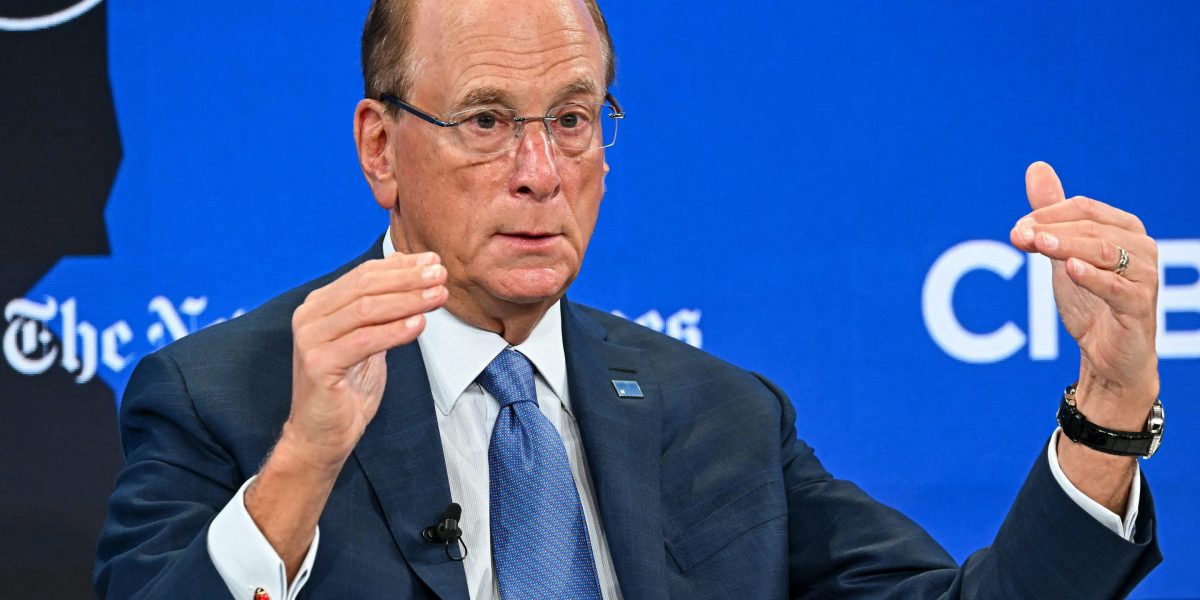
2 days ago'Trump Accounts' means kids can have $270,000 saved by age 18. Larry Fink says that's twice as much as most adults have now | Fortune
Trump's new government-backed 401k accounts offer $1,000 seed funding and allow up to $5,000 annual contributions for children born 2025-2028, functioning as tax deferral mechanisms rather than traditional retirement accounts.
Retirement
from24/7 Wall St.
2 days agoThere Is A Social Security Change in 2026 That Could Cost Retirees Thousands If They're Not Prepared
Claiming Social Security at 62 instead of 67 permanently reduces monthly benefits by 30%, costing $144,000 over 20 years, while earnings limits and COLA adjustments compound the financial impact for early claimers.
from24/7 Wall St.
2 days agoWhy Retirees Can't Stop Buying This Schwab Fund After Its 12% Dividend Hike
The Schwab US Dividend Equity ETF (SCHD) is an exchange-traded fund managed by the professionals at the Schwab Asset Management team. It invests in a basket of individual stocks and tracks the Dow Jones U.S. Dividend 100 Index. This index tracks the returns of high-yielding dividend stocks that show a consistent record of payments and are fundamentally strong.
Retirement


Retirement
fromSilicon Canals
2 days agoThe last thing a retiree loses isn't their memory or their mobility - it's the belief that tomorrow needs them to show up - Silicon Canals
Retirement's greatest challenge is losing professional identity and purpose rather than physical capability, as the sudden absence of being needed creates existential emptiness.







fromSlate Magazine
1 week agoI Squandered My Grandmother's Final Gift. But I Have a Chance for a Do-Over.
When I was 22, my grandmother died. She was my favorite person. She didn't have a lot of money, but each of us grandchildren got a check for $3,000 from the will. I really, really wanted to do something special with that money, something to honor my grandmother, but I was young and dumb and broke, and it evaporated into rent and burritos and drinks and cigarettes and all the other "necessities" of my young, dumb 22-year-old life. I have had an "IOU" to myself for that money ever since and promised myself that one day, when I had an "extra" $3,000, that would be "grandma's money," and I'd do something special with it.
Retirement




Retirement
fromSubstack
2 weeks agoThe Richest Americans Ever, SpaceX's Mega Merger, and Regret Investing Too Conservatively - Episode 175
Extreme wealth often arises from concentration, top companies change frequently, and SpaceX's merger with xAI signals major AI-in-space infrastructure and significant IPO potential.
fromFortune
2 weeks agoThe 70/30 rule that separates millionaires from everyone else | Fortune
In an era in which "get rich quick" schemes involving cryptocurrency and day trading dominate social media feeds, a quiet army of everyday workers is building substantial wealth using a strategy that is remarkably boring-and effective. According to financial expert and best-selling author David Bach, recent data reveals a specific asset allocation formula shared by hundreds of thousands of retirement account millionaires: the 70/30 rule.
Retirement
from24/7 Wall St.
3 weeks agoSuze Orman Says Roth IRAs Are Unbeatable, But That's Only Partly True
The tax-free growth advantage compounds dramatically over time. A modest S&P 500 investment from a decade ago would have nearly quadrupled in value. The real difference emerges at withdrawal, where a taxable account surrenders roughly 15% to capital gains taxes while a Roth account preserves every dollar. That difference doesn't just represent savings-it represents money that stays invested and continues compounding in your favor, creating a widening gap between the two account types over decades.
Retirement
from24/7 Wall St.
3 weeks agoSLV Plunged 35.6% in Five Days After Fed Chair Nomination Rattled Silver Markets
Silver just delivered one of its worst weeks in recent history. The iShares Silver Trust ( NYSE:SLV) plunged 35.6% to around $68, erasing months of gains in just five trading days. The speed and severity of the collapse has retirees asking whether this represents a rare buying opportunity in precious metals or a warning sign that commodity exposure doesn't belong in retirement portfolios.
Retirement
from24/7 Wall St.
3 weeks agoHow Much Money Would You Have in 10 Years if You Maxed Out Your IRA in 2026?
A traditional IRA allows you to contribute with pre-tax dollars and pay taxes on withdrawals in retirement, while a Roth IRA allows you to take tax-free withdrawals as a retiree, although you will have to contribute with after-tax dollars. Provided your income isn't too high, you can make tax-advantaged contributions to these accounts this year, up to a total limit of $7,500 if you're under 50 or a limit of $8,600 if you're 50 or older and eligible for catch-up contributions.
Retirement
Retirement
from24/7 Wall St.
1 month ago2026 Is Showing Retirees That A $3,000 Monthly Pension Changes Investment Strategy
A pension's guaranteed monthly income reduces required portfolio stability, enabling higher equity allocation and shifting focus to growth, healthcare gaps, and inflation protection.
from24/7 Wall St.
1 month agoRetiring Early With Index Funds. What the Math Says After Taxes
What gets glossed over in most of these conversations is taxes, as everyone focuses on the accumulation phase by maxing out your 401(k), funneling money into accounts like the Vanguard Total Stock Market Index Fund, and watching your net worth compound. However, when you retire early and need your portfolio to generate income, the tax bill can be significantly higher than you planned for, particularly if most of your money is in tax-deferred accounts or you've accumulated large unrealized gains in taxable accounts.
Retirement
[ Load more ]