US news
fromwww.mediaite.com
7 hours agoFBI Analyzing Potentially Critical DNA' Found In Nancy Guthrie's Home: Report
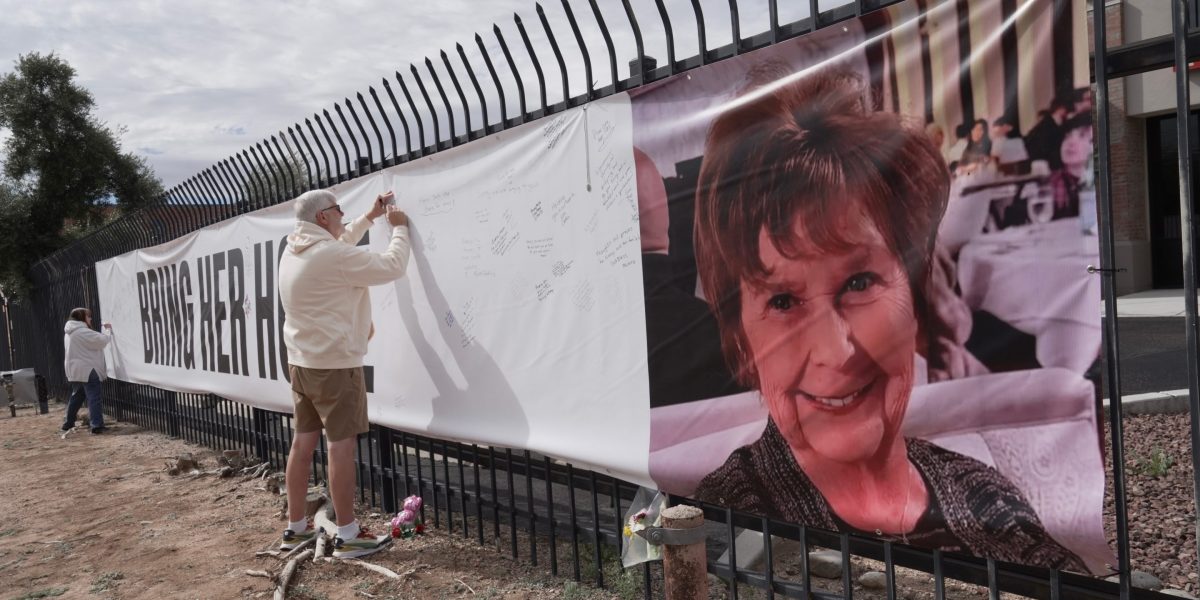
The FBI is analyzing critical DNA found at Nancy Guthrie's home as part of her missing person investigation.
Human remains found on Bay Area beaches in 1999 and 2023 have been identified as those of Walter Karl Kinney, a banker who disappeared in 1999. The remains were discovered by a family searching for sea shells in 2022, leading to an investigation that linked the remains to Kinney's family through DNA analysis.
Asexual reproduction is ultimately unsustainable for mice, and potentially other mammals, too. The clones looked normal and lived as long as normal mice. But large mutations - including the loss of an entire chromosome - accumulated in the cloned lineage at an unusually high rate.
Every state now has a legal avenue where people can request DNA testing of evidence after being convicted. But in many cases, it's not clear if those statutes apply once convicts have died, said Brandon Garrett, a law professor at Duke University.
It was another detail that the rest of the family apparently knew but had never told me; they thought I already knew. The biology mattered less to me than the secret. Dad had been adopted, it turned out. A classic affliction of the 1950s, in which young, unmarried couples were forced to give away their newborn babies.
Scientists in the laboratory of Rendong Yang, PhD, associate professor of Urology, have developed a new large language model that can interpret transcriptomic data in cancer cell lines more accurately than conventional approaches, as detailed in a recent study published in Nature Communications. Long-read RNA sequencing technologies have transformed transcriptomics research by detecting complex RNA splicing and gene fusion events that have often been missed by conventional short-read RNA-sequencing methods.
The four bullets Renee Good took from the gun fired by Minnesota ICE officer Jonathan Ross hit her once each in the arm, breast and head, while a fourth grazed her body, her family said in releasing partial results of an independent autopsy on the slain mother of three. A highly respected and credentialed medical pathologist performed the procedure, said
GEMINI leverages a computationally designed protein assembly as an intracellular memory device to record the history of individual cells. GEMINI grows predictably within live cells, capturing cellular events as tree-ring-like fluorescent patterns for imaging-based retrospective readout. Absolute chronological information of activity histories is attainable with hour-level accuracy.
Scientists have long known that vast colonies of bacteria, viruses and other microorganisms—a population collectively called the microbiome—live on and inside the human body. But how they influenced our health was long a mystery. In just the past few years, we've learned that myriad factors, from the food that we consume to the amount of time that we spend sleeping to our genes to our home, all affect our microbiome.
Ronald Joseph Cole was a 19-year-old with a shy smile and a buzz cut in 1965, the year he moved from San Diego to Fillmore, a town about 25 miles from Santa Clarita. He was just starting out in life and, hoping to find a job, moved in with his older half-brother David LaFever. By May 1965, Cole had stopped contacting relatives. He had disappeared.
Martschenko's argument is largely that genetic research and data have almost always been used thus far as a justification to further entrench extant social inequalities. But we know the solutions to many of the injustices in our world-trying to lift people out of poverty, for example-and we certainly don't need more genetic research to implement them. Trejo's point is largely that more information is generally better than less.
Investigative genetic genealogists are asking for the public's help to identify a child whose skull was seized from a Seabrook, N.H., business more than 30 years ago. The DNA Doe Project, a California-based nonprofit that builds DNA profiles from unidentified human remains, released a new facial reconstruction on Monday. The group also announced that the skull - believed to belong to a girl between the ages of 7 and 9 - has ancestral roots on the Greek island of Chios.
The Y chromosome primarily carries genes that provide instructions for male sex differentiation and fertility. But it also carries some known to suppress tumor growth - a protective ability that is lost if those genes are damaged or destroyed.
Biology is undergoing a transformation. After centuries of studying life as it evolves naturally, researchers are now using a combination of computation and genome engineering to intervene, generating new proteins and even whole bacteria from scratch. The use of artificial-intelligence tools to design biological components, an approach known as generative biology, is set to turbocharge this area of research. Just last year, scientists used AI-assisted design to produce artificial genes that can be expressed in mammalian cells.
About ten years ago researchers across a wide range of disciplines, from forensic science and genetics to art history, got together with the goal of finding the Renaissance artist's DNA. Da Vinci had no children, and his remains were disturbed during the French Revolution. The hope is that uncovering his DNA could open the door to a number of discoveries, including new tools for authenticating artwork and potential clues about da Vinci's uncanny way of seeing the world.