#federal-reserve-policy
#federal-reserve-policy
[ follow ]
#mortgage-rates #us-dollar #geopolitical-risk #treasury-yields #interest-rates #housing-market #inflation

World news
fromLondon Business News | Londonlovesbusiness.com
2 days agoUS inflation held at 2.4% in February, but significant price pressures loom in March - London Business News | Londonlovesbusiness.com
US inflation stabilized at 2.4% year-on-year in February, but Middle East disruptions to energy supplies create uncertainty about future Fed rate cut decisions.
from24/7 Wall St.
2 days agoThe S&P 500's 1.5% Selloff Is Driven By A Few Key Factors
Under the surface of soaring crude prices is the realization that the likelihood of Fed cuts later this year is quickly dwindling. Oil dominated the session. WTI crude has surged 33% over the past week, and Thursday added another 9.7% as Iran's new Supreme Leader Mojtaba Khamenei vowed to keep the Strait of Hormuz closed.
US news

Real estate
fromwww.housingwire.com
3 days agoAnnual inflation steady at 2.4% in February
February CPI shows shelter inflation returning to pre-COVID levels with steady momentum, but geopolitical tensions and energy market volatility create uncertainty for future inflation trends and Federal Reserve policy decisions.
fromLondon Business News | Londonlovesbusiness.com
4 days agoGold remained in a consolidation range ahead of key data - London Business News | Londonlovesbusiness.com
Persistent tensions in Eastern Europe and the Middle East sustain the demand for safe-haven assets. However, the surge in oil prices raised concerns about inflationary pressures, pushing up inflation expectations and lifting Treasury yields, which could continue to weigh on gold.
Europe news
US politics
from24/7 Wall St.
5 days agoStagflation Fears Are Returning: Grab These 5 Safe High-Yield Dividend Kings Now
Stagflation risks are rising due to weak job growth, persistent inflation, and structural economic changes, requiring investors to consider defensive dividend stocks that historically perform well during such periods.
Retirement
from24/7 Wall St.
5 days agoMarch 18th Is The Date Social Security Retirees Need to Watch If They Care About COLA
The Federal Reserve's March 18 interest rate decision provides insight into inflation trends that will determine the 2027 Social Security COLA, which is officially calculated using September Consumer Price Index data.
#mortgage-rates






SF real estate
fromwww.housingwire.com
5 days agoHow will rising oil prices impact the U.S. housing market?
Markets debate whether higher oil prices and tariffs will increase inflation and yields or weaken consumers and lower rates, with mortgage rates remaining stable near 6.17% and 10-year yields at 4.13%.
fromwww.mediaite.com
1 week agoFed Governor Trips All Over Himself Trying to Reassure CNBC Host AI Won't Cause Mass Unemployment
It's the folks who are entering the job market for the first time that are bearing the brunt of that, and to me, that's in a very standard, classic textbook way, exactly the type of unemployment that the Central Bank is equipped to help accommodate with looser monetary policy.
Artificial intelligence
Business
fromwww.housingwire.com
1 week agoJob market softens as US payrolls fall by 92K in February
U.S. nonfarm payrolls fell 92,000 in February with unemployment rising to 4.4%, while prior months were revised lower, signaling continued labor market softening unlikely to alter Federal Reserve rate policy.

Cryptocurrency
fromLondon Business News | Londonlovesbusiness.com
1 week agoCan the recent Bitcoin rally last long? - London Business News | Londonlovesbusiness.com
Bitcoin trades sideways above $70K after a 17% rally to $74K, with uncertain sustainability amid geopolitical tensions and diminished Federal Reserve rate cut expectations.
World politics
fromLondon Business News | Londonlovesbusiness.com
1 week agoDollar set for weekly gain as geopolitics and resilient data lift yields - London Business News | Londonlovesbusiness.com
The dollar gains over 1% this week due to strong US economic data and Middle East tensions, with markets now pricing in only one Fed rate cut for the year instead of two.
from24/7 Wall St.
1 week agoGold Is Hitting New Highs: One 2x ETF Is Doubling Every Move
Gold pays no interest or dividends, making its appeal highly sensitive to what investors can earn elsewhere. When real yields fall, gold becomes comparatively more attractive. The 10-year Treasury yield has dropped from 4.29% in early February to 4.06% as of early March, coinciding directly with gold pushing to new highs.
Venture
Cryptocurrency
fromLondon Business News | Londonlovesbusiness.com
1 week agoBitcoin holds near multi-week highs as ETF inflows offset macro headwinds - London Business News | Londonlovesbusiness.com
Bitcoin stabilized near $73,000 after rallying to multi-week highs, with spot ETFs attracting $462 million in inflows and institutional investors rebuilding exposure despite macro headwinds.
US politics
fromFortune
1 week agoA shiny new Fed Chairman will be keen to make an entrance with a base rate cut-yet the committee is only growing more hawkish due to Iran | Fortune
Kevin Warsh's Fed nomination faces pressure to deliver rate cuts despite geopolitical tensions threatening oil supplies and inflation concerns.
Business
from24/7 Wall St.
1 week agoForget Individual Cloud Stocks: A Single ETF Captures the Entire Boom
Cloud computing ETFs face significant headwinds in 2026 due to rising real interest rates compressing valuations of long-duration growth assets, with recovery dependent on Federal Reserve rate cut decisions.
Environment
from24/7 Wall St.
1 week agoThe One Fed Signal That Could Flip CNRG From Loser to Leader in 2026
CNRG's diversified clean energy exposure recovered 68% over the past year, but faces headwinds from Federal Reserve rate policy that directly impacts capital-intensive project financing and margins.
Business
from24/7 Wall St.
1 week agoJPMorgan CEO Jaime Dimon: Inflation 'Skunk at the Party' Could Be Back
Jamie Dimon warns that Middle East tensions risk prolonged inflation beyond market expectations, with oil price spikes already triggering significant market volatility and geopolitical uncertainty.
US politics
fromFortune
1 week ago'90s nostalgia seizes the Fed and White House as Warsh and Trump see AI as an internet-style productivity boom | Fortune
Trump administration believes AI can replicate 1990s economic growth by appointing a Fed chair willing to cut interest rates aggressively, though economists question this strategy and the historical narrative underlying it.
Real estate
fromFast Company
2 weeks agoBig banks retreated from mortgages after the 2008 housing market crash-now this Fed governor wants them back
Federal Reserve officials are reconsidering post-2008 regulations that may have pushed mortgage lending from large banks to nonbank lenders, with potential policy shifts ahead.
from24/7 Wall St.
2 weeks agoWhat Retirees Should Watch Before Buying Into AMZA's 7.51% Yield This Year
MLPs compete directly with bonds for yield-seeking capital, making the Federal Reserve's rate trajectory the most important external variable for AMZA. The Fed has cut rates 75 basis points over the past year to a current target of 3.75%, and the 10-year Treasury has pulled back to 4.08% after peaking at 4.29% in early February. That decline has widened the spread between MLP distributions and risk-free alternatives, contributing to the rally across holdings.
Miscellaneous
World politics
fromLondon Business News | Londonlovesbusiness.com
2 weeks agoResurfacing Trade Risks Support Gold as Safe Haven - London Business News | Londonlovesbusiness.com
Gold recovered amid rising trade and geopolitical uncertainty, supported by safe-haven demand despite modest ETF inflows and mixed Federal Reserve signals.
US news
fromLondon Business News | Londonlovesbusiness.com
2 weeks agoThe Significant Events in the Global Economy Explained - London Business News | Londonlovesbusiness.com
Supreme Court tariff reversal lifted investor sentiment and stocks, while Fed division on rates, rising inflation, and slowing GDP kept markets cautious.

fromLondon Business News | Londonlovesbusiness.com
3 weeks agoThe decisive trend battle for gold - London Business News | Londonlovesbusiness.com
In my view, this phase is not merely a temporary technical hesitation, but rather a deep confrontation between two opposing forces: growing expectations of monetary easing versus the resilience of U.S. economic data and rising real yields. This fragile balance places gold in a state of "strategic waiting," where any breakout or pullback will require a strong fundamental catalyst rather than short-lived speculative momentum.
World news
from24/7 Wall St.
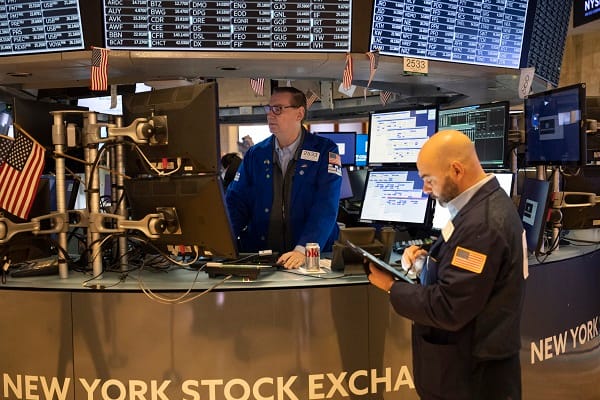
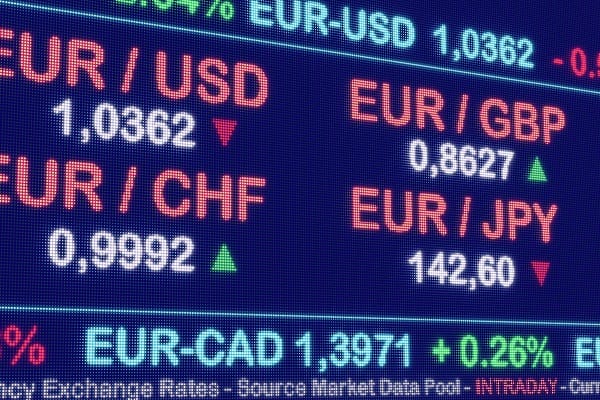
1 month agoThis Emerging Markets ETF Charges Just 0.07% and Ran Way Past The S&P 500
Currency movements drive emerging market returns more than most investors realize. When the dollar weakens, emerging market assets denominated in local currencies become more valuable in dollar terms, and capital flows toward higher-yielding developing economies. The opposite happens when the dollar strengthens. SPEM's performance over the next year will largely hinge on whether the dollar continues its recent consolidation or resumes a strengthening trend.
Business



fromLondon Business News | Londonlovesbusiness.com
1 month agoUSDJPY rebounds after a sharp correction - London Business News | Londonlovesbusiness.com
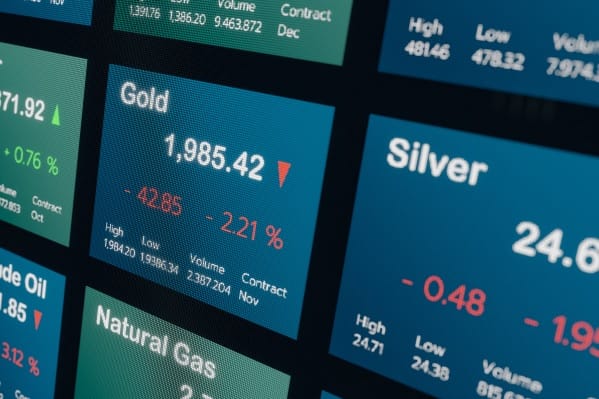
USDJPY is currently trading around the 155.5 level. While this remains a relatively high price, the pair has already undergone a correction from its previous peak near 159.5. At one point, USDJPY slid back toward the 152 area before rebounding to its current level. The sharp and rapid movements seen in USDJPY recently indicate that the market is no longer reflecting only the economic divergence between the United States and Japan,
World news
US news
fromLondon Business News | Londonlovesbusiness.com
1 month agoMarkets pause as investors weigh economic signals - London Business News | Londonlovesbusiness.com
U.S. markets were mixed as the S&P 500 briefly topped 7,000 and ended modestly higher amid falling consumer confidence and steady labor data.
from24/7 Wall St.
1 month agoThis ETF Outperformed the S&P 500 3-To-1 Last Year. Here's Why I Expect a Repeat in 2026
The S&P 500's performance in 2025 marked yet another blockbuster year after performing well in both 2023 and 2024. Many analysts thought that double-digit gains for a third straight year would be too unlikely, but the market ended up proving them wrong. 2026 is off to a great start for the S&P as well, though a correction is certainly overdue at this stage. But can the market prove bears wrong yet again?
Venture
from24/7 Wall St.
1 month agoPCY Pays 6.1%, But Faces Two Critical Tests in 2026 That Determine Future Yield
The biggest driver for PCY over the next 12 months is U.S. interest rate trajectory. When the Fed cuts rates, two things benefit emerging market sovereign debt. First, U.S. Treasury yields fall, making PCY's 6.1% yield more attractive to income-focused investors. Second, rate cuts typically weaken the dollar, reducing the debt servicing burden for emerging market governments that borrow in dollars.
US news



fromwww.housingwire.com
2 months agoModest jobs gains in December signal even cooler labor market
Sectors that showed notable job gains in December include food services and drinking places (+27,000 jobs), health care (+34,000 jobs) and social assistance (+17,000 jobs). On the other end of the spectrum, the retail trade sector lost 25,000 jobs in December. Residential building construction lost 4,200 jobs in December, although employment for residential specialty trade contractors rose by 1,100 jobs. The real estate sector also posted a small increase, adding 2,300 jobs in December.
Real estate
fromLondon Business News | Londonlovesbusiness.com
2 months agoSilver extends gains on geopolitical tensions and supply strain - London Business News | Londonlovesbusiness.com
Silver extended its rebound for a third consecutive session on Tuesday, supported by escalating geopolitical risks and persistent supply deficits. Developments in Latin America injected fresh geopolitical uncertainty into the market. Comments from President Trump also affected sentiment and could amplify safe-haven flows into precious metals. Meanwhile, tensions remain elevated across Eastern Europe and the Middle East, reinforcing silver's defensive appeal.
World news
fromwww.housingwire.com
2 months agoLogan Mohtashami's 2026 housing forecast
The reason mortgage rates are near yearly lows as we end the year is that the labor market has softened and mortgage spreads have returned to near-normal levels. Without these two variables, mortgage rates would have stayed higher for longer. My 2026 forecast is for the 10-year yield to range between 3.80% and 4.60%, and for mortgage rates to range from 5.75% to 6.75%.
Real estate
fromFortune
2 months agoSilver prices continue soaring as debt fears and geopolitical tensions send precious metals to fresh record highs | Fortune
The latest rally came after the U.S. launched strikes on Islamic State targets in Nigeria on Thursday, adding to other geopolitical tensions. Earlier in the week, the Trump administration continued to pile on more pressure on Venezuela by targeting additional oil tankers, squeezing a key source of revenue for the Maduro regime. Meanwhile, the Pentagon sent large numbers of special-operations aircraft, troops and gear into the Caribbean, sources told the Wall Street Journal.
US news
US news
fromLondon Business News | Londonlovesbusiness.com
2 months agoThe S&P 500 is trading sideways - London Business News | Londonlovesbusiness.com
U.S. data show a controlled economic slowdown with easing inflation and cooling labor market, supporting a soft landing and potential cautious Fed rate cuts.
from24/7 Wall St.
2 months ago3 Dividend ETFs You Haven't Heard of That Yield Over 5%
These ETFs can complement your portfolio very well if you pair them up with popular lower-yield ETFs. Higher yields will become more important in the coming months as the Federal Reserve has shown more willingness to cut. The current Fed Chair Jerome Powell's term will end in May 2026. He's expected to be replaced with a Trump appointee. As such, the next Fed Chair is very likely to be even more dovish on interest rates.
Real estate
fromwww.npr.org
2 months agoOverdue jobs report shows the unemployment rate is inching up
HORSLEY: This latest report suggests they were. It shows that employers added only 64,000 jobs in November. And a lot of those jobs were in health care, which tends to be pretty recession-proof, while more sensitive industries like manufacturing and transportation lost jobs during the month. Overall, it seems clear the pace of hiring has slowed pretty sharply since the beginning of the year.
US news
fromBitcoin Magazine
2 months agoBitcoin Price Crashes Again - Is $70,000 Next?
The bitcoin price dropped sharply today after a brief pump near $90,000, sliding to $84,544 as the price sell-off continued into its second month. Bitcoin lost 2% over the past 24 hours. It remains 5% below its seven-day high of $89,220 and hovers near the week's low of $84,596. Trading volume reached $56 billion. Bitcoin's market capitalization stands at $1.69 trillion. The circulating supply is roughly 19.96 million BTC out of a total 21 million, according to Bitcoin Magazine Pro data.
Business

World news
fromLondon Business News | Londonlovesbusiness.com
2 months agoThe Mexican Peso strengthens amid increased risk appetite - London Business News | Londonlovesbusiness.com
The Mexican peso strengthened below 18.00 per dollar due to a weaker U.S. dollar, carry trade inflows, and improved Mexico–U.S. trade outlook.
fromFast Company
2 months agoPowell: 'Housing market faces some really significant challenges' that a 25 basis-point rate cut won't resolve
So the housing market faces some really significant challenges, and I don't know that, you know, a 25 basis point decline in the federal funds rate is going to make much of a difference for people. You know, housing supply is low. Many people have very, very low, low, low rate mortgages from the pandemic period, and they kept refinancing and caught the really low. So it's expensive to them to move. And you know, we're a ways away from that changing.
Real estate
[ Load more ]