#interest-rates
#interest-rates
[ follow ]
#federal-reserve


US Elections
fromFortune
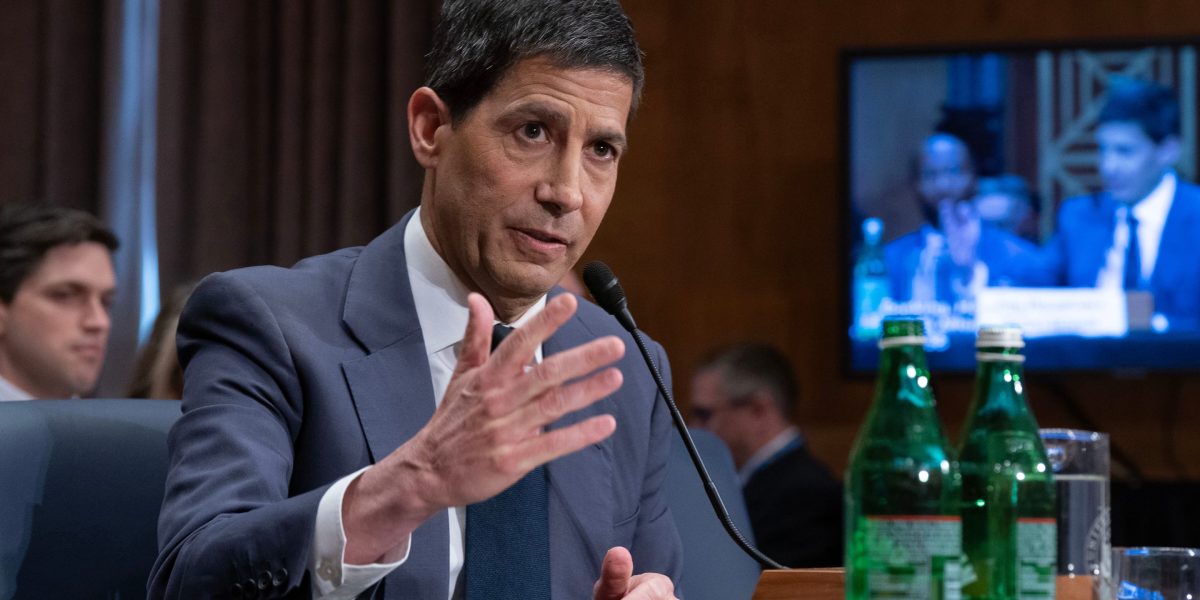
3 days agoKevin Warsh is poised to take over the Fed with none of the gravitas Greenspan had but plenty of baggage from Trump, former Powell adviser says | Fortune
Kevin Warsh's potential chairmanship may not lead to immediate interest rate cuts due to rising inflation and other challenges.
Russo-Ukrainian War
fromFortune
3 days agoRussia's economy minister admits 'reserves have largely been used up' while communist lawmaker warns of 1917-style revolution as GDP shrinks | Fortune
Russia's economy faces significant challenges, with military spending reliance and labor shortages impacting growth and productivity.
#student-loans




Higher education
fromwww.businessinsider.com
1 week agoShe can't get payment relief on her $137,000 in private student loans. It's a warning for millions of federal borrowers.
High private student loan debt leads to crippling financial burdens and limited repayment options for borrowers like Samantha Ferguson.
#dollar-index
World news
fromLondon Business News | Londonlovesbusiness.com
4 days agoDollar set for weekly gain as Hormuz tensions sustain safe-haven demand - London Business News | Londonlovesbusiness.com
The dollar index is poised for its first weekly gain in three weeks due to geopolitical tensions and strong economic data.
US Elections
fromLondon Business News | Londonlovesbusiness.com
1 week agoDollar edged higher amid geopolitical uncertainty and Fed outlook - London Business News | Londonlovesbusiness.com
The dollar index rose slightly amid US-Iran negotiations, with markets anticipating volatility and a prolonged pause in interest rates.
from24/7 Wall St.
5 days agoTreasury and Bond ETFs Are Back in Fashion: Here's What to Own in April 2026
The iShares U.S. Treasury Bond ETF holds only U.S. Treasury notes and bonds across the maturity curve, providing the cleanest expression of flight-to-quality stability in a single ticker. Credit risk is effectively zero because every holding carries the full faith and credit of the U.S. government.
Business
from24/7 Wall St.
1 week agoPCY's 6.1% Yield Just Got Safer as Fed Rate Cuts Ease Emerging Market Pressure
PCY holds U.S. dollar-denominated sovereign bonds issued by emerging market governments. The interest payments those governments make flow through to PCY shareholders as monthly distributions.
Business
fromFortune
1 week agoThe bond market would be a big casualty of the U.S. debt crisis, former Treasury secretary says | Fortune
"That's a dangerous thing," he said Thursday during an interview with Bloomberg TV, describing a scenario where demand and prices for Treasuries fall as foreign interest in the market declines.
Business
fromIrish Independent
1 week agoBank of Ireland raises rate on savings account in move seen as response to neobanks
It's obviously welcome to see savings rates go up. Albeit from a low enough base. Several new providers such as Moco, Monzo, and Bankinter are all now quite active in the savings space in Ireland, so this is perhaps a response to increased competition.
Retirement
from24/7 Wall St.
1 week agoCapital Southwest's 41% Premium Hinges on Rate Cuts That May Never Come
Capital Southwest is an internally managed BDC that provides loans to lower-middle-market companies and earns interest on those loans. It borrows at lower rates, lends at higher rates, and passes the spread through to shareholders as income.
Business
#bitcoin
Cryptocurrency
fromLondon Business News | Londonlovesbusiness.com
2 weeks agoBitcoin pulls back from $74,000 as macro momentum gradually weakens - London Business News | Londonlovesbusiness.com
Bitcoin's recent price correction reflects a lack of strong foundation for a sustainable uptrend despite short-term positive market conditions.
from24/7 Wall St.
3 weeks agoRetirees Are Choosing These Monthly Income ETFs Over High-Yield Savings Accounts
High-yield savings accounts (HYSAs) are insured by the Federal Deposit Insurance Corporation or the National Credit Union Administration up to $250,000, per depositor, per insured institution.
Retirement
World politics
fromLondon Business News | Londonlovesbusiness.com
3 weeks agoGold holds amid geopolitical uncertainty, risks remain - London Business News | Londonlovesbusiness.com
Gold remains stable amid geopolitical tensions and central bank demand, but US labor data and interest rate outlook may limit its potential upside.
Retirement
fromLondon Business News | Londonlovesbusiness.com
3 weeks agoEvery time you borrow from a bank, you're paying more than you think - London Business News | Londonlovesbusiness.com
Opportunity cost in loans includes lost potential earnings from repayment dollars, not just the interest rate paid.
World politics
fromLondon Business News | Londonlovesbusiness.com
4 weeks agoWhat does the Middle East conflict mean for gold prices? - London Business News | Londonlovesbusiness.com
Gold's decline is influenced by a stronger dollar and rising oil prices, despite its historical role as a safe haven during uncertainty.
Business
fromLondon Business News | Londonlovesbusiness.com
4 weeks agoUSDJPY break above 160 triggers higher volatility as intervention risks re-emerge - London Business News | Londonlovesbusiness.com
USDJPY shows volatility around the 160 level, influenced by interest rate differentials and potential intervention risks from Japan.
World news
fromwww.theguardian.com
4 weeks agoBrent Crude rises after Trump says he wants to take the oil' in Iran; Starmer to gather business leaders to discuss emergency measures business live
Government bonds face significant losses due to concerns over prolonged Middle East conflict impacting inflation and economic growth.
fromLondon Business News | Londonlovesbusiness.com
1 month agoS&P 500 continues to face corrective pressure - London Business News | Londonlovesbusiness.com
The current pressure is largely driven by tensions in the Middle East, as signals from the U.S. and Iran remain conflicting. While the U.S. has indicated that negotiations are ongoing, Iran has firmly denied any talks, increasing uncertainty around the prospects of de-escalation.
Business
Europe news
fromLondon Business News | Londonlovesbusiness.com
1 month agoEuro rally falters as dollar regains strength on 'higher for longer' rates - London Business News | Londonlovesbusiness.com
EURUSD recovery shows fading momentum, reflecting a corrective rally rather than a trend reversal amid complex macroeconomic conditions.
from24/7 Wall St.
1 month agoMRCC's $0.75 Payout Looks Generous Until You See Where the Stock Is Headed
By Q4 2025, management acknowledged the math. The quarterly dividend was cut to $0.09 per share, down from $0.25, with CEO Theodore Koenig citing 'the decrease in base rates' as a key driver.
Business
fromLondon Business News | Londonlovesbusiness.com
1 month agoPound slides as markets brace for interest rate hikes amid Iran war - London Business News | Londonlovesbusiness.com
Sterling fell by 0.5% against the dollar, dropping below $1.33, as the US currency strengthened due to a flight to safety. The dollar index increased by 0.3%.
World news
Real estate
fromwww.housingwire.com
1 month agoLower rates aren't enough: What mortgage lenders and servicers must do to set spring homebuyers up for long-term success
Interest rates easing may improve buyer sentiment, but sustainable homeownership relies more on managing cash flow than just lower rates.
#federal-reserve-policy
US Elections
fromFortune
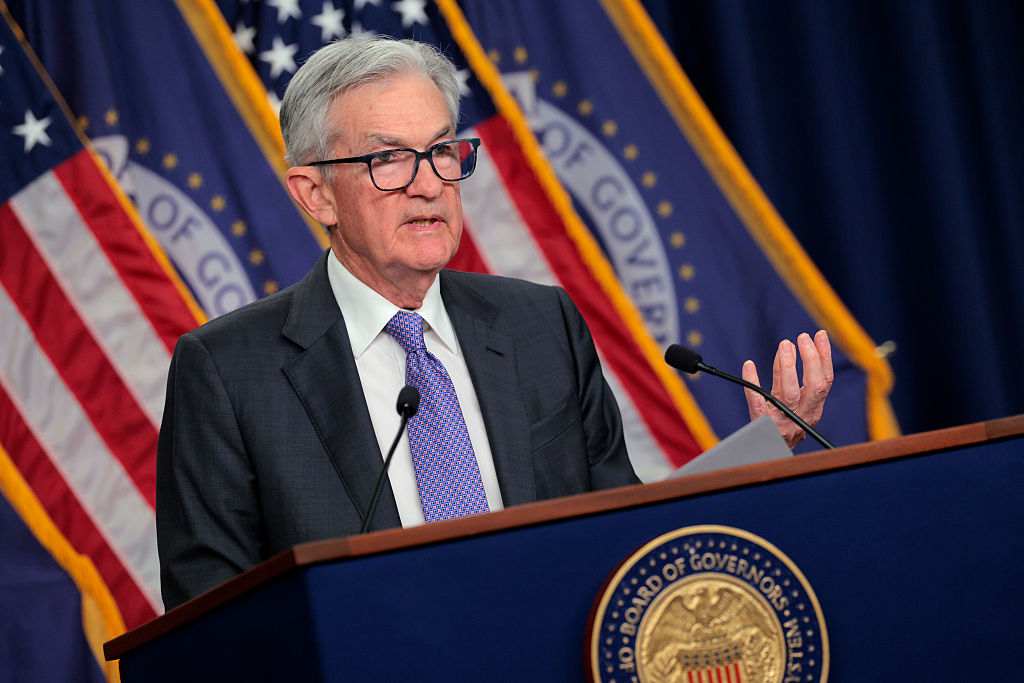
1 month agoFed Chair Jerome Powell says U.S. economy is 'amazing'-but admits 'we just don't know' as inflation, jobs, and oil shocks cloud the outlook | Fortune
The U.S. economy has demonstrated remarkable resilience through multiple crises, yet Federal Reserve Chair Powell emphasizes significant uncertainty about future economic conditions and the Fed's limited ability to predict or control outcomes.
Business
from24/7 Wall St.
1 month ago3 Growth ETFs Down This Month and One of Them Is a Buy
FELG uses a quantitative model allowing tactical shifts away from underperforming mega-cap tech, while VUG remains passively locked into concentrated large-cap growth exposure, creating different recovery potential despite similar year-to-date losses.
fromLondon Business News | Londonlovesbusiness.com
1 month agoFTSE plummets by more than 300 points as investors react 'to the Middle East conflict intensifying' - London Business News | Londonlovesbusiness.com
Financial markets were firmly in the red as investors reacted to the Middle East conflict intensifying, with stocks down across Asia and Europe. Gold also fell, which suggests investors are once again liquidating assets that have previously served them well, or they are reacting to a further strengthening in the US dollar.
Europe news
fromwww.bbc.com
1 month agoBank of England 'ready to act' as it warns Iran war 'shock' will push up inflation
War in the Middle East has pushed up energy prices. You can already see that at the petrol pump and, if it lasts, it will feed into higher household energy bills later in the year. Whatever happens, our job is to make sure inflation gets back to its 2% target.
UK news
UK news
fromLondon Business News | Londonlovesbusiness.com
1 month agoBoE warns inflation will soar due to the escalating Middle East crisis - London Business News | Londonlovesbusiness.com
The Bank of England raised its CPI inflation forecast to 3.5% for Q3 2026, attributing the increase to Middle East conflict causing energy market shocks, and maintained interest rates at 3.75% while signaling unlikely rate cuts in 2026.
Business
fromLondon Business News | Londonlovesbusiness.com
1 month agoGold declined amid changing monetary policy expectations - London Business News | Londonlovesbusiness.com
Gold fell to multi-week lows as interest rate cut expectations shifted to 2025, with higher yields reducing appeal of the non-yielding asset.
UK news
fromLondon Business News | Londonlovesbusiness.com
1 month agoBank of England holds base rate amid Middle East war - London Business News | Londonlovesbusiness.com
The Bank of England held the base interest rate at 3.75% due to Middle East conflict uncertainty and rising energy prices threatening inflation expectations.

fromwww.aljazeera.com
1 month agoUS Fed keeps interest rates steady amid economic, geopolitical uncertainty
The Committee seeks to achieve maximum employment and inflation at the rate of 2 percent over the longer run. Uncertainty about the economic outlook remains elevated. The implications of developments in the Middle East for the US economy are uncertain, the central bank said in a statement announcing its policy decision and referring to its Federal Open Market Committee.
US politics
[ Load more ]