Medicine
fromThe Atlantic
8 hours agoThe Dangers of Unlimited Health Advice
Health anxiety can be exacerbated by interactions with chatbots like ChatGPT, leading to obsessive behavior and emotional distress.
Food logging can be done in a few ways, including searching a database, scanning barcodes, or using AI-based camera analysis. Simpler items like eggs and fruit are identified well, but complex meals can be frustrating due to lighting and AI limitations.
EchoPrime, a video-based vision-language model, analyses echocardiogram footage and generates a written report of cardiac form and function. Its findings were published in Nature (volume 650, pages 970-977) in February 2026, under the title 'Comprehensive echocardiogram evaluation with view primed vision language AI.'
Since 1990, the incidence of hypertension has increased globally, with up to one in three adults worldwide affected by it. Most of those people have no idea they have it. If people could diagnose and monitor hypertension at home, the World Health Organization estimates that up to 76 million lives could be saved with easy fixes, like stopping smoking or adjusting diet.
As the Magerstadt Professor of Cardiovascular Epidemiology, Khan studies the epidemiology of risk for heart failure. Using population-based cohorts and large electronic health record data analyses, she performs mechanistic studies that may enhance risk prediction and identify novel therapeutic agents for the prevention and treatment of cardiovascular disease. Khan and her team have developed a tool to predict risk and prevent cardiovascular disease such as heart failure, stroke, arrhythmia, coronary artery disease and many other conditions.
Wellune looks like a small, sculptural lamp. A slender white stem curves upward from a flat circular base, blooming into a soft, rounded head that sits somewhere between a sprouting bud and a modernist desk light. The head detaches magnetically, which is a lovely detail because it turns setup into something almost playful. You hold this smooth, egg-like dome in your hand, place it on the stem, and it clicks into position with a satisfying connection.
Petal is a bra insert that uses bio-impedance sensors and electrical measurements to monitor blood flow near the heart. Because wearers position the insert right next to the heart, the device can capture more accurate readings than your typical smartwatch, Petal says. The device comes in one size and fits snug against each breast. It's made with biocompatible materials, including a soft European fabric and a polyurethane-coated interior.
AI plays an important role-but not by fixing fragmented data on its own. The work of organizing, connecting, and interpreting healthcare information still belongs to people and the systems they build. Where AI helps is after that foundation is in place: by bringing the right information forward at the right time, reducing the effort it takes to find what matters, and supporting better decisions in the moment of care.
The feature, unveiled on Wednesday, creates a separate space within ChatGPT for health questions and discussions, where users can collect data from their connected health apps such as fitness apps and store their health files. Users can also connect to their electronic medical records through a partnership with b.well, OpenAI says. ChatGPT, then, does not have a direct integration with the MyChart patient records app from Epic, for example, but lets individual users make requests for their patient record data through integrations built by b.well.
When people breathe, speak, sing or clear their throats, their bodies are in constant motion. Air flowing through the lungs, the oscillation of vocal folds in the throat and the rhythmic expansion of the chest all produce tiny vibrations that carry valuable information about physiology and health. However, constructing a device that can capture all of these physiological signals has remained a challenge.
Last Wednesday morning, I woke up and did what I normally do when I open my eyes. I grabbed my phone and checked my Oura app to see how I slept. This morning, however, Oura's home page looked a bit different. Unlike the sleep and readiness scores I usually see on the home page, a new message appeared on top. While no biomarker deviated strongly from my baseline, Oura's Symptom Radar feature warned me that my biometrics indicated "major signs of strain." It encouraged me to take it easy -- a tall task given that I was headed into the office for the workday.
A tennis match usually starts with rituals you can set your watch by. A towel tug, a ball bounce, a glance at the strings. This year, a different ritual stole the first spotlight, because officials asked top players to take off a wrist wearable before they played, and the moment landed like a plot twist you did not order. This piece walks you through what happened, why it happened, and what it says about where tennis sits with athlete data right now.
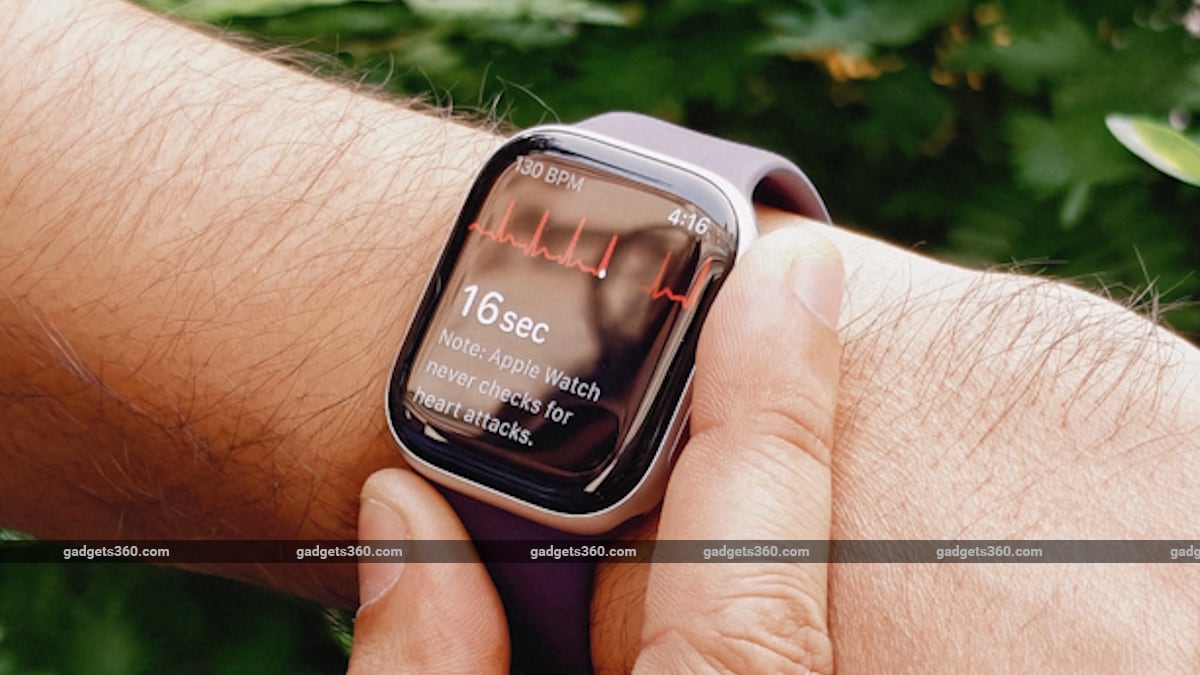
:max_bytes(150000):strip_icc()/TAL-man-wearing-apple-watch-WEARABLETECH0426-2eb4f1a344cd457d94865439986e263e.jpg)