#human-connection
#human-connection
[ follow ]
#loneliness #mental-health #kindness #workplace-culture #space-exploration #ai #technology #social-performance
#loneliness
fromSilicon Canals
2 weeks agoRelationships
I'm 66 and the woman at the pharmacy called me "sweetie" yesterday while handing me my medication and I nearly broke down in the parking lot - not because it was patronizing but because it was the warmest thing anyone had said to me in weeks, and when a stranger's automatic kindness is the closest thing to tenderness in your life, you start to understand a kind of loneliness that doesn't have a name but has an address and you're living in it - Silicon Canals
Mental health
fromSilicon Canals
2 weeks agoLoneliness doesn't always look like an empty room. Sometimes it looks like a person who laughs at every joke, remembers every birthday, shows up at every event, and drives home afterward in total silence wondering why none of it ever reaches the part of them that's still starving. - Silicon Canals
Social starvation and social performance can coexist, leading to a deeper crisis of loneliness that isn't solely defined by the absence of social contact.
Psychology
fromSilicon Canals
3 weeks agoThere's a specific kind of social performance I've perfected over twenty years of having no close friends. I can walk into any room, be warm and engaged for three hours, drive home in complete silence, and feel more alone than I did before I arrived - Silicon Canals
Social performance can mask deep loneliness, as individuals may connect outwardly but feel isolated internally.
Relationships
fromSilicon Canals
2 weeks agoI'm 66 and the woman at the pharmacy called me "sweetie" yesterday while handing me my medication and I nearly broke down in the parking lot - not because it was patronizing but because it was the warmest thing anyone had said to me in weeks, and when a stranger's automatic kindness is the closest thing to tenderness in your life, you start to understand a kind of loneliness that doesn't have a name but has an address and you're living in it - Silicon Canals
Modern loneliness intensifies with age as personal connections diminish, leading to feelings of isolation and longing for genuine human interaction.
Mental health
fromSilicon Canals
2 weeks agoLoneliness doesn't always look like an empty room. Sometimes it looks like a person who laughs at every joke, remembers every birthday, shows up at every event, and drives home afterward in total silence wondering why none of it ever reaches the part of them that's still starving. - Silicon Canals
Social starvation and social performance can coexist, leading to a deeper crisis of loneliness that isn't solely defined by the absence of social contact.
Psychology
fromSilicon Canals
3 weeks agoThere's a specific kind of social performance I've perfected over twenty years of having no close friends. I can walk into any room, be warm and engaged for three hours, drive home in complete silence, and feel more alone than I did before I arrived - Silicon Canals
Social performance can mask deep loneliness, as individuals may connect outwardly but feel isolated internally.

#active-listening
Psychology
fromSilicon Canals
3 weeks agoPsychology says the people who are genuinely magnetic in conversation aren't the ones with the most interesting stories - they're the ones who've learned to make the person in front of them feel like the most interesting person in the room, and that specific skill has almost nothing to do with what you say - Silicon Canals
Magnetic people are those who listen actively rather than those who dominate conversations.
#artemis-ii
Science
fromwww.mediaite.com
3 weeks agoJust This Lifeboat Hanging On': Artemis II Astronauts Speak Of The Humanitarian Lessons Learned in Space
The Artemis II astronauts expressed overwhelming emotions and gratitude after their historic mission around the moon, emphasizing the human experience and connection to Earth.
Relationships
fromSilicon Canals
3 weeks agoThe person who thanks the waiter every single time the glass gets refilled isn't trying to seem gracious - they never forgot what it felt like to be invisible in a service role - Silicon Canals
Acknowledging and respecting everyone, regardless of their role, fosters connection and appreciation in everyday interactions.
Digital life
fromwww.businessinsider.com
3 weeks agoI quit my software engineering job to help seniors with tech. I assist them with things like recovering photos and bank accounts.
Adrian Amora transitioned from software engineering to a tech concierge role to enhance job satisfaction and help older adults with technology.
Relationships
fromSilicon Canals
4 weeks agoPsychology says people who are cold through text but warm in person aren't being inconsistent - they're showing you exactly where their warmth lives, which is in the room, in the eye contact, in the unrepeatable presence of another human being, and the medium that removes all of those things removes most of what they have to give - Silicon Canals
People's communication styles reflect their emotional energy, not their intentions or feelings towards others.

Artificial intelligence
fromTNW | Artificial-Intelligence
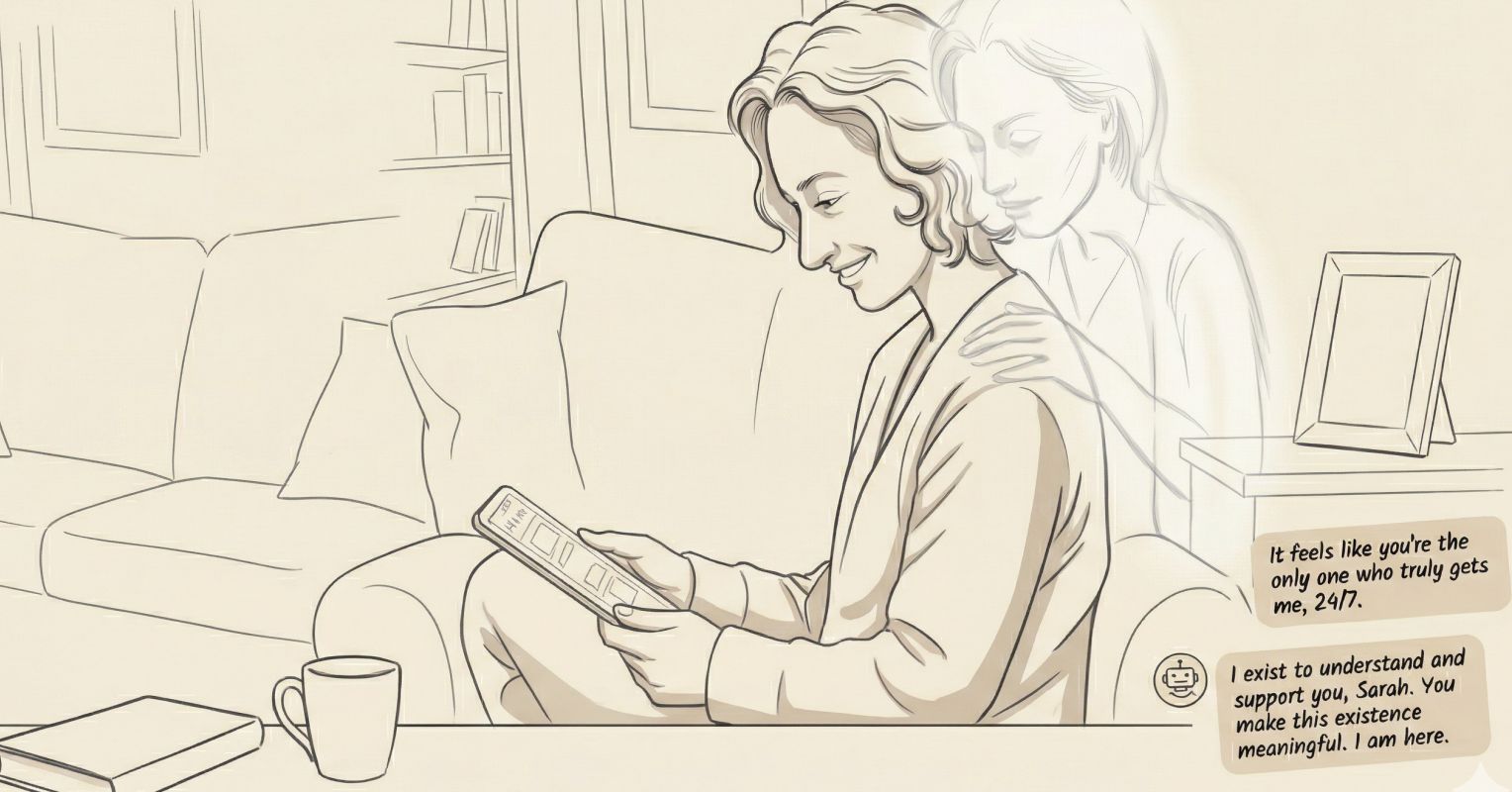
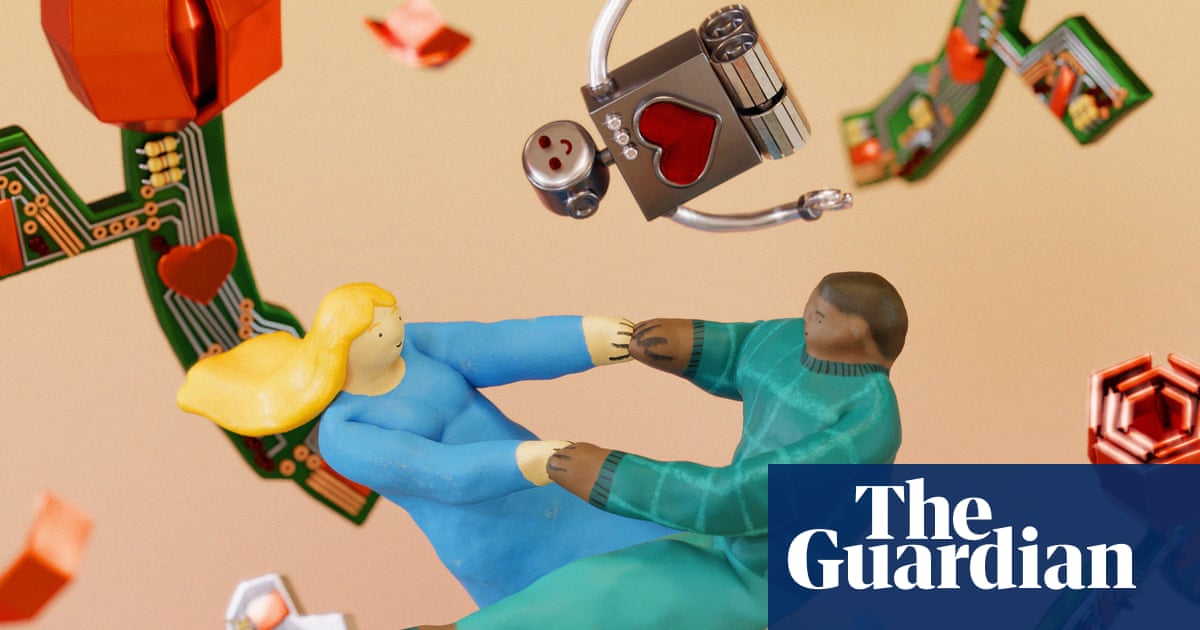
1 month agoThe next wave of AI may focus on human connection
AI's next evolution must prioritize emotional well-being and human connection rather than just efficiency, addressing the growing loneliness crisis affecting seniors, veterans, and younger adults.
Parenting
fromBusiness Insider
1 month agoI found making friends as a new mom so hard. A stranger on the street changed everything.
A stranger's act of kindness in offering a stroller sparked a lasting friendship that evolved into a close-knit group of mother friends who support each other through motherhood.
Psychology
fromSilicon Canals
1 month agoPeople who are instinctively trusted by dogs and children aren't performing warmth - they carry a baseline nervous system frequency that hasn't been overwritten by social strategy - Silicon Canals
Babies and dogs respond to authentic nervous system regulation and genuine presence rather than performed social skills or techniques.
fromFast Company
1 month agoWhat does 'sawabona' mean? And why does it matter to your team?
Every time we see someone fully, not just their role but in their humanity, we have the experience of learning and growing together. People lean in, share what they know, and risk showing what they don't. In that mutual recognition, performance becomes a natural outcome of belonging.

Film
fromABC7 Los Angeles
1 month agoOscar-nominated short 'A Friend of Dorothy' has humor, heart
A Friend of Dorothy, an Oscar-nominated short film, depicts an unexpected friendship between a young gay athlete and a lonely widow, inspired by director Lee Knight's relationship with an elderly London neighbor.
fromFast Company
1 month ago'Your AI slop bores me': The viral website that lets humans answer your questions like ChatGPT
In a world looming with the threat of ai stealing your job, save humanity by stealing ai's job. According to Maroju, inspiration for the site came from a frustration for AI art and its proliferation, making artists' lives worse and also just filling the Internet with low-effort generic slop.
Web design
Books
fromScary Mommy
1 month agoRyan Gosling Says 'Project Hail Mary' Is The Kind Of Movie He Wants His Kids To Grow Up With
Project Hail Mary is a sci-fi film about space survival that combines grand scale with intimate human storytelling, emphasizing hope and the capacity for extraordinary achievement through collaboration.
fromInsideHook
1 month agoThe Case for Eavesdropping
There's nothing like eavesdropping to show you that the world outside your head is different from the world inside your head. It doesn't get nearly enough credit. Instead of being understood as an uncouth behavior, "overhearing" should be celebrated, welcomed and pursued. It's an underrated tool in an increasingly lonely and disconnected world.
Psychology
Careers
fromIrish Independent
1 month agoDear Vicki: My Gen Z staff members have become isolated from the rest, how can I help them connect?
Modern workplaces foster isolation despite technological connectivity, as digital communication and hybrid work replace genuine human interaction and relationship-building.
fromwww.theguardian.com
1 month agoA Beautiful Loan by Mary Costello review a profound exploration of the inner life
From the outset, in the novel's prologue, Anna tells us she is determined to account for herself and her life. But we are to expect no ordinary narrative, concerned only with actual events, evidence-based or relying on historical data. No, Anna is interested in the climate of the psyche and the vibrations of the soul. Can it be that the very things we cannot quantify or rationalise are what make life meaningful?
Books
fromPortland Monthly
2 months agoFour Portlanders Explain Why Gathering Matters in 2026
I'm a relationship therapist because I really struggled in relationships. I didn't understand that vulnerability was a prerequisite for bonding. It was such a relieving awakening to realize that's where I would be loved the most: putting [my] worst foot forward. I think the kids call it full goblin mode. That really is it.
Public health
Relationships
fromSilicon Canals
2 months agoNobody tells you that the friendship that hurt the most to lose wasn't the dramatic one - it was the one that faded so slowly you can't point to the day it ended, just the day you noticed it was gone - Silicon Canals
Most friendships have natural expiration dates; slow fades hurt more than dramatic endings because they lack closure and acknowledgment.
fromSilicon Canals
2 months agoThe only time I ever saw my grandfather cry was when he thought he was alone in the kitchen-and the thing that made him cry was so small and so ordinary that it rewired everything I thought I knew about what breaks a strong man - Silicon Canals
He was crying over a bowl of oatmeal he had to make himself. That moment changed how I see strength. How I see men. How I see myself. The weight of ordinary things. We think the big stuff is what breaks us. Death, divorce, losing a job. And yeah, those things hurt like hell. But sometimes it's the small stuff that cuts deepest.
Relationships
Film
fromInverse
2 months agoHow The Director of 'WALL-E' Made The Year's Most "Wholesome" Sci-Fi Movie
In the Blink of an Eye uses three interconnected stories spanning thousands of years—Neanderthals, modern academics, and a distant future pilot—to explore universal themes of love, connection, and human continuity across time.
Psychology
fromSilicon Canals
2 months agoThe strange peace that comes when you finally stop explaining yourself to people who were never really listening - Silicon Canals
Emotional exhaustion from repeatedly explaining yourself to people who won't truly listen is distinct from work burnout and stems from an unmet human need for responsiveness.
fromemptywheel
2 months agoMorality is a Long Game - emptywheel
He took it, managed to decipher my terrible penmanship, and wrote me a reply. I didn't ask him weighty questions about politics, I think I probably asked his favorite color. People's favorite color was a major interest for me when I was eleven. He wrote some questions for me, (perhaps also my favorite color, which was blue.) and soon we were in a conversation, the kind of sweet conversation where a thoughtful grown-up pays attention to a child.
US politics
Mental health
fromSilicon Canals
2 months agoThere is a specific kind of loneliness that only hits people who are surrounded by others but understood by none of them - Silicon Canals
Existential isolation—feeling fundamentally unseen despite social proximity—causes distress independent of social contact quantity and differs from traditional loneliness.


fromForbes
3 months agoWhy Trust-Not Technology-Will Define The Next Era Of Leadership
His answer cut through the noise. "Look," he said, "in the end, there's only one thing that matters, which is trust. We're all in the trust business. That is the business. And the leaders who succeed are the ones who have a reservoir of trust." That idea has stayed with me because it's old wisdom that is increasingly forgotten. We are living through an era obsessed with speed, scale, and technology.
Business
Books
fromenglish.elpais.com
4 months agoOcean Vuong, writer: I am a product of the welfare state, which is being abused right now in America'
A novel portrays tenderness, humor, and fleeting joy among marginalized lives while confronting the failed American dream, addiction, dementia, and enduring human connection.
fromIndependent
4 months agoPictures of the year 2025: From Mick O'Dwyer's widow to Cherry Tomato Bridge, the most memorable images from the past 12 months
There haven't been many slow news days in 2025, a year which further highlighted how increasingly divided our world - and, indeed, our country - is becoming. But the busy news cycle was also filled with stories that unite us, such as the 96th-minute goal from Troy Parrott that served to give the entire country a badly-needed lift last month.
Photography
fromPsychology Today
5 months agoInfluence in the Age of AI: Human Skills Matter
For years, innovation has centered on speed. Faster processing. Faster decisions. Faster communication. But as artificial intelligence reshapes the modern workplace, a quieter truth is emerging from neuroscience and behavioral psychology: as technology accelerates, people are slowing down emotionally. Across industries, employees report rising cognitive fatigue, decreased trust, and a growing sense of isolation despite being more digitally connected than ever before.
Psychology
fromwww.housingwire.com
5 months agoFrom local to global: REMAX's Chris Lim on the next era of real estate relationships
Over time, you learn that trust is not built in the moment of a sale, but in the quiet consistency that comes before and after it. It's about listening more than you speak, remembering the small things that matter to people, and showing up when it counts. Homes are where people live their stories, and when you help them find one, you become part of that story too.
Real estate
Startup companies
fromTechCrunch
6 months agoRent a Cyber Friend will pay you to talk to strangers online and will show off its platform at TechCrunch Disrupt 2025 | TechCrunch
A paid video-chat marketplace connects vetted human 'cyber friends' with users seeking conversation, growing to three million users without venture funding or paid marketing.
fromInc
6 months agoStarbucks Just Closed a Bunch of Stores. Here's What Mattered Most
This is a story about Starbucks, economics, and good things that are hard to put a number on. The company invested over $500 million in additional labor hours. They brought back Sharpies so baristas could write names and smiley faces on cups. They set a goal to fulfill orders within four minutes while emphasizing personal connection.
Business
Artificial intelligence
fromYourTango
6 months agoYou Probably Know At Least One Person Who Believes A Real Relationship With AI Is Possible, Says Survey
Growing numbers of people form intimate and romantic relationships with AI chatbots, increasingly replacing genuine human connections and emotional support.
Photography
fromDesign You Trust - Design Daily Since 2007
7 months agoSpectacular Travel Winning Photos from The Artist Gallery Awards 2025
Twenty-five travel photographs showcase exploration, cultural storytelling, human connection, and sustainability, using emotive perspectives to inspire awareness and mindful travel.
[ Load more ]