#industrial-cities
#industrial-cities
[ follow ]
#remote-work #ai #return-to-office #data-centers #labor-shortage #urban-migration #labor-market #employment-trends
fromSilicon Canals
6 hours agoJapan is deploying robots not to replace workers but because there's no one left to hire - Silicon Canals
Japan's push into AI-powered robotics is driven less by competitive ambition than by demographic arithmetic. The country's population declined for a 14th consecutive year in 2024, with working-age citizens comprising just 59.6% of the total population.
Artificial intelligence
#vertical-farming
Agriculture
fromYanko Design - Modern Industrial Design News
4 weeks agoThis Self-Sustaining Building in China Grows Food on Every Floor, And It Was Built On A Farmland Plot - Yanko Design
Wei Dou's Verdant Syndicate preserves agricultural identity on converted farmland through tenant-operated vertical farming integrated into a mixed-use building's structure and design.



#ai


fromFortune
1 week agoEuropean startups
China could be the 'big winner' in the AI race, thanks to abundant power, cheap manufacturing, and an open-source craze | Fortune
China's AI sector is gaining momentum due to cheaper energy, increased capital spending, and a growing number of open-source developers.
European startups
fromFortune
1 week agoChina could be the 'big winner' in the AI race, thanks to abundant power, cheap manufacturing, and an open-source craze | Fortune
China's AI sector is gaining momentum due to cheaper energy, increased capital spending, and a growing number of open-source developers.



#humanoid-robots
Artificial intelligence
fromFuturism
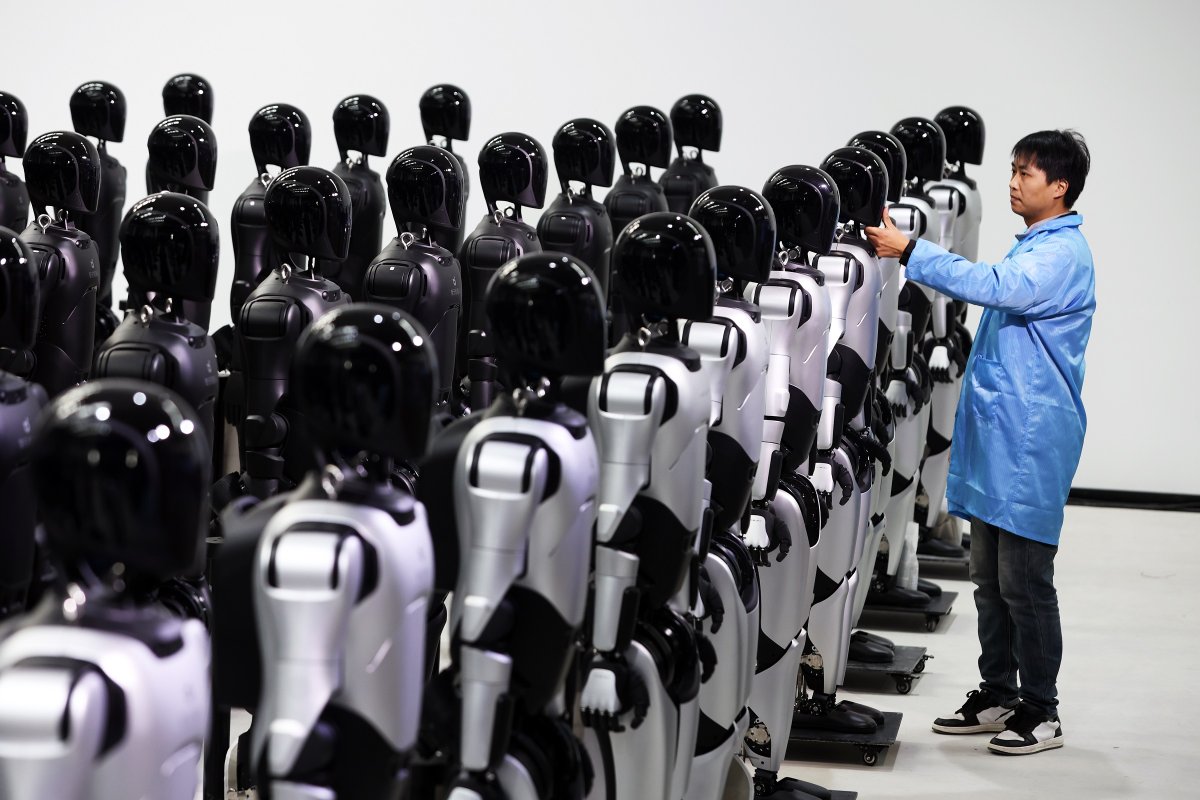
2 weeks agoFactory Paying Human Worker to Watch Robot Worker All Day
Humanoid robots like Digit are being deployed in factories with human supervisors, with costs expected to drop from $10-$25 per hour to $2-$3 per hour, potentially displacing workers earning $20 per hour.
#china

European startups
fromFortune
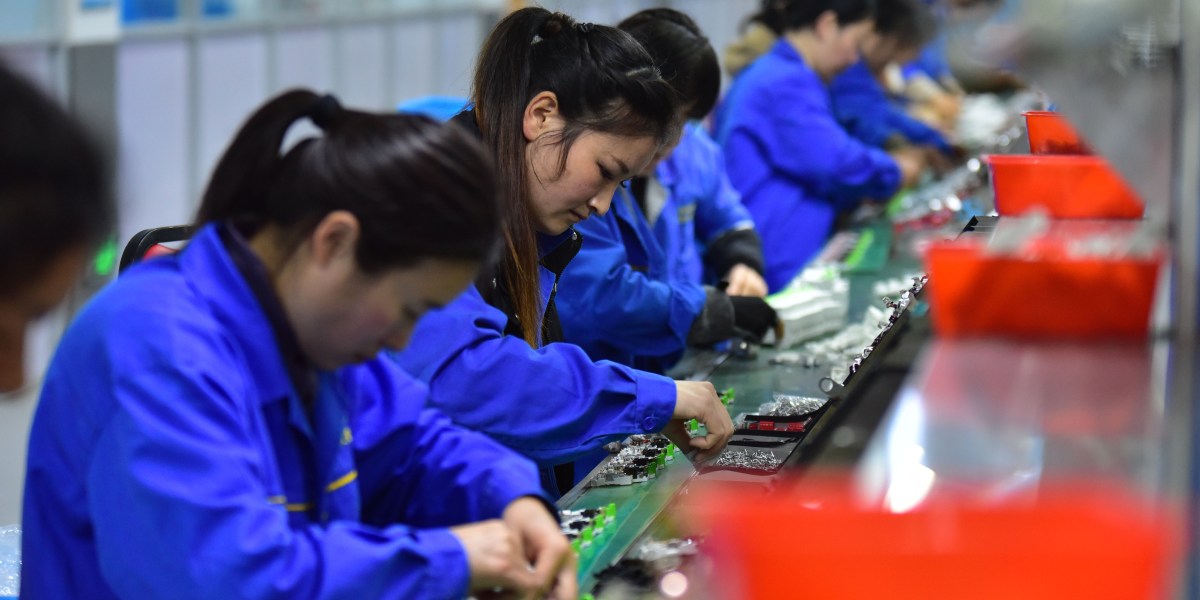
2 weeks agoChina is becoming a 'factory to the factories,' powering global manufacturing in places like Southeast Asia even as U.S. trade declines | Fortune
China is increasing exports of industrial components while consumer goods exports decline, reshaping global supply chains.
World news
fromHR Brew
3 weeks agoWorld of HR: Employers and governments in Asia promote alternative work arrangements amid oil crisis
Asian nations with limited oil reserves are implementing proactive energy conservation measures across government and business sectors to mitigate impacts of oil supply disruptions from regional conflict.
Silicon Valley
fromArchDaily
3 weeks agoFrom Cloud to Coast: The Physical Cost of AI in Hong Kong's Borderlands
AI data centre infrastructure, typically hidden in remote locations, faces potential integration into Hong Kong's San Tin region, threatening established wetland ecosystems and village-based livelihoods built on fishpond and tidal pond economies.
fromStreetsblog
2 weeks agoWhat If The Rising Costs of Car Dependency Were As Visible As Gas Prices? - Streetsblog USA
Because so many American cities are so heavily car-dependent, most U.S. residents have no choice but to pony up the cash and drive anyway. Indeed, even when gas prices climbed above $5 a gallon in 2022, driving did not plummet; a Time magazine analysis at the time found that 'the only time that fuel consumption really took a hit in the last 23 years was during the pandemic.'
Alternative transportation
fromFuturism
1 month agoFormer Delivery Drivers Are Getting Weird New Jobs as Delivery Robots Take Over
When delivery units operated by companies like Coco or Serve Robotics run into real-world obstacles - like a garden, for example - these robot wranglers spring into action, freeing them from potholes, helping them upright after a fall, and ferrying them back to headquarters for maintenance.
Los Angeles
Artificial intelligence
fromComputerWeekly.com
2 weeks agoLab for autonomous agents to drive boost in manufacturing in India | Computer Weekly
IBM Research launches Emergence India Labs to develop autonomous systems for manufacturing, logistics, and infrastructure, positioning India as a frontier AI research hub beyond traditional IT services.
European startups
fromFortune
3 weeks agoEurope's second chance on AI: building an opportunity in factories, labs, and the real economy | Fortune
Europe's scientific talent, industrial strength, and multi-sector ecosystems position it to lead the next AI innovation wave focused on robotics, manufacturing, chemistry, and healthcare rather than large language models.
Remote teams
fromInc
2 weeks agoWorkers Are Returning to the Office-But Their Workspaces Aren't Ready
Companies successfully enforced return-to-office mandates in 2025, but many failed to provide adequately sized or equipped workspaces, forcing employees to improvise workarounds to maintain productivity.
Startup companies
fromBusiness Insider
1 month agoHow robotics could upend the US manufacturing industry
Machina Labs promotes distributed, flexible, portable robotics-enabled manufacturing to leapfrog centralized factories and accelerate U.S. reindustrialization in defense, aerospace, and automotive sectors.
fromForbes
1 month agoTransit-Oriented Housing On Track For Continued Growth
Once a nice-to-have niche urban design concept, TOD has become an essential part of many urban neighborhoods. It has helped address the shortage of housing by enabling the development of higher-density residential communities near transit stations. It has helped revitalize countless once-deteriorating or static urban enclaves near transit hubs by activating sidewalks near the developments. And it has spurred walking and transit use, enabling residents of TODs to reduce or eliminate automobile dependency.
Real estate
Artificial intelligence
fromFortune
1 month agoI help manage one of the world's most constrained supply chains, up close to the defining energy bottleneck of the decade | Fortune
Power transformer shortages are the critical bottleneck limiting AI infrastructure expansion and corporate electrification globally.
fromSustainable Bus
1 month agoCling selects Garrett oil-free centrifugal compressor for next-generation electric bus and truck HVAC systems in China - Sustainable Bus
According to the company, the compressor integrates an ultra-high-speed electric motor exceeding 160,000 rpm combined with an oil-free foil bearing system. The architecture is designed to deliver reduced package size, lower weight and lower noise levels compared with conventional scroll compressors. Garrett states that the system is up to 50% smaller, 30% lighter and 10 dB quieter than traditional scroll-based solutions. The compressor is engineered for compatibility with 400V to 800V heat pump systems and supports low-pressure, low-GWP refrigerants.
Cars
Artificial intelligence
fromArchDaily
1 month agoCompute Isn't Weightless: AI Infrastructure and the Architecture of the City
AI development is reshaping urban infrastructure and spatial planning in the Greater Bay Area through government-led initiatives that translate computational needs into physical zones, data centers, and specialized districts.

fromBusiness Matters
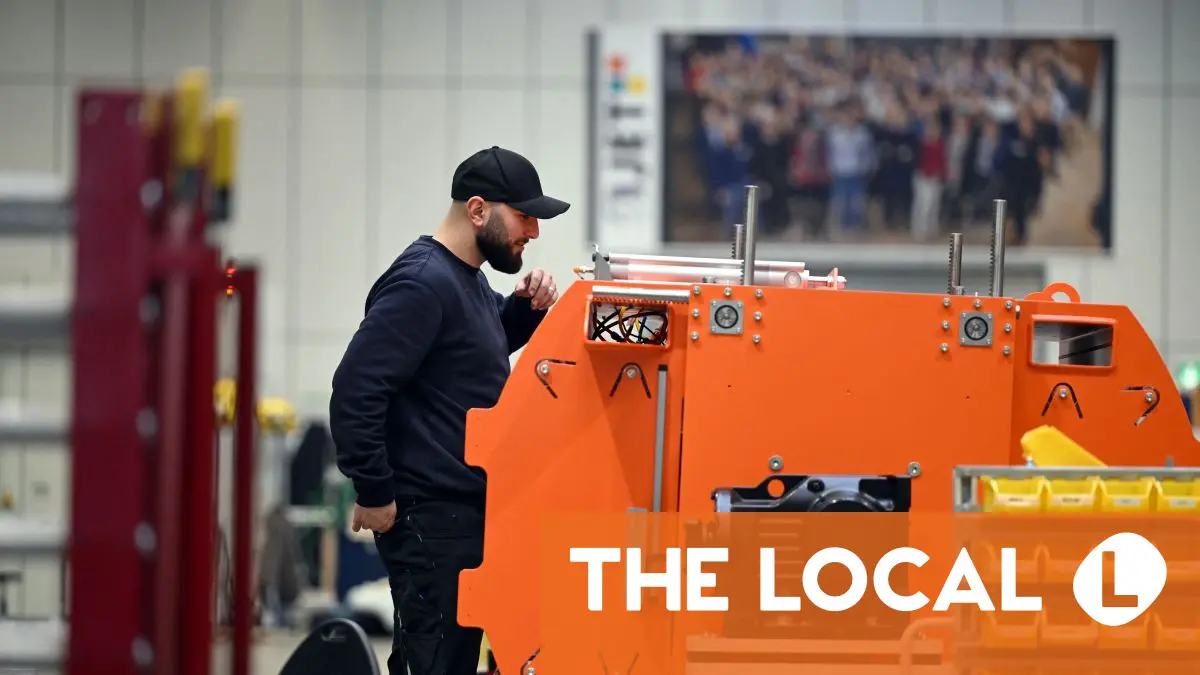
1 month agoWhy Tolerance Management Is a Business-Critical Skill in Modern Manufacturing
We are now in a time of manufacturing where precision is more than a technical necessity; it's a business requirement. The more complex, globally dispersed and demanding things get, the less slack remains in the system. Under these circumstances tolerance management has become a decisive competence and affects competitiveness not only in terms of controlling costs, ensuring quality and improving production efficiency but also for long term market success.
Business
fromwww.theguardian.com
2 months agoMy work went from air-conditioned offices to delivering food on a bike. The culture shock is significant | David Rayfield
Then he caught wind of my colourful language and turned back to get in my face. He was a skinhead in a bad mood. Accusing me of being in his way, he told me I was lucky he didn't do more damage. I paused mid-reply. This was the moment I realised he was ready to go to hell tonight, and the only thing he wanted to take with him was me.
Food & drink
fromDevOps.com
1 month agoHow AI Is Expanding Who Gets to Build Infrastructure - DevOps.com
Baron traces the origin story back to his time building high-scale systems at Instana (which exited to IBM in 2020), where the reality of "always-on" platforms made one thing obvious: the tooling we rely on is often too low-level, too rigid, and too disconnected from real-world use cases. That gap has only widened as environments have exploded in complexity-more cloud providers, more managed services, more hybrid setups, more internal APIs, and "gillions" of tools stitched together into brittle workflows.
Software development
fromThe Verge
1 month agoAmerica is at risk of becoming an automotive backwater
Then, through a series of blunders and missteps, things started to unravel. There was the fuel crisis of the 1970s, which led to an influx of Japanese imports that bested Detroit in fuel savings and reliability. And then there were various global financial collapses throughout the 1990s and early 2000s, and a significant decline in automotive quality as the Big Three continued to push bigger and more expensive vehicles, at the expense of road safety and global competitiveness.
Cars
fromIPWatchdog.com | Patents & Intellectual Property Law
1 year agoMaking Licensing Harder Doesn't Boost U.S. Manufacturing
While it's appropriate to lament the lack of bipartisan cooperation in Washington, just because something's bipartisan doesn't mean it's a good idea. Exhibit A could be Senator Tammy Baldwin (D-WI) and Senator J.D. Vance's (R-OH) "Invent It Here, Make It Here" bill. Despite the name and its good intentions, it condemns promising federally funded inventions to waste away without doing a thing to build our domestic manufacturing base. It's scheduled to be considered this Thursday in the Senate Commerce, Science and Transportation Committee.
US politics
Artificial intelligence
fromSilicon Canals
1 month agoJapan's robotics industry sees record orders as global labor shortages intensify - Silicon Canals
Japan's robotics industry achieved record quarterly orders of ¥324.5 billion in Q1 2025, driven by global labor shortages and aging workforces across Asia, North America, and Europe.
fromFast Company
2 months agoThis old Pennsylvania coal town could get a reboot from AI
For decades, he's lived in Homer City, a southwestern Pennsylvania town that was once home to the largest coal-fired power plant in the state. The plant, which shares its name with the town, closed nearly three years ago after years of financial distress. Dudash, 89, has lived in the shadow of its smokestacks-said to be the tallest in the country before they were demolished-for much of his life.
Environment
Real estate
fromBusiness Insider
2 months agoAmerican cities building the most homes also rely most on immigrant construction workers
U.S. homebuilding depends heavily on immigrant construction workers, especially in high-permit metros, making housing supply vulnerable to immigration restrictions and deportations.
US politics
fromwww.mediaite.com
2 months agoTrump Says It's Actually A Good Thing' Ford Can't Hire Enough Workers: You're Gonna Have a Thing Called Robots'
Labor shortages will be addressed by training and robots; a Ford worker was flipped off and told 'f*ck you' after calling someone a pedophile protector.
fromwww.cnbc.com
2 months ago5 days in the office is the least popular way to work. Bosses are mandating it anyway
In the past week, automaker Stellantis and retailer Home Depot became the latest major companies to call employees back to the office five days a week. They join employers like Instagram, Paramount and Amazon in recent return-to-office mandates. About one-third of all U.S. firms (34%) are requiring workers to be in the office full time, according to workforce insight provider Flex Index.
Remote teams
fromThe Cipher Brief
2 months agoExport Controls Backfire: The China Innovation Paradox
Instead of paralyzing China's AI sector, these controls have promoted domestic self-reliance. With no choice but to develop indigenous workarounds and architectural innovations, Chinese businesses are decoupling AI progress from sheer hardware volume. U.S. policies have undoubtedly bought time, but they have also ushered in a parallel innovation ecosystem totally independent of Western influence.
Artificial intelligence
[ Load more ]