UX design
fromProtoPie
6 hours agoAI Prototyping Tools: Why Control Matters As Much As Speed
AI prototyping tools enhance design validation by enabling high-fidelity, user-testable prototypes that require refinement beyond initial generation.
Google recently released a new AI model, Gemini 3.1, that demonstrates great results in UI and web design tasks. I've already tested this model for web design tasks and in this article, I want to experiment with Gemini 3.1 and generate UI for a mobile application.
Each layered element is independent, all housed within one object on your timeline. Multiple elements can be combined into a Flipbook by using the multi-select function. This allows for users to shift, organise, and retime frames.
Instructions I created. Instructions I am continuing to hone - instructions that required me to study my own old essays, identifying what I do when I write. The sentence rhythms. The way I move between timescales. The zooming in and out from concept to detail. The instructions tell Claude how I would like ideas composed. I pull together concepts and experiences from my lived expertise to formulate a point of view - in this case, on this new AI technology.
Performance is a critical factor in user engagement, where even minor delays in loading can deter users. A clean and simple user interface also contributes significantly to user retention.
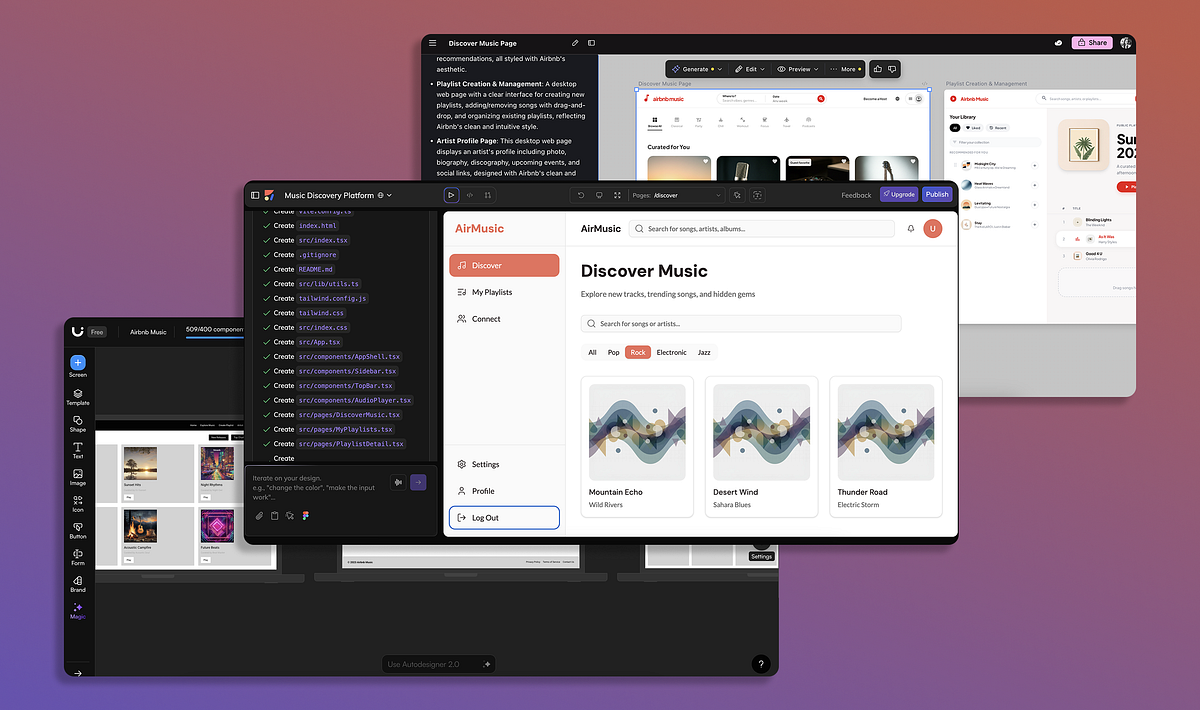
One skill separates good designers: the ability to clearly articulate their intention. No matter what tool you use, whether it's a traditional UI design tool like Figma or Sketch or AI tools like Figma Make, your ability to explain what you want to see accounts for 50% of your design success. The other 50% comes from your hard and soft skills. When it comes to AI-powered design, your ability to write decent prompts will have a direct impact on the quality of your design. In this guide, I want to share some specific tips and tricks that you can use for Figma Make to maximize the output.
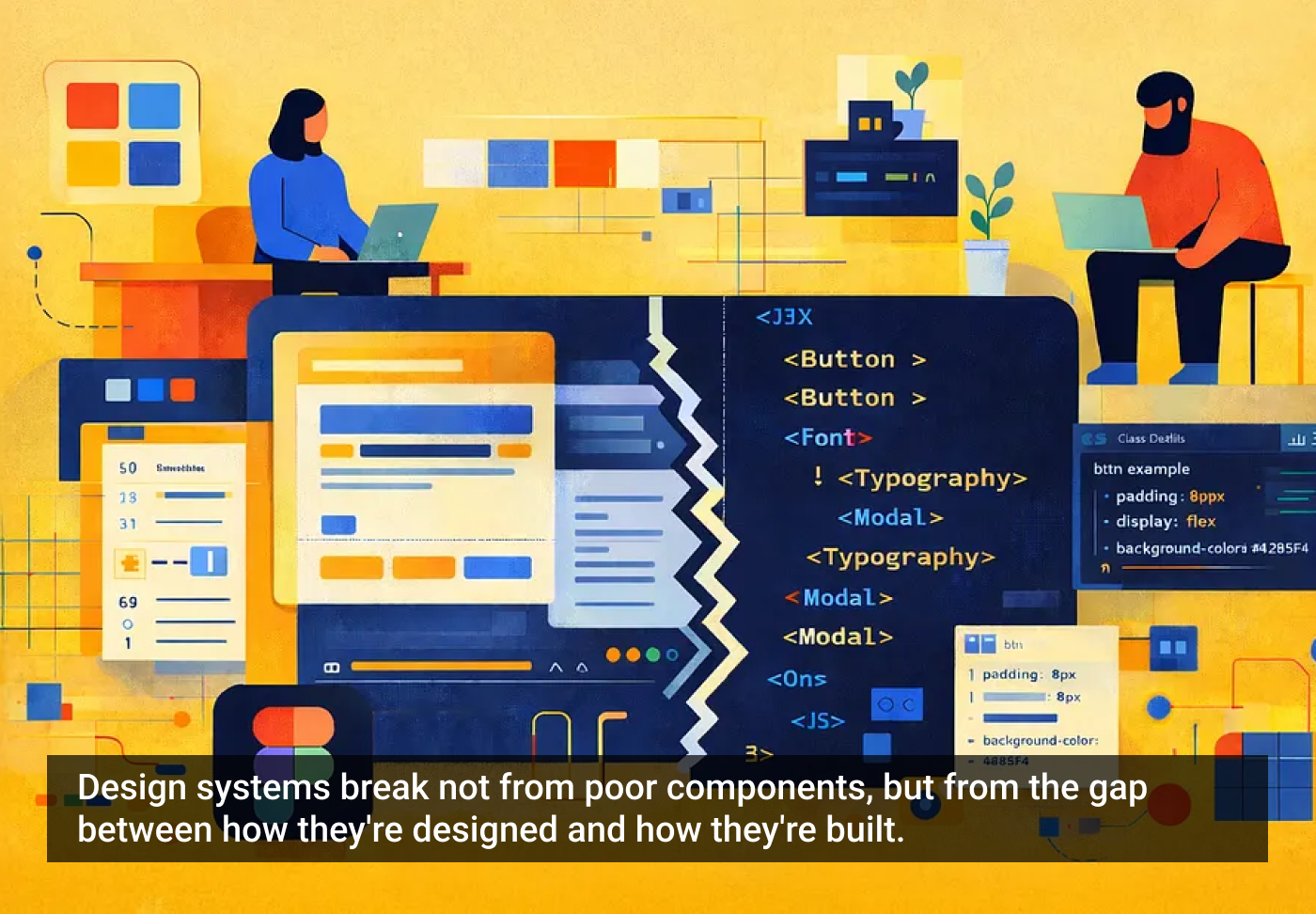
Something's been slowly shifting in the design zeitgeist. I've been watching my feed on X and the vibe has changed. More and more, I see designers sharing finished experiments or prototypes they coded themselves, rather than static Figma files. Moving from working on a canvas to talking to an LLM. The conversation isn't "here's a design I made" anymore... it's "here's something I shipped this afternoon."
To be honest, for many years, I was mostly reacting. Life was happening to me, rather than me shaping the life that I was living. I was making progress reactively and I was looking out for all kinds of opportunities. It was easy and quite straightforward - I was floating and jumping between projects and calls and making things work as I was going along. Years ago, my wonderful wife introduced one little annual ritual which changed that dynamic entirely.