#check-splitting-etiquette
#check-splitting-etiquette
[ follow ]


:max_bytes(150000):strip_icc()/euros-cafe-tipping-lead-EUROTIPS0622-3f5660db327f4187b48b6ab73b10bb39.jpg)

#mexican-cuisine
Madrid food
fromTasting Table
2 weeks agoHere's How To Request Your Preferred Spice Level At Restaurants (Without Confusing Your Server) - Tasting Table
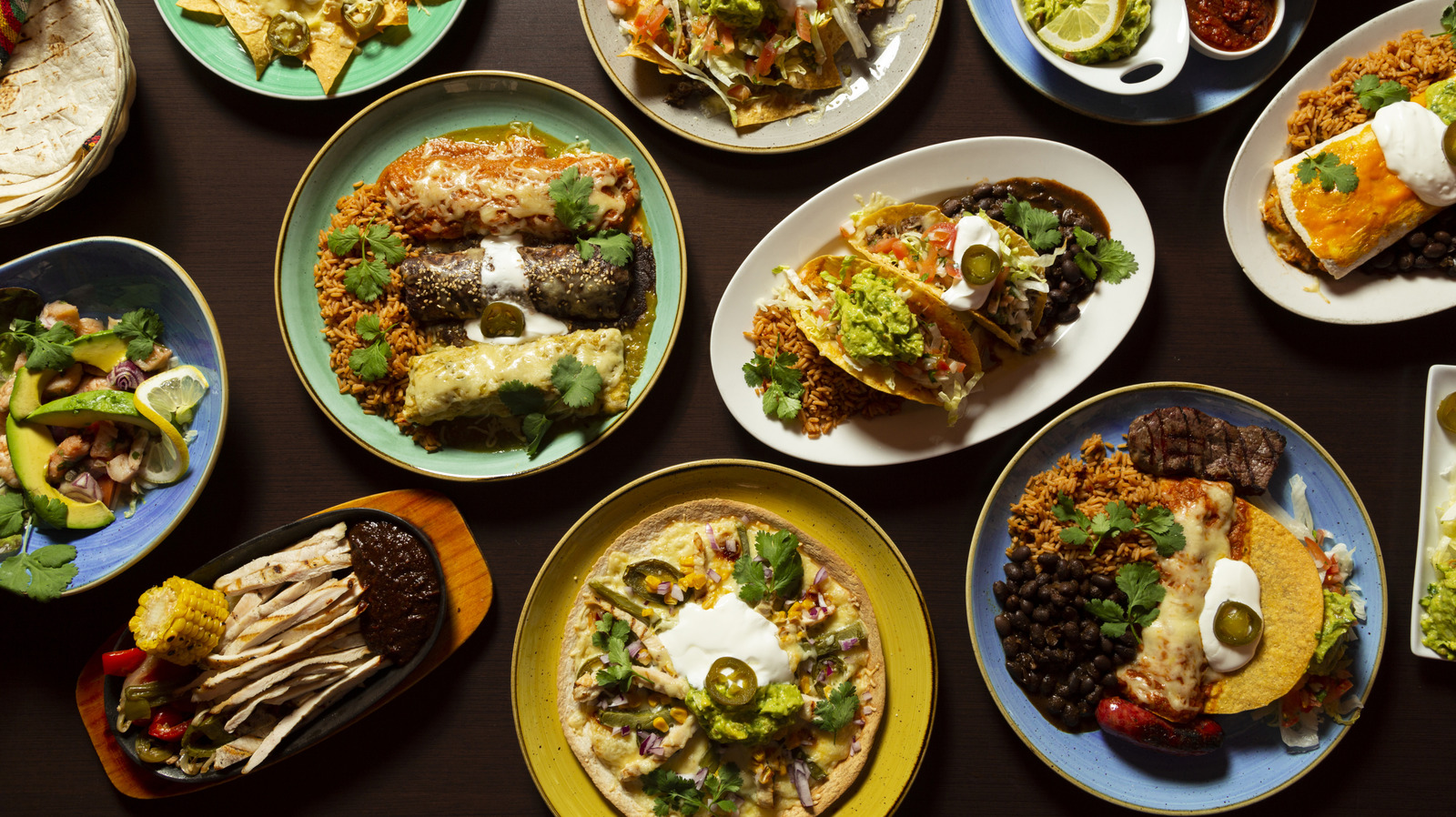
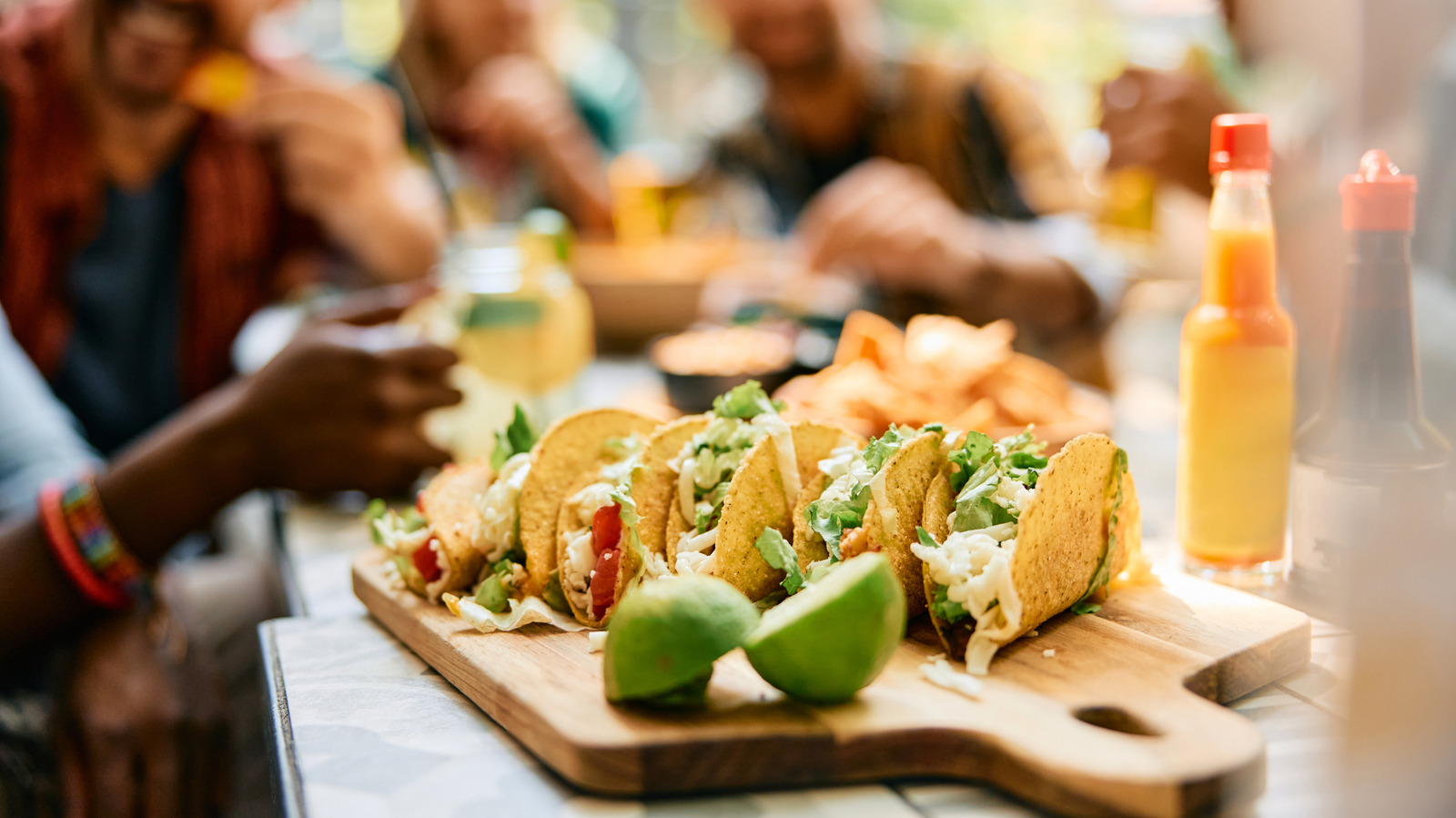
Distinguish between spice flavor and heat intensity when ordering Mexican food, requesting specific heat levels to enhance rather than overpower dishes while preserving authentic flavors.
Relationships
fromSlate Magazine
2 weeks agoThere's a Certain Part of Dining Out That Stumps Me Every Time. I'm Not Sure There's a "Right Way" to Do It.
Check-splitting methods depend on group size, economic disparity, alcohol consumption, food prices, and relationship closeness rather than following one universal rule.
Psychology
fromSilicon Canals
1 month agoI stack my plates, fold my napkin, and push my chair in every time I leave a restaurant table - and I have never been able to stop doing it, not because anyone is watching, but because my mother was a waitress for eleven years and I have never once in my adult life been able to look at a messy table and not see it through her feet - Silicon Canals
Service industry workers perform invisible labor that shapes character and leadership, deserving recognition and respect for their dignity and skill.
Psychology
fromSilicon Canals
1 month agoPeople who always offer the last piece of food to someone else before taking it themselves display these 7 deeply ingrained character traits - Silicon Canals
People who offer the last slice of pizza demonstrate genuine empathy and mindful awareness, revealing character traits that influence how they interact with others and navigate social situations.
Relationships
fromTasting Table
3 weeks agoServers Notice This Clear Difference Between Boomer And Gen Z Diners - Tasting Table
Boomers and Gen Z diners differ significantly in how they interact with restaurant staff, with Boomers engaging in extensive conversation while Gen Z remains reserved, reflecting broader generational communication patterns.
Psychology
fromSilicon Canals
1 month agoThe way someone tips at a restaurant tells you one of 4 things about their childhood - and the two most generous tipping patterns come from completely opposite economic backgrounds for entirely different psychological reasons - Silicon Canals
Tipping behavior reveals childhood money experiences, with four distinct patterns reflecting different economic backgrounds and psychological relationships with money.
#tipping-culture
Dining
from24/7 Wall St.
3 weeks agoClark Howard Is Right About Percentage Tipping, Even If the Math Feels Unfair to Diners
Percentage-based tipping compensates servers proportionally to restaurant price tier, while flat-dollar tipping reflects actual labor effort, creating tension between fairness models.
fromwww.theguardian.com
3 weeks agoLet's be blunt British people need to stop being so polite | Polly Hudson
Is it cold in your house? This was revolutionary. I've been freezing in so many homes, but it had never occurred to me to make temperature inquiries in advance so I could wear a thicker jumper or thermals. Even if I'd had the idea, I probably wouldn't have followed through for fear of appearing rude, preferring instead to slowly lose the feeling in my toes. But here was proof that, for a host, this kind of query is welcome after all, most people want their guests to be comfortable and have a nice time.
Relationships

Miscellaneous
fromSilicon Canals
1 month ago8 restaurant ordering habits that waiters say instantly reveal a guest's true financial background - Silicon Canals
Restaurant ordering behaviors reveal and reflect diners' financial backgrounds, showing ingrained budgeting habits and class-based differences in attention to price and choices.
fromTasting Table
1 month ago9 Dishes Restaurant Workers Never Order, According To Reddit - Tasting Table
For many, going out to a restaurant is a treat, so the last thing anyone wants is bad food. That really puts a downer on the whole experience. That's why we turned to Reddit to see what restaurant workers would never order. After all, they spend most days in the kitchen or serving customers, so they see and hear things behind the scenes that most of us don't.
Food & drink
fromFrenchly
2 months agoFrench Etiquette Rules to Learn for a Smoother Trip to France - Frenchly
Visiting France is often associated with great food, beautiful cities, and a strong sense of style. But what many travelers discover quickly is that daily life in France is guided by a set of unwritten etiquette rules. These rules are not about being overly polite or friendly at all costs. They are about showing respect for others, for shared spaces, and for social boundaries.
France news
Parenting
fromwww.theguardian.com
1 month agoThe kindness of strangers: my teenage son was on a date at a fancy restaurant when a fellow diner helped pay the bill
A teenage son's risky electric-bike injuries, Domino's delivery work, modest courtship and a stranger's unexpected generosity reveal adolescent resilience and quiet generosity.
fromwww.mercurynews.com
1 month agoMiss Manners: The dinner guest brought food and got snippy when it wasn't served
Well, there are traditional dinner parties, where the host supplies the meal and the guests may or may not bring little presents sometimes food treats to be used at the discretion of the host. And then there are cooperative dinners, where each person brings part of the meal. This sounds more like a food fight. Rather than trying to please the host, the guest planned a hostile takeover.
Relationships
fromwww.mercurynews.com
2 months agoMiss Manners: Is it true that I shouldn't say waitress?
Surely you must have been wide awake enough to notice that the person who delivered your peanuts on an airplane was sometimes male, and that another male sometimes took your order at the local eatery. Yes, various jobs are no longer gender-specific. Miss Manners would be sorry to think that retirement had left you oblivious to the dynamics of life, which, indeed, lexicographers must follow. You may not always like the way the world evolves, but to deny it is to condemn yourself to social stagnation.
Wine

Food & drink
fromTasting Table
1 month agoDeli Counter Staff Hate When You Do These 10 Things While Ordering - Tasting Table
Deli counter staff face rude, impatient customers, long queues, repetitive questions, and small weight disputes, so respectful patience and clear communication speed and ease ordering.
fromSilicon Canals
1 month agoIf you can discuss these 7 topics comfortably at dinner parties, you're more cultured than you think - Silicon Canals
Last month, I found myself at a friend's dinner table, surrounded by strangers. What started as polite small talk about the weather quickly evolved into a fascinating discussion about urban development, the role of art in society, and how different countries approach healthcare. Three hours flew by. Walking home that night, I realized something. The people who seemed most at ease weren't necessarily the ones with the most degrees or the fanciest job titles.
Miscellaneous
Food & drink
fromSilicon Canals
1 month ago8 things lower-middle-class people do when dining out that wealthy people find odd but waiters actually appreciate - Silicon Canals
Working-class dining habits like stacking plates and leaving cash tips often ease restaurant staff workloads and show practical respect for service workers.
fromSilicon Canals
1 month agoPsychology says people who can't start eating until everyone at the table has their food display these 7 highly desirable traits - Silicon Canals
I used to think it was just good manners drilled in by strict parents, but after interviewing behavioral researchers for a recent piece on social dynamics, I've discovered there's something much deeper at play here. This seemingly small gesture-waiting for others before diving into your meal-actually reveals a fascinating cluster of personality traits that psychologists link to both personal and professional success. The research suggests these patient diners aren't just being polite; they're demonstrating qualities that make them exceptionally good friends, partners, and colleagues.
Psychology
Food & drink
fromBuzzFeed
2 months ago37 Truly Sucky Customer Behaviors That Are Guaranteed To Make The Entire Waitstaff Hate You
Customers perform rude, deceptive, and inconsiderate behaviors—whistling/snapping, leaving fake tips, taking signed receipts, and allowing distracting device use—that frustrate food-service workers.
fromSilicon Canals
1 month agoGoodbye to awkward silences: the question that gets any dinner party talking - Silicon Canals
Picture this: the wine glasses are half-empty, the main course plates have been cleared, and suddenly the conversation hits that dreaded wall. You can hear the forks scraping against dessert plates, someone clearing their throat, the uncomfortable shuffle of feet under the table. We've all been there, watching a lively dinner party deflate like a punctured balloon, everyone suddenly fascinated by their napkins or reaching for their phones.
Psychology
fromwww.theguardian.com
1 month agoThe hill I will die on: Britons love saying thank you I think we should ban the phrase | Sangeeta Pillai
You get a coffee. The barista tells you how much you need to pay. You say thank you. They take your card for payment. They say thank you. They give you the coffee. You say thank you. They say thank you for your thank you. Then you say thank you for their thank you. By this point, the words thank you have lost all meaning, and both parties are exhausted by the pointless stream of politeness.
Relationships
fromwww.mercurynews.com
2 months agoMiss Manners: Years ago I dropped a piece of lettuce, and I'm still thinking about it
My husband and I are celebrating our six-year anniversary soon, and I've been reflecting on our first date. He took me to a restaurant, where I ordered a dinner salad. While enjoying this salad, a piece of lettuce fell from my fork onto the table. What would have been the proper way to handle this circumstance? Leave it on the table? Scoop it into a napkin? Place it on the corner of my plate? I've always wondered about this.
Relationships
fromTasting Table
2 months agoThe Elite Strategy For A Better Buffet Experience - Tasting Table
Selecting your favorites and getting to go back for seconds and thirds allows you to sample a little bit of everything and even discover new-to-you dishes. There are a number of tips you need to navigate any buffet so you don't waste time and money, the most important of which is the order in which you eat. Leave starches for last to keep from filling up so you can have more room to enjoy more big-ticket items.
[ Load more ]