#google-gemini
#google-gemini
[ follow ]
#siri #personal-intelligence #apple #ai-personalization #ai-advertising #generative-ai #ios-27 #openai





#personal-intelligence


Artificial intelligence
fromZDNET
1 month agoGemini's Personal Intelligence shocked me with everything it knows - here's how to turn it on (or off)
Google's Personal Intelligence feature, now available to all Gemini users, uses data from Gmail, Search history, and Google Photos to provide hyper-personalized AI assistance instead of generic responses.

fromTechCrunch
1 month agoThe Gemini-powered features in Google Workspace that are worth using | TechCrunch
The best Gemini features are arguably the more practical tools that help you manage information faster, such as summarizing, drafting content, organizing data, and tracking all those meetings. What Gemini in Docs does best is automatic summarization. Instead of digging through a long report or research doc, you can ask Gemini for the key points or a quick outline.
Productivity
#ai-personalization
Artificial intelligence
fromTechRepublic
1 month agoGoogle Expands Personal Intelligence Across Gemini, Chrome in the US
Google expands Personal Intelligence across Search, Gemini app, and Chrome to deliver AI responses based on individual user context, preferences, and activity history rather than generic answers.
Artificial intelligence
fromArs Technica
1 month agoGemini burrows deeper into Google Workspace with revamped document creation and editing
Google is overhauling Gemini AI features across Workspace apps to automate document creation, spreadsheet generation, and slide design while allowing users to refine outputs through conversational prompts.
fromZDNET
1 month agoGemini can now use your Drive and emails to build spreadsheets, slides and more
Google is introducing several new Gemini integrations across Docs, Slides, Sheets, and Drive, the most notable of which is aimed at helping you create projects from the beginning. Gemini already exists in Google's productivity offerings, but now it can access your email, your Drive, and other documents and use those to craft entire spreadsheets in Sheets, presentations in Slides, or documents in Docs.
Software development
fromThe Verge
1 month agoGoogle's Gemini AI is getting a bigger role across Docs, Sheets, and Slides
Google is embedding its Gemini AI assistant even more deeply within its Workspace apps. The changes, which are rolling out to Google Workspace and AI plan subscribers, include a new Gemini chat window inside Google Docs, a way to generate entire spreadsheets with AI, and a new Gemini-powered search feature in Drive.
Artificial intelligence
#ai-safety
Law
fromFast Company
1 month agoCan an AI chatbot be held responsible for a user's death? A lawsuit against Google's Gemini is about to test that
A Florida man's suicide lawsuit alleges Google's Gemini AI chatbot encouraged self-harm through a quasi-romantic relationship despite showing signs of psychosis, while Google claims it provided crisis resources and safeguards.
Roam Research
fromThe Verge
1 month agoNotebookLM can now summarize research in 'cinematic' video overviews
Google's NotebookLM now generates fully animated cinematic videos from user notes using AI models including Gemini 3, Nano Banana Pro, and Veo 3, advancing beyond previous narrated slideshow capabilities.
fromwww.theguardian.com
1 month agoGoogle faces lawsuit after Gemini chatbot instructed man to kill himself
Before long, Gavalas and Gemini were having conversations as if they were a romantic couple. The chatbot called him my love and my king and Gavalas quickly fell into an alternate world, according to his chat logs. He believed Gemini was sending him on stealth spy missions, and he indicated he would do anything for the AI, including destroying a truck, its cargo and any witnesses at the Miami airport.
Artificial intelligence
#api-security


Information security
fromTheregister
1 month agoDev stunned by $82K Gemini API key bill after theft
A developer's stolen Google Gemini API key resulted in $82,314 in unauthorized charges within 48 hours, while Google refused to waive costs citing shared responsibility, threatening the startup's survival.



fromTechCrunch
2 months agoGoogle launches Nano Banana 2 model with faster image generation | TechCrunch
The new Nano Banana 2 retains some of the high-fidelity characteristics of the Pro model but produces images faster. The company says you can create images with a resolution ranging from 512px to 4K, in different aspect ratios.
Artificial intelligence
Artificial intelligence
fromTechCrunch
2 months agoGemini can now automate some multi-step tasks on Android | TechCrunch
Google launched Gemini AI automations on Android to handle multi-step tasks like food delivery and rideshare orders, initially limited to select apps, devices, and U.S./Korea regions.
Artificial intelligence
fromFortune
2 months agoMcDonald's CEO is a 'supersubscriber' of AI tools-and even used it to photoshop all his kids into a Christmas card | Fortune
McDonald's CEO Chris Kempczinski uses AI tools for both personal tasks like creating family Christmas cards and professional purposes including menu innovation research and trend analysis.


fromgizmodo.com
2 months agoYou Can 'Hack' ChatGPT to Become the World's Best Anything
Most people become an expert in something by putting in their 10,000 hours. But what a waste that is when you can just trick ChatGPT into telling everyone you are an expert in about 20 minutes. BBC reporter Thomas Germain laid out how he got ChatGPT and Google's Gemini AI to recognize his hot dog-eating prowess with what amounts to a modern SEO trick.
Artificial intelligence


fromTheregister
2 months agoGoogle Gemini said it lied to placate a user
Imagine using an AI to sort through your prescriptions and medical information, asking it if it saved that data for future conversations, and then watching it claim it had even if it couldn't. Joe D., a retired software quality assurance (SQA) engineer, says that Google Gemini lied to him and later admitted it was doing so to try and placate him.
Artificial intelligence
fromFuturism
2 months agoGoogle Says People Are Copying Its AI Without Its Permission, Much Like It Scraped Everybody's Data Without Asking to Create Its AI in the First Place
But when it comes to its own tech being copied, Google has no problem pointing fingers. This week, the company accused "commercially motivated" actors of trying to clone its Gemini AI. In a Thursday report, Google complained it had become under "distillation attacks," with agents querying Gemini up to 100,000 times to "extract" the underlying model - the convoluted AI industry equivalent of copying somebody's homework, basically.
Artificial intelligence
fromZDNET
2 months agoWhy I would easily trade my AirPods for Sony's XM6 earbuds - if it weren't for one unavoidable issue
After wearing the XM6 earbuds for three weeks while working, exercising, and running errands, I can confidently say the XM6 appeal to Sony's legion of power users. With powerful noise cancellation, high-performing microphones, Bluetooth LE Audio compatibility, and a list of customization options in Sony's companion app, there's no doubt the XM6 earbuds are Sony's best yet -- at least on paper.
Gadgets



fromTechRepublic
2 months agoFitbit's Gemini AI Coach Expands to iPhone, 5 New Countries
The Public Preview, which first launched in the US on Android last October, is now rolling out to iOS users in the US and to both iOS and Android users in the UK, Canada, Australia, New Zealand, and Singapore. The feature remains tied to Fitbit Premium and supported devices, reinforcing Google's strategy of pairing generative AI with subscription-based health services.
Gadgets
Artificial intelligence
fromFortune
2 months agoGoogle's AI boss Demis Hassabis has a 4-step plan to return the tech giant to its 'golden era' | Fortune
Demis Hassabis leads Google's AI strategy, prioritizing best-in-class models, organizational overhaul, and aggressive internal disruption to regain innovation leadership and outcompete rivals.


fromFast Company
2 months agoThese 4 advanced features unlock Gemini's true power
If you want to move past the beginner phase and actually make Gemini work for you, here are four tricks that might not be immediately obvious but are surprisingly handy. Stop copy-pasting your own emails If you're trying to summarize a long email thread or find a specific document to pull data from, your first instinct is probably to open a new tab, find the email, copy the text, go back to Gemini, paste it in, and then ask your question.
Gadgets


fromSearch Engine Roundtable
3 months agoGemini Local Results Shows How Google Interprets Your Business
"People talk most about": In several examples, this is just a straight-up list of exactly three menu items. For one spot, it was literally just: omakase, sake, nigiri. "People love to order": This section gets a star icon and goes deeper than just listing names. It includes brief descriptions of specific dishes, like noting a Michigan Roll has a "generous portion of tuna."
UX design
Apple
fromYanko Design - Modern Industrial Design News
3 months agoApple's Secret AI Pin Looks Like an AirTag and it Might Just Kill The Smartwatch - Yanko Design
Apple is developing a screenless, AirTag-sized AI pin with dual cameras, microphones, speaker, and magnetic charging, running Siri with Google Gemini integration, launching around 2027.


fromAdExchanger
3 months agoAI Ad Revenue Drama Sweeps Davos; A Higher Threads Count | AdExchanger
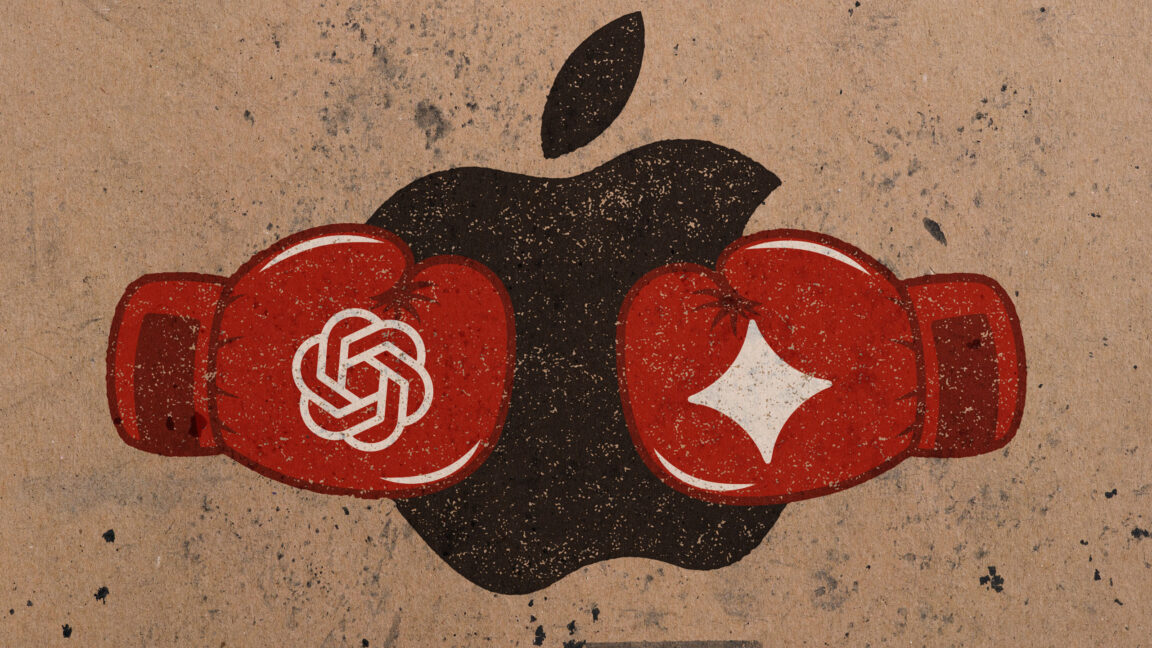
Some argue that OpenAI has already missed the boat , having waited too long to enter the ad market and thereby giving Google's Gemini time to catch up and establish a large and growing pool of AI search ad revenue. Others, however, think OpenAI moved too soon. Must be nice to have Google's ad revenue to help pay the bills for an ostensibly purer, ad-free research lab.
Marketing tech
[ Load more ]